
Choosing a China-based Mouthpiece Adapter manufacturer or supplier starts with fit, material, and clear communication. An adapter may look simple, yet a small difference in diameter can affect connection, stability, or comfort. Buyers should confirm dimensions, thread details, material options, and intended use before requesting a quotation. A drawing helps. A physical sample can reveal details that a drawing misses.
A reliable supplier should explain how it checks incoming materials, production dimensions, and finished parts. Ask whether inspection records, sample approval, and production updates are available for your order. These details make quality easier to assess, though no checklist can remove every risk. Not every fit is perfect on paper. That is why revision feedback matters. Share the issue clearly, such as a loose connection or an edge that feels too sharp, and ask how the supplier will address it.
When comparing Mouthpiece Adapter manufacturers in China, look beyond the lowest quoted price. Consider product consistency, response times, packaging, lead time, and the supplier’s ability to work from your specifications. Request relevant product information rather than assuming that one adapter suits every application. A careful supplier will ask questions when requirements are unclear. That can slow the first exchange, but it may prevent costly misunderstandings later. The right partner is not simply a factory with a broad catalog; it is a supplier willing to document expectations, discuss limitations, and improve the details with you.
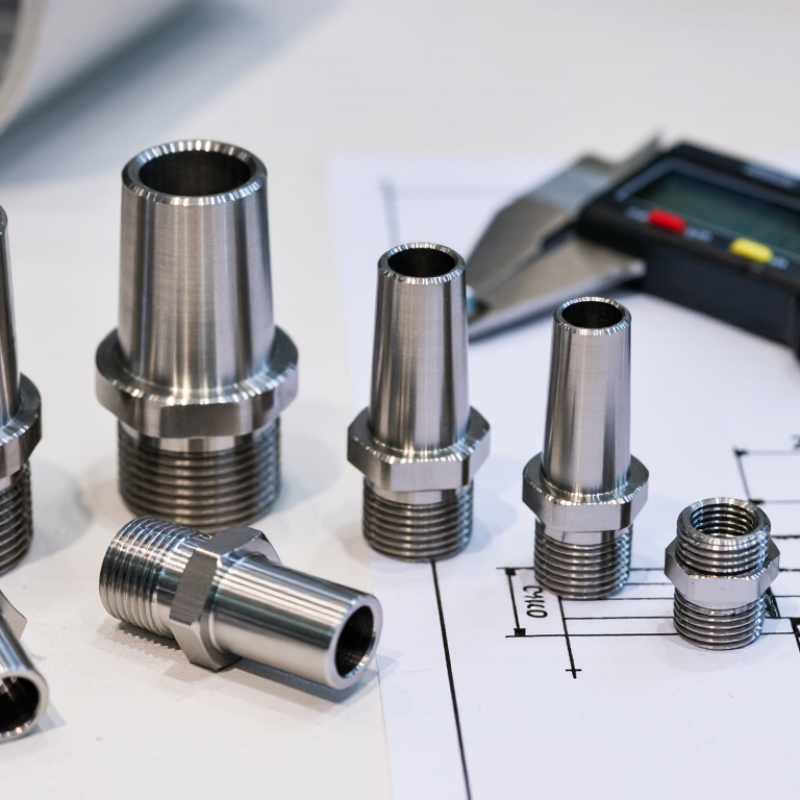
A mouthpiece adapter is a small connector that joins a mouthpiece to compatible equipment. It can bridge differences in diameter, shape, or connection style. One end fits the mouthpiece; the other attaches to a tube, instrument, or testing device. A snug fit helps reduce movement and unwanted air leaks. Simple part, important job.
Adapters may use a tapered push-fit, a threaded joint, or another specified connection. The right design depends on the equipment’s dimensions and operating conditions. Check the inner and outer diameters, connection depth, and material requirements before ordering. A measurement can look correct on paper yet still feel loose in use, so verify fit with the actual parts when possible.
Tips: Measure twice, and note the units. Ask the supplier for a drawing or sample if the connection is unusual. Confirm material compatibility and any stated temperature or pressure limits. Do not force a tight joint; it may damage the mouthpiece or adapter. Reliable suppliers should explain dimensions and tolerances clearly, though a drawing cannot replace a practical fit check.

Straight adapters connect a mouthpiece to a compatible breathing circuit with minimal added length. Angled adapters help when tubing pulls across the face or a user needs a more comfortable position. Swivel types reduce twisting as the patient turns. Size-reducing adapters bridge different connector diameters, but should not be used to force an incompatible assembly. Fit matters.
In respiratory equipment, circuit-side connections commonly use 15 mm and 22 mm conical fittings. ISO 5356-1:2015 specifies requirements for these connectors in breathing systems. Always confirm the device instructions, connector dimensions, and intended use before selecting an adapter. A snug connection is not proof of compatibility. Small leaks can be easy to miss.
Application needs vary by setting. A straight adapter may suit a compact setup, while an angled or swivel model can reduce strain during longer sessions. The World Health Organization’s 2024 asthma fact sheet reports that asthma affected an estimated 262 million people in 2019. That figure describes the condition, not adapter demand, but it underlines why dependable respiratory interfaces matter. Material, cleaning method, and dead-space volume deserve attention too; product descriptions do not always make these details easy to compare.
A mouthpiece adapter depends on material choice as much as precise geometry. Polypropylene can suit lightweight designs, while stainless steel or aluminum may be chosen where greater rigidity is needed. The right option depends on the intended use, cleaning conditions, and contact requirements. PlasticsEurope’s Plastics – the Fast Facts 2023 reports global plastics production of 400.3 million tonnes in 2022. That figure shows the scale of polymer supply, but it does not prove that any particular grade is suitable for an adapter. Fit matters. Manufacturers should identify the resin grade and keep batch records.
For plastic parts, injection molding can produce repeatable shapes, but tool design and cooling affect shrinkage and fit. Metal adapters may be made by CNC turning or milling, followed by deburring and surface finishing. Small details count. A practical inspection checks connection dimensions, burrs, surface defects, and fit with a matching component. ISO 20457:2018 provides tolerance guidance for molded plastic parts, though product-specific drawings still define acceptance limits. A polished finish alone proves little. Material certificates and dimensional records offer stronger evidence, and cleaning validation may also be needed for the intended application. Real production has trade-offs: tighter tolerances can raise cost, and prototypes may reveal issues that drawings miss.
| Category | Material or process | Typical characteristics | Common manufacturing or inspection considerations |
|---|---|---|---|
| Metal option | Brass | Good machinability and corrosion resistance; commonly used for small turned components. | CNC turning can produce concentric bores and threaded features. Plating or polishing may be specified according to the intended use. |
| Metal option | Stainless steel | Durable and corrosion-resistant; grade selection affects machinability and corrosion performance. | CNC turning and milling are common. Deburring and surface-finish checks help remove sharp edges and machining marks. |
| Metal option | Aluminum alloy | Lightweight and readily machinable; surface protection may be needed for the application. | CNC machining is suitable for prototypes and production parts. Anodizing is a possible finishing process for compatible aluminum alloys. |
| Polymer option | Acetal (POM) | A machinable engineering thermoplastic with low friction and good dimensional stability in many applications. | CNC machining works well for low-volume parts; injection molding may suit higher volumes when the design and tooling justify it. |
| Polymer option | Silicone elastomer | Flexible material that can provide a compliant sealing or grip surface, depending on the design and compound. | Compression or injection molding may be used. Compound, hardness, and any regulatory requirements should be confirmed for the intended application. |
| Manufacturing process | CNC turning and milling | Subtractive processes suited to round parts, bores, flats, slots, and threaded features. | The drawing should define critical dimensions, thread specifications, tolerances, and surface-finish requirements. |
| Manufacturing process | Injection molding | Forms polymer parts by injecting molten material into a mold; tooling is generally required. | Part geometry, shrinkage, draft, and expected production volume should be reviewed during mold design. |
| Surface finishing | Polishing, plating, or anodizing | Finishing can change appearance and surface characteristics; the suitable method depends on the base material. | Confirm coating compatibility, coverage on mating surfaces, and any dimensional allowance needed for the finish. |
| Quality control | Dimensional and fit checks | Adapter performance depends on the mating interface, bore, alignment, and fit specified for the product. | Use appropriate gauges or measuring instruments and verify fit with the intended mating component against the approved drawing. |
| Specification planning | Material, application, and compliance requirements | There is no single material or tolerance suitable for every mouthpiece adapter design. | Provide the application, interface dimensions, operating environment, finish, and any applicable material or regulatory requirements before production. |
A reliable mouthpiece adapter supplier should show how each part is controlled, not just display a certificate. Ask for material specifications, batch traceability, and inspection records. The ISO Survey 2022 counted more than 1.2 million ISO 9001 certificates worldwide. That figure reflects broad adoption of quality-management systems, but certification alone does not prove an adapter’s fit or performance.
Fit matters. Suppliers should check critical dimensions with calibrated gauges and test connections for looseness, leakage, or damage after repeated assembly. For clinical-use products, material selection and contact risks need documented assessment; ISO 10993 provides a framework for biological evaluation of medical-device materials. Sampling plans based on ISO 2859-1 can help define lot acceptance, but buyers should agree on inspection levels and acceptance criteria before production.
Look closely at the records. A clear report links measurements to the production batch and identifies the inspection method. Ask how the supplier handles failed samples and corrective actions. A small weakness remains: paperwork may look complete while checks are inconsistent on the factory floor. Request recent, batch-specific evidence, and verify that the tested sample matches the approved drawing.
Choosing a suitable mouthpiece adapter manufacturer starts with fit, material, and repeatability. Ask for dimensioned drawings, stated tolerances, and material specifications. Confirm how each batch is inspected, and request sample parts before approving a large order. Fit matters. A connector that looks correct can still wobble if its inner diameter or seating depth varies.
Review the supplier’s quality records, calibration practices, and process for handling defects. Ask how production changes are documented and whether batch records can trace materials to finished parts. McKinsey’s 2020 survey of supply-chain executives found that 93% planned to increase supply-chain resilience. That broad finding is not specific to adapters, but it reinforces the value of checking capacity, lead-time commitments, and contingency plans. One overlooked detail: a polished sample does not prove consistent mass production.
Tips: Measure the mating parts with calipers and record the results. Compare samples from more than one production run when possible. Request written answers on inspection frequency, replacement policy, and delivery timelines; keep them with the order records.