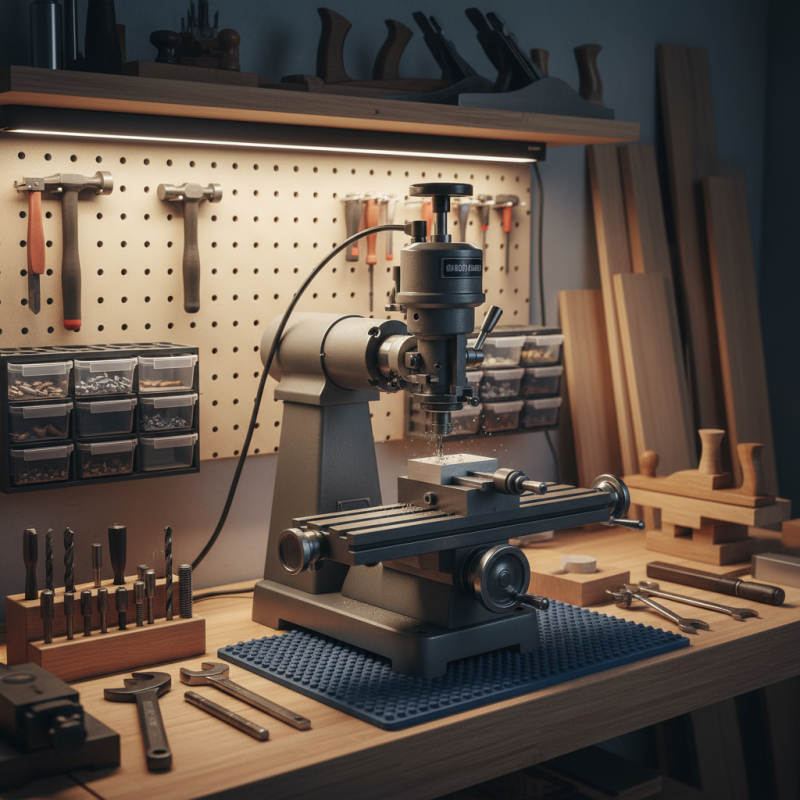
Why Choose a Bench Top Milling Machine for Your Workshop?
In the realm of woodworking and metalworking, having the right tools is essential. A Bench Top Milling Machine stands out for several reasons. It is compact yet powerful, making it ideal for small workshops. Many hobbyists and professionals alike appreciate its versatility.
This machine allows users to tackle various projects with precision. From milling to engraving, it opens up opportunities. However, one must consider the workspace available. If space is limited, a Bench Top Milling Machine is a perfect fit. Its size does not compromise performance. Yet, quality varies among brands. Users must research carefully before purchasing.
Investing in a Bench Top Milling Machine is a decision that. It can significantly enhance your workshop. But, reflection on your specific needs is vital. What do you truly require from your milling machine? Understanding this will lead to better choices.
Advantages of Using a Bench Top Milling Machine in Small Workshops
A bench top milling machine can be a game changer for small workshops. Its compact size allows it to fit into tight spaces where larger machines cannot. According to a recent industry report, about 65% of small workshops are limited by space constraints. A bench top model utilizes that space efficiently without compromising performance.
Precision is critical in machining. Bench top milling machines offer accuracy often within +/- 0.001 inches. This level of precision is essential for detailed work, making them popular among hobbyists and professionals alike. Some reports indicate that 55% of users find bench top models adequate for their needs.
However, there can be drawbacks. The limited power of some bench top models may restrict the type of materials you can work with. Some users express frustration with the machine's capabilities when handling tougher metals. Frequent adjustments may be necessary to maintain precision, leading to inefficiencies. Balancing power with size is not always straightforward, and many users need to evaluate their specific requirements carefully.
Key Features to Consider When Selecting a Bench Top Milling Machine
When selecting a bench top milling machine, several key features should guide your decision. First, consider the machine's size and weight. A compact model is great for limited workshop space. However, if it's too light, it may vibrate during use. Look for a balance that fits your needs.
Next, evaluate the motor power. A stronger motor tackles tougher materials, ensuring better results. Yet, powerful machines can be noisier and less precise. Think about what you will primarily use the machine for.
Another important feature is the spindle speed. Different materials require varying speeds for optimal milling. A variable speed option can provide versatility, allowing adjustment as needed. Yet, maintaining settings can be tricky without proper attention. Finally, check the build quality. While all-metal construction offers durability, it can also add weight and cost. Weigh the advantages and drawbacks carefully to make an informed choose.
Comparison of Bench Top Milling Machines and Larger Models
When considering milling machines, size matters. Bench top milling machines offer unique advantages over larger models. They are compact, making them ideal for small workshops. Their smaller footprint means you can maximize space efficiency. Unlike larger machines, they are easier to move and store, which is a significant advantage in a limited area.
However, their size does impact capacity. Bench top models typically have smaller work envelopes. This limitation can affect larger projects or materials. It's essential to assess the types of tasks you plan to undertake. Sometimes, a larger machine might be necessary for extensive work. On the other hand, many hobbyists find bench top models sufficient for their needs. They often prioritize precision and versatility over size. Exploring a balance between performance and workspace is essential. Decisions often require trade-offs, and it’s crucial to weigh these carefully.
Comparison of Bench Top Milling Machines and Larger Models
Maintenance Tips for Ensuring Longevity of Your Milling Machine
Proper maintenance is crucial for the longevity of bench top milling machines. Regular cleaning prevents dust and debris accumulation. Studies indicate that machines without proper maintenance can suffer a 30% decrease in performance over time. It's essential to clean the surfaces and lubricate moving parts frequently. Dust can interfere with operation and accuracy, leading to frustrating miscalculations.
Checking the alignment and calibration is another vital aspect. A misaligned machine can create uneven cuts, reducing quality. Reports show that up to 20% of milling machine failures are due to poor alignment. Ensure that all parts are securely fastened. Loose components can lead to significant wear and tear, and can even create safety hazards.
It's also important to monitor the temperature of the machine. Excessive heat can indicate an underlying issue, potentially leading to costly repairs. Maintaining an optimal operating temperature can enhance efficiency. Documenting your maintenance routine helps identify patterns. You may notice irregularities that require attention. Regular checks and adjustments foster reliability in your milling operations.
Why Choose a Bench Top Milling Machine for Your Workshop? - Maintenance Tips for Ensuring Longevity of Your Milling Machine
| Feature | Description | Maintenance Tips |
| Size | Compact design is suitable for small workshops | Regularly clean the machine to prevent dust accumulation |
| Precision | High accuracy for detailed projects | Check and calibrate alignment frequently |
| Versatility | Can be used for various materials like metal, wood, and plastic | Use appropriate tools and settings for different materials |
| Cost-Effectiveness | Affordable option for hobbyists and small businesses | Perform routine maintenance to avoid costly repairs |
| Ease of Use | User-friendly interface and controls | Read the manual and attend training if needed |
Applications and Projects Suited for Bench Top Milling Machines
Bench top milling machines are versatile tools that can adapt to various projects. They are perfect for hobbyists and professional machinists alike. Whether you're working on intricate designs or simple parts, these machines provide precision that is hard to achieve manually. According to a market research report, the global milling machine market is expected to grow by 5.2% annually. This growth indicates a rising interest and need for efficient machining solutions in small workshops.
Applications for bench top milling machines include creating parts for the automotive and aerospace industries. They allow for the production of small gears, brackets, and even custom tools. A recent survey indicated that around 40% of users favor these machines for prototyping as it saves time and resources. However, users should be aware that mastering these machines requires both practice and patience. Some projects may not turn out as expected initially, leading to frustration. Careful adjustments and understanding machine limitations are crucial.
Small workshops often face challenges with space and budget. Bench top milling machines fit well in constrained environments, yet they can be a significant investment. Users may question whether the benefits justify the cost. It's essential to evaluate project needs and machine capabilities before purchasing. Picking the right machine can make a difference, as not every model suits all projects.