How to Choose the Best Wafer Roll Machine for Your Needs?
When it comes to the confectionery industry, the right equipment can make all the difference. Choosing a suitable Wafer Roll Machine can be a daunting task. Michael Chen, an industry expert, once said, "The right machine can elevate your production to a new level." This quote emphasizes the significance of selecting the best machine for your specific needs.
Different wafer roll machines come with various features. Speed, efficiency, and ease of use are critical factors to consider. For instance, a machine with adjustable temperature controls can deliver a more consistent product. Moreover, the wrong choice can lead to wasted time and resources. It’s essential to evaluate your production demands carefully.
Investing in a Wafer Roll Machine requires a keen assessment of your goals. Think about your production scale and desired output quality. You might find shiny marketing promises misleading. Thus, understanding your actual needs is vital. By reflecting on your requirements, you can make an informed decision that ensures a successful blending of taste and technology.
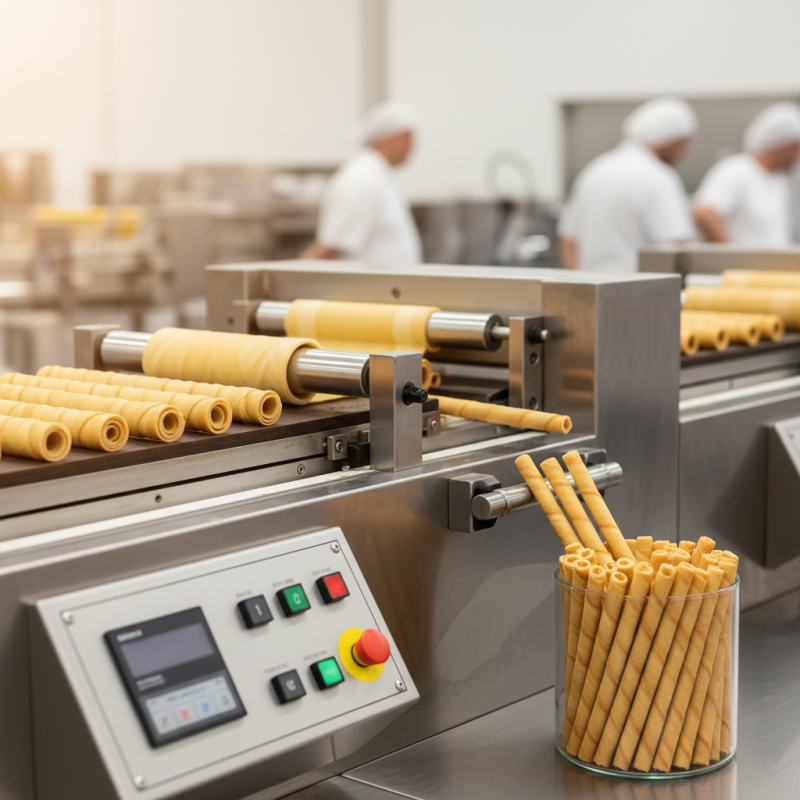
Identify Your Production Needs for Wafer Roll Machines
When choosing a wafer roll machine, identifying your production needs is critical. Understand your output requirements. A typical production line may need to produce 500 to 5,000 wafer rolls per hour. This variability depends on market demand and your operational goals. For small businesses, a lower capacity machine might suffice. For larger operations, a high-capacity machine is essential.
Consider product variety as well. Some machines are versatile, able to create different flavors or shapes. Reports suggest that 65% of consumers prefer personalized snack options. If you want to tap into this trend, choose a machine that can adapt to various recipes. However, versatility often comes with complexity. Balancing different production needs can be challenging.
Think about the space available in your facility. A compact machine might be suitable for limited spaces, yet larger setups often provide enhanced productivity. It's essential to assess your facility layout carefully. Remember, the wrong choice can lead to bottlenecks or inefficiencies. Evaluate future growth as well. What works today may not fit tomorrow's demands.
Understand Different Types of Wafer Roll Machines Available
When choosing a wafer roll machine, understanding the different types available is crucial. Several models exist, each catering to various production needs. The most common types include manual, semi-automatic, and fully automatic machines. Manual machines require skilled operators but are ideal for small batches. Semi-automatic units strike a balance, offering more efficiency without losing versatility. Fully automatic machines are perfect for large-scale production, but the initial cost can be high.
Industry reports show that the demand for wafer rolls has surged by 25% in recent years. As a result, manufacturers are increasingly investing in advanced machinery. A fully automatic machine can produce up to 300 rolls per hour, while manual options may only achieve 50. This efficiency can significantly impact production time and overall profits. However, not every business may need such high output. Assessing your specific needs is key.
**Tips:** Consider your production volume before making a purchase. A smaller operation might benefit from a semi-automatic model. Always compare several machines to find the best fit for your budget and output requirements. Be mindful of maintenance costs, which can add up over time. Budget wisely; unexpected repairs can be disruptive.
Evaluate Key Features and Specifications of Machines
When choosing a wafer roll machine, it's essential to evaluate key features closely. The size of the machine matters. Larger machines can produce more wafers, but they take up more space. If you have limited room, a smaller model might be better. Consider the power consumption too. Some machines require more electricity, increasing operational costs.
Another important specification is the materials used in the machine's parts. Stainless steel is a good choice as it resists rust and corrosion. This can enhance durability. Check the heating system. Even heat distribution is vital for even cooking of the wafers. Machines with adjustable temperature settings offer better control over the cooking process.
It's worth noting the machine's ease of use. Complex controls might slow down production. Look for features like an automatic timer or simple buttons. However, a machine that's too basic might lack essential functions. Finding the right balance is crucial. Manufacturers' descriptions may seem persuasive, but customer reviews can reveal hidden issues. Don't overlook user feedback.
Consider Budget and Return on Investment (ROI)
When considering a wafer roll machine, budget and return on investment (ROI) are key factors. The initial cost can vary widely. A machine may range from a few thousand to tens of thousands of dollars. According to industry reports, around 70% of manufacturers prioritize ROI when making equipment purchases. Thus, understanding the long-term savings is crucial.
Investing in a high-quality machine can lead to efficient production. For example, a well-designed wafer roll machine can produce 2000 rolls per hour. This efficiency can reduce operational costs. However, if you choose a machine based on price alone, you may face higher maintenance costs. A detailed analysis of operational expenses can reveal the true cost beyond initial purchase price.
Calculating ROI is often overlooked. A good rule of thumb is to aim for a payback period of less than two years. Many in the industry report that automated machines can improve profit margins by 15-20%. Nevertheless, this benefit is not guaranteed. A poor choice may lead to lost production time and increased defects. Evaluating both short-term costs and long-term gains will provide better insight.
Research Manufacturers and After-Sales Support Options
When considering a wafer roll machine, after-sales support is crucial. Many manufacturers offer varied levels of support. Researching each company's service reputation can save time and cost down the line. A 2021 industry report revealed that 70% of businesses experience issues with poor customer service post-purchase.
It’s essential to look at how manufacturers handle warranty claims and technical support. Ask questions about their response time and availability. Find out if they provide online troubleshooting or direct access to technicians. These factors can significantly affect your production efficiency.
Tips: Always read customer reviews. They can highlight potential service issues. Check industry forums for discussions about after-sales experiences. Investing a bit of time can help you avoid future headaches.
Lastly, don't overlook training programs. Some manufacturers may offer training for their equipment. This enhances efficiency and minimizes errors. A solid knowledge base can lead to better product quality.
Wafer Roll Machine Features Comparison