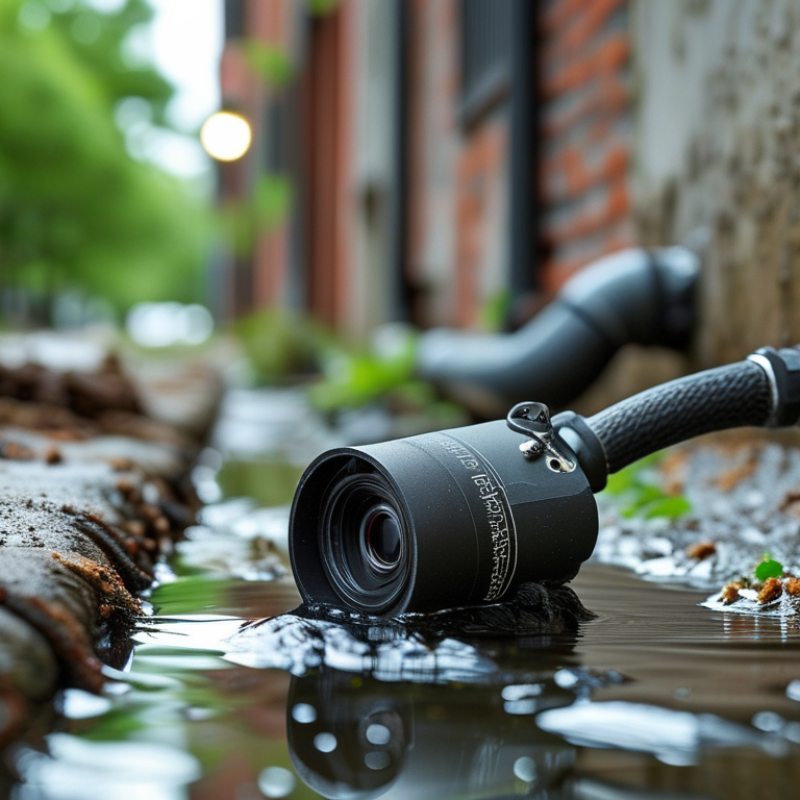
How to Choose Sewer Cameras for Global Buyers in 2026

Choosing Sewer Cameras for global buyers in 2026 requires more than comparing screen size and cable length. Municipal networks are aging, expanding, and increasingly difficult to access. The U.S. Environmental Protection Agency’s 2022 Clean Watersheds Needs Survey estimated $630.1 billion in wastewater infrastructure needs over the next 20 years. That figure is a useful benchmark, not a complete global picture. Climate, pipe materials, maintenance budgets, and local construction practices vary widely.

Field conditions should guide the purchase. A narrow residential line may need a compact push camera with a self-leveling lens. A large municipal conduit may require a crawler, powerful lighting, and a long-range reel. Check camera diameter, cable stiffness, waterproofing, sonde frequency, recording quality, and battery performance. A clear image matters more than a decorative monitor. It should reveal root intrusion, displaced joints, cracks, grease, and standing water under poor lighting.

Standards also deserve attention. NASSCO’s Pipeline Assessment Certification Program supports consistent defect descriptions and inspection reporting. Buyers should confirm whether suppliers provide compatible software, exportable reports, calibration records, and operator training. Local service availability can matter more than a low purchase price.

No camera fits every pipe.

Market forecasts often use different definitions, so their growth figures may not be directly comparable. That is an easy detail to miss. This guide therefore focuses on measurable performance, total ownership cost, and practical field evidence. Request sample footage from similar pipes, test the controls with gloves, and inspect the warranty terms carefully. The best choice is not always the most advanced model. It is the system your team can operate reliably, maintain affordably, and trust when the screen shows something unexpected.

How to Choose Sewer Cameras for Global Buyers in 2026

Define Inspection Objectives Using EN 13508-2 and NASSCO PACP Codes

How to Choose Sewer Cameras for Global Buyers in 2026

Camera selection should begin with the inspection objective, not the resolution label. EN 13508-2 defines structured observations for pipe condition, including defects, locations, and severity. NASSCO PACP codes support consistent assessments of structural, operation, and maintenance problems. These systems demand different evidence. A small push camera may locate roots through a 100-millimeter lateral. A crawler with pan-and-tilt control is more suitable for long municipal lines. Need measurements too? Add a distance counter, inclinometer, and sonde. The pipe may look clean while infiltration enters behind a joint.

The U.S. Environmental Protection Agency’s 2022 Clean Watersheds Needs Survey estimated 630.1 billion dollars in wastewater infrastructure needs over the next 20 years. That figure makes repeatable inspection data commercially important, not decorative. Choose cameras that record clear images, stable timestamps, pipe diameter, chainage, and lighting conditions. Confirm whether software exports EN 13508-2 or PACP-compatible reports. This is often missed. A system that produces attractive video but weak coding can delay rehabilitation decisions. Field teams should test focus, traction, cable handling, and image quality in muddy water before purchase. Standards improve comparability, but operators still make judgment calls. I would leave room for those judgments, while recording why a defect received its code.

Match Camera Head Diameter to Pipe Sizes from 50 mm to 2000 mm

Choosing a sewer camera starts with the camera head diameter, not the screen size.

For 50–100 mm pipes, a compact 20–25 mm head can pass bends with less risk of obstruction. Pipes from 100–300 mm often suit a 30–40 mm head. Always check the actual head length and lens housing.

For 300–600 mm lines, a 40–60 mm head can provide stronger lighting and clearer images. From 600–1,200 mm, a crawler camera with a 60–100 mm head usually offers better stability. Large pipes from 1,200–2,000 mm need a crawler platform, powerful illumination, and often pan-and-tilt movement.

A larger head improves visibility, but it may reduce access around offsets, sediment, or damaged joints. Bigger is not always better.

Field conditions can change the choice. I have seen a camera fit the pipe but struggle because the push rod was too flexible. A neat size chart can mislead. Measure the smallest opening, not only the nominal pipe diameter. Consider bends, deposits, water depth, and access chambers.

For global purchasing, request measured head diameter, minimum bend radius, cable length, lighting output, and waterproofing details. Confirm test reports and operating temperatures before ordering. Specifications sometimes look complete. They are not always complete.

Compare 1080p and 4K Imaging, LED Output, and Pan-Tilt Coverage

How to Choose Sewer Cameras for Global Buyers in 2026

For sewer inspections, 1080p often provides enough detail for cracks, roots, and joint gaps. It also creates smaller files and requires less storage. 4K imaging shows finer defects, especially in wide pipes or distant views. However, resolution alone does not guarantee better inspection results. A dirty lens, unstable cable, or weak monitor can reduce visible detail. The screen matters too. I have seen operators overvalue 4K while ignoring lighting and camera movement.

LED output should match the pipe diameter and surface condition. Bright LEDs help reveal wet concrete, dark deposits, and uneven walls. Excessive brightness can create glare on standing water. Adjustable output is more useful than maximum output. Test the camera in a dark pipe before purchase. Short field trials expose problems quickly. Color accuracy also matters when distinguishing rust, soil, and biological growth.

Pan-tilt coverage improves control near bends, connections, and lateral openings. A fixed camera may miss the upper pipe wall or a side branch. A pan-tilt head can inspect these areas without moving the vehicle repeatedly. Check its rotation range, response speed, and image stability during movement. Global buyers should also examine cable length, voltage compatibility, language options, and local technical support. These details are less exciting, but they affect daily reliability. One imperfect assumption remains: more features do not always mean faster inspections. Operators still need training and a repeatable viewing method.

How to Choose Sewer Cameras for Global Buyers in 2026 - Compare 1080p and 4K Imaging, LED Output, and Pan-Tilt Coverage
Evaluation Dimension 1080p Sewer Camera 4K Sewer Camera Buyer Guidance for Global Projects
Native Image Resolution 1,920 × 1,080 pixels; approximately 2.07 million pixels per frame. 3,840 × 2,160 pixels; approximately 8.29 million pixels per frame. 4K provides four times as many pixels as 1080p, which can help reveal small cracks, joints, roots, and surface defects when the lens, lighting, and focus are adequate.
Image Detail at Normal Inspection Distance Suitable for routine condition surveys, blockage checks, maintenance records, and general pipe assessment. Better suited to detailed defect classification, larger-diameter pipes, evidence capture, and digital cropping during reporting. Choose 4K when inspection evidence may be reviewed on large displays or cropped later. Resolution alone cannot compensate for dirty lenses, motion blur, poor focus, or insufficient light.
Frame Rate and Motion Commonly available at 25 or 30 frames per second, depending on the recording system and regional video settings. Often available at 25 or 30 frames per second, but some systems reduce frame rate at maximum resolution. Confirm the actual recording frame rate at the selected resolution. A stable 25–30 fps is generally preferable for smooth cable movement and defect review.
Storage Demand Lower storage and network bandwidth requirements; easier to archive and transfer in areas with limited connectivity. Approximately four times the uncompressed pixel data of 1080p; actual file size depends on codec, bitrate, frame rate, and recording format. For 4K, verify storage capacity, export time, backup policy, and compatibility with the inspection-reporting software. H.265 can reduce file size, but playback support should be checked.
Low-Light Performance Can produce a clear inspection image with moderate illumination because fewer pixels are being recorded. Can show more detail, but the additional detail is useful only when illumination, sensor sensitivity, focus, and image processing are well matched. Request sample footage recorded inside a dark, wet pipe rather than relying only on a resolution label or a daylight demonstration.
LED Output Measurement Evaluate actual brightness at the working distance; LED count alone is not a reliable performance indicator. Use the same measurement approach as for 1080p, but prioritize even illumination across the viewing area to support high-resolution detail. Ask whether the supplier specifies lumens, lux at a stated distance, beam angle, dimming range, and color temperature. A measured lux value at the pipe wall is more useful than the number of LEDs.
LED Adjustment Prefer continuously adjustable or multi-level LED control to prevent glare, reflection, and washed-out wet surfaces. Prefer independent or finely adjustable LED control because excessive brightness can reduce visible texture and create reflective hotspots. Useful controls include manual dimming, automatic exposure, adjustable gain, and a lockable brightness setting for repeatable surveys.
Camera Head Movement Available as fixed-view or pan-tilt configurations. Fixed-view heads are usually simpler and less costly. Most valuable when paired with a pan-tilt head, optical zoom, or high-quality digital zoom for close inspection of defects. For routine line inspections, a fixed camera may be adequate. For asset assessment and connection surveys, pan-tilt capability generally provides greater diagnostic value.
Pan Coverage Common pan-tilt systems may provide continuous 360° rotation, while some designs offer a limited pan range. Common pan-tilt systems may also provide continuous 360° rotation; verify whether the specification means unlimited rotation or a limited angular range. Ask for the exact pan range, rotation speed, control method, and whether the camera can maintain orientation during continuous rotation.
Tilt Coverage Typical pan-tilt designs provide approximately 180° tilt coverage, but the usable range depends on the camera housing and cable entry design. Typically similar to 1080p because tilt coverage is a mechanical feature rather than a resolution feature. Confirm the actual upward and downward tilt angles, the minimum pipe diameter for movement, and whether the head can inspect lateral connections without repositioning the crawler.
Pipe-Diameter Suitability Often suitable for small- to medium-diameter service lines when matched with the correct camera head and centering equipment. Often preferred for medium- to large-diameter pipes where the additional pixels can be used across a wider field of view. Do not select by resolution alone. Match the camera head diameter, lens angle, centering wheels, cable length, and crawler size to the target pipe range.
Lens and Field of View Wide-angle lenses can cover more pipe circumference but may make small defects appear smaller near the image edges. High resolution supports cropping, but a very wide lens can still reduce effective detail on distant or edge-of-frame defects. Compare horizontal and diagonal field of view, minimum focus distance, optical distortion, and whether the lens is replaceable or protected by a sapphire or hardened window.
Water and Dust Protection Camera heads for sewer work should have a clearly stated IP rating; IP68 is commonly specified for equipment designed for temporary or continuous immersion, subject to the manufacturer's test conditions. Requires the same environmental protection as 1080p. Higher resolution does not improve sealing or chemical resistance. Check the test depth, test duration, connector sealing, pressure rating, and compatibility with wastewater, cleaning chemicals, and temperature conditions in the target market.
Cable and Reel Selection Available with various push-rod lengths and stiffness levels; shorter systems are easier to transport for building and service-line work. May require higher data-handling capacity and a compatible reel, controller, and recording unit. Specify cable length, diameter, minimum bend radius, locating sonde frequency, counter accuracy, and whether metric or imperial distance units are supported.
Video and Reporting Compatibility Generally easier to play, edit, transfer, and embed in standard inspection reports. Requires confirmation of codec, container format, bitrate, subtitles, time stamps, defect tagging, and export compatibility. For international operations, select systems that support common file formats, selectable date and time formats, multilingual overlays, and metric/imperial measurements.
Power and Regional Deployment Verify input voltage, frequency, battery chemistry, charger approvals, and operating time for the destination country. May have higher processing and display power requirements, depending on the controller and monitor. For global procurement, confirm the permitted mains input range, plug options, battery transport documentation, replacement battery availability, and local service support.
Best-Fit Application Routine inspection and lower data overhead Detailed evidence and future-proof archiving Choose 1080p for cost-sensitive, high-volume work where standard reporting is sufficient. Choose 4K when defect detail, cropping, long-term records, or large-pipe inspection quality justifies the added system and storage requirements.
Technical purchasing note: Published specifications are not always measured under identical conditions. Before placing an international order, request original sample footage, a complete illumination specification, verified pan-tilt angles, environmental test details, recording-format information, and a compatibility list for the intended reporting workflow.

Select Push Rods, Crawlers, and Cable Lengths for Network Scale

How to Choose Sewer Cameras for Global Buyers in 2026

Network scale should decide the camera system, not the sales brochure. Small buildings and short laterals usually suit push-rod cameras with 30–60 metre cables. Municipal networks need crawlers, stronger reels, and longer cables, often 120–300 metres. The right length depends on access points, bends, pipe diameter, and cleaning frequency. A cable that is too long becomes heavy and difficult to control. A short cable leaves blind sections.

The U.S. EPA’s 2022 Clean Watersheds Needs Survey estimated $630.1 billion in wastewater infrastructure needs over 20 years. ASCE’s 2021 Infrastructure Report Card rated U.S. wastewater infrastructure D+. These figures show why scalable inspection matters. For regional contractors, a modular push rod may offer better mobility. For large utilities, crawler systems can provide longer reach, stronger traction, and clearer distance records. However, crawler performance can fall sharply in standing water, heavy roots, or irregular pipe joints. I have seen specifications look impressive, yet field access exposed their limits.

Tips: Match cable length to the longest practical inspection run, not the entire network map. Check camera head diameter, bend radius, meter accuracy, and waterproof ratings. Keep spare centering skids and cable guides available. Test the system in a real manhole before purchase. A simple field trial often reveals more than a polished specification sheet.

Verify IP68 Protection Under IEC 60529 and Exportable Inspection Data

When buying sewer cameras in 2026, treat IP68 as a test claim, not a marketing shortcut. IEC 60529 defines protection against dust and continuous water immersion. It does not set one universal depth or duration for every product. Ask for the actual test conditions, including immersion depth, test time, cable entry design, and connector status. A camera may pass in a laboratory and still fail after repeated impacts. I still distrust a perfect-looking screen.

Infrastructure demand supports careful purchasing. The U.S. Environmental Protection Agency’s 2022 Clean Watersheds Needs Survey identified about 630.1 billion dollars in documented water infrastructure needs. For global buyers, reliable inspection records can protect expensive rehabilitation decisions. Choose systems that export original video, snapshots, timestamp, distance, location, and operator notes. Open formats such as MP4, JPEG, CSV, or PDF usually travel better between contractors and public agencies. Proprietary files can create avoidable access problems years later.

Tips: Request an IEC 60529 test report before shipment. Confirm whether IP68 covers the camera head, reel, control unit, and connectors. Test a sample unit in water before accepting a large order. Record serial numbers and calibration dates. Use NASSCO PACP-style observations when your project requires consistent defect coding. Export one short inspection file and reopen it on another computer. Small checks reveal large weaknesses.

How to Choose Sewer Cameras for Global Buyers in 2026

Verify IP68 Protection Under IEC 60529 and Exportable Inspection Data

Reading the chart: The second characteristic numeral in IEC 60529 identifies the level of protection against water ingress. IPX5 covers water jets, IPX6 covers powerful water jets, IPX7 covers temporary immersion up to 1 metre for 30 minutes, and IPX8 covers continuous immersion under conditions specified by the manufacturer. IPX8 therefore requires buyers to verify the declared immersion depth and duration in the test report rather than relying on the rating alone.

Export check: For cross-border inspections, request original video files together with timestamps, distance-counter data, inspection location, camera direction, file format, and a searchable inspection report. These records help preserve evidence during maintenance reviews, claims, and regulatory documentation.

Contact Us Today for a Free Quote

(800) 708-6036