
How to Choose the Right 430 Stainless Steel Strip?

Choosing the right 430 Stainless Steel Strip begins with understanding its intended service, not simply comparing prices. This ferritic stainless steel is magnetic and commonly selected for appliance panels, automotive trim, kitchen equipment, and architectural components. Its chromium content supports useful corrosion resistance, while its lower nickel content can make it more economical than many austenitic grades. However, performance depends on thickness, surface finish, forming requirements, and the working environment.

Start with the details.

Specify the required width, thickness, coil weight, edge condition, and dimensional tolerance. A bright annealed finish may suit decorative trim, while a duller finish can be more practical for formed parts. Ask whether the strip requires slit edges, rounded edges, or protection against handling scratches. Formability also deserves careful attention. Grade 430 can perform well in moderate forming operations, but severe drawing may expose limitations. Testing a small sample before full production is sensible.

Reliable purchasing involves more than a mill certificate. Confirm the applicable specification, such as ASTM A240 where appropriate, and review chemical, mechanical, and surface requirements with the supplier. Request test reports, inspection records, and clear packaging details. Coil shape matters too; telescoping or uneven edges can disrupt high-speed feeding. In practice, even experienced buyers sometimes overlook this point. That mistake can be expensive.

A dependable supplier should explain trade-offs honestly, including corrosion limits, weldability concerns, and temperature exposure. Compare verified quality, consistency, technical support, and delivery control. The cheapest strip is not always the safest choice. Careful selection connects the material to its real operating conditions. That is where value becomes measurable.
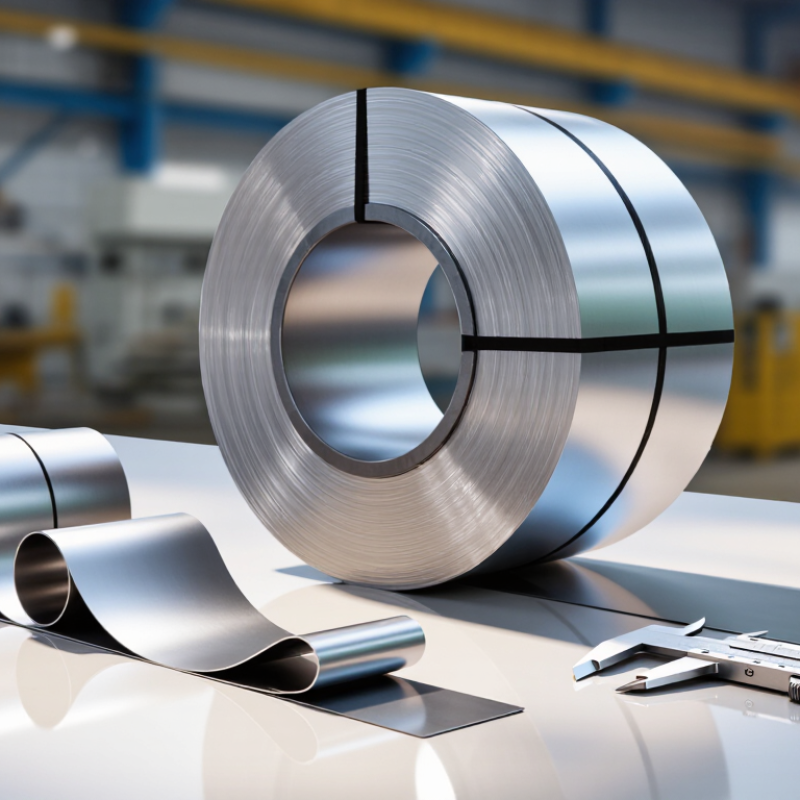
How to Choose the Right 430 Stainless Steel Strip?

Define the Properties and Typical Uses of 430 Stainless Steel Strip

430 stainless steel strip is a ferritic stainless steel with useful chromium content and a magnetic structure. It offers good resistance to atmospheric moisture, mild chemicals, and oxidation at elevated temperatures. Its surface can be polished to a clean, reflective finish. However, it does not match 304 stainless steel in severe chloride environments. Salt spray may cause staining or pitting, especially near edges and formed areas.

The strip is often used for appliance panels, automotive trim, kitchen equipment, decorative interiors, and heat-resistant components. It also suits covers, brackets, and shallow-formed parts where moderate corrosion resistance is acceptable. I have found thickness, temper, and surface finish more important than many buyers expect. A bright finish can reveal scratches quickly. A softer temper forms more easily, while a harder temper may improve spring action but increase cracking risk.

Welding and deep forming require caution. 430 can become less ductile in certain heat-affected zones, so process trials are sensible before production. Check the required standard, dimensional tolerance, and mechanical data from the material supplier. Do not choose it only because the price looks attractive. For outdoor coastal use, the decision may be weak. For dry indoor equipment, it can be a practical option. The “right” strip still depends on forming depth, exposure, cleaning chemicals, and the appearance expected after service. Testing a small sample may prevent an expensive mistake.

Identify the Required Grade, Thickness, Width, and Surface Finish

How to Choose the Right 430 Stainless Steel Strip?

Choosing 430 stainless steel strip starts with confirming the required grade. Grade 430 is a ferritic stainless steel with magnetic properties and useful resistance to atmospheric corrosion. It suits appliance panels, decorative trims, kitchen equipment, and light industrial parts. However, it is not an automatic substitute for every stainless grade. Check the drawing, service temperature, moisture exposure, and forming requirements before ordering. Request a material certificate that confirms chemical composition and mechanical properties under the applicable standard.

Thickness controls strength, bending behavior, and production stability. A thin strip may reduce weight, but it can wrinkle during stamping or handling. A thicker strip may improve rigidity, yet it can require greater forming force. Measure twice. Do not guess. Width should match the finished component, including trimming allowance and edge waste. Tight width tolerances matter when the strip enters a progressive die or narrow roll-forming line. Confirm both nominal dimensions and permitted tolerances with the supplier.

Surface finish affects appearance, friction, cleaning, and sometimes forming performance. A bright finish may suit visible panels, while a brushed finish can hide minor scratches. Matte surfaces may offer a more uniform appearance after handling. Inspect sample coils under the actual lighting used in production. This detail is often missed. Also check edge condition, flatness, and protective packaging. A clean surface can still arrive with dents or edge damage. The right specification is not merely 430 stainless steel; it is the correct grade, thickness, width, and finish for the real process.

Evaluate Forming, Cutting, Welding, and Performance Requirements

How to Choose the Right 430 Stainless Steel Strip?

Evaluate Forming, Cutting, Welding, and Performance Requirements

Choosing 430 stainless steel strip starts with the finished part, not only its thickness. This ferritic grade offers magnetic behavior, useful corrosion resistance, and a clean surface for indoor applications. However, it forms less easily than many austenitic grades. Tight bends can create edge cracking, especially across the rolling direction. Check the bend radius, strip temper, and surface condition before ordering. A small trial bend often reveals more than a datasheet.

Cutting quality also affects performance. Slitting can leave burrs that disturb assembly or create sharp handling edges. Laser cutting may produce a heat-affected edge, while mechanical shearing can cause slight distortion in thin strip. Welding requires extra care. Excessive heat can enlarge grains and reduce toughness near the joint. Use controlled heat input, suitable filler selection, and practical joint design. I have seen a visually smooth weld fail after repeated flexing. Appearance alone is not proof of reliability.

Tips: Ask for test samples. Measure burr height after cutting. Record the actual forming radius. Test welded parts under real service conditions. Do not assume a polished surface guarantees corrosion performance. If the strip will face moisture, salts, or outdoor exposure, review the environment carefully. A specification may look complete, yet one missing detail can change the result.

How to Choose the Right 430 Stainless Steel Strip?

Typical ASTM A240/A240M minimum and maximum reference values for annealed 430 stainless steel sheet and strip are shown above. The moderate elongation supports simple forming operations, while the ferritic structure generally provides good cutting performance but limited weldability in critical sections because heat can promote grain growth and reduced toughness. Its chromium content provides useful atmospheric corrosion resistance, while its thermal conductivity is higher than that of many austenitic stainless steels.

Compare Suppliers, Quality Standards, Pricing, and Delivery Options

Choosing the right 430 stainless steel strip requires more than comparing the lowest quotation. In my experience, supplier reliability often affects production costs more than the initial price. Ask for a mill test certificate, heat number, and clear traceability records. Confirm compliance with standards such as ASTM A240 or EN 10088. Check thickness tolerance, width accuracy, surface finish, hardness, and magnetic properties. A sample coil can reveal edge cracks, scratches, or uneven slitting before a large order.

Pricing should include more than the material rate. Compare minimum order quantities, slitting fees, protective packaging, taxes, and freight charges. A cheaper offer may become expensive after rework or delayed production. Request a detailed quotation with payment terms and validity dates. I would also compare at least three suppliers. However, I sometimes focus too heavily on price, which is a mistake when consistent quality matters more.

Tips: Ask how the supplier handles nonconforming material. Confirm available stock before placing an urgent order. Request realistic production and shipping dates in writing. Check whether the supplier can provide coil photos before dispatch. Delivery performance deserves equal attention. A supplier with stable inventory and backup logistics can protect your schedule during sudden demand. Still, no delivery promise is perfect, so allow a small buffer for inspection and transport delays.

Verify Specifications Through Sampling and Quality Inspection

Choosing 430 stainless steel strip starts with a clear specification, not a low quotation. Confirm thickness, width, temper, surface finish, edge condition, and coil weight. Also define the intended forming process. A strip for light stamping may need different mechanical properties from one used in decorative panels.

Sampling reveals what documents can hide. Request samples from several coils, not only one convenient piece. Mark each sample with its heat number and production date. Measure thickness at the center and both edges with a calibrated micrometer. Check width, flatness, burrs, scratches, stains, and edge cracks under bright, angled light. Small defects often become obvious after slitting.

Test chemistry and mechanical performance through a qualified laboratory. The report should confirm chromium content, carbon level, yield strength, tensile strength, elongation, and hardness. A simple bend test can expose unexpected brittleness, but it should follow an agreed method. Use a magnet only as a quick identity check. It is not proof of complete quality. Compare results with the purchase specification and material certificate. Keep photographs and inspection records for every batch.

In practice, sampling plans are often too narrow. One sample may create false confidence. I have seen attractive surfaces fail during forming because the temper was inconsistent. Recheck critical measurements after delivery. If results conflict, pause production and investigate traceability before accepting the coil. That extra step may feel slow. It is usually cheaper than repairing finished parts.

Contact Us Today for a Free Quote

(800) 708-6036