How to Use CNC Laser Cutting for Precision Manufacturing?
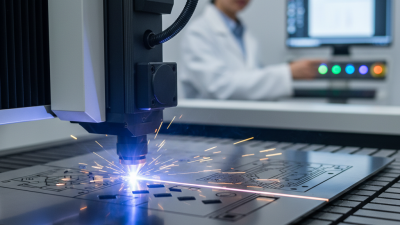
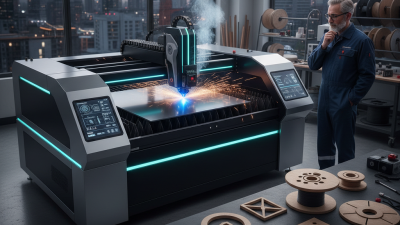
CNC laser technology has revolutionized precision manufacturing. According to a report by the International Federation of Robotics, the global market for CNC laser cutting is expected to reach $3.3 billion by 2025. This growth is driven by increased demand for efficiency in production. Businesses are turning to CNC lasers for their ability to cut materials with extreme accuracy and speed.
The process involves using focused laser beams to cut through metal, plastic, and wood. Precision is critical, especially in industries like aerospace and automotive. A small error could lead to significant consequences. While the technology offers many advantages, not all manufacturers are fully adopting it. Challenges such as high initial costs and the need for skilled operators can hinder its integration.
Despite these hurdles, the benefits are evident. CNC lasers create cleaner edges and reduce waste compared to traditional methods. However, understanding and mastering this technology requires ongoing training and investment. Being aware of its limitations is also crucial. Balancing costs with the advantages is part of the journey in adopting CNC laser cutting in precision manufacturing.
Understanding CNC Laser Cutting Technology in Precision Manufacturing
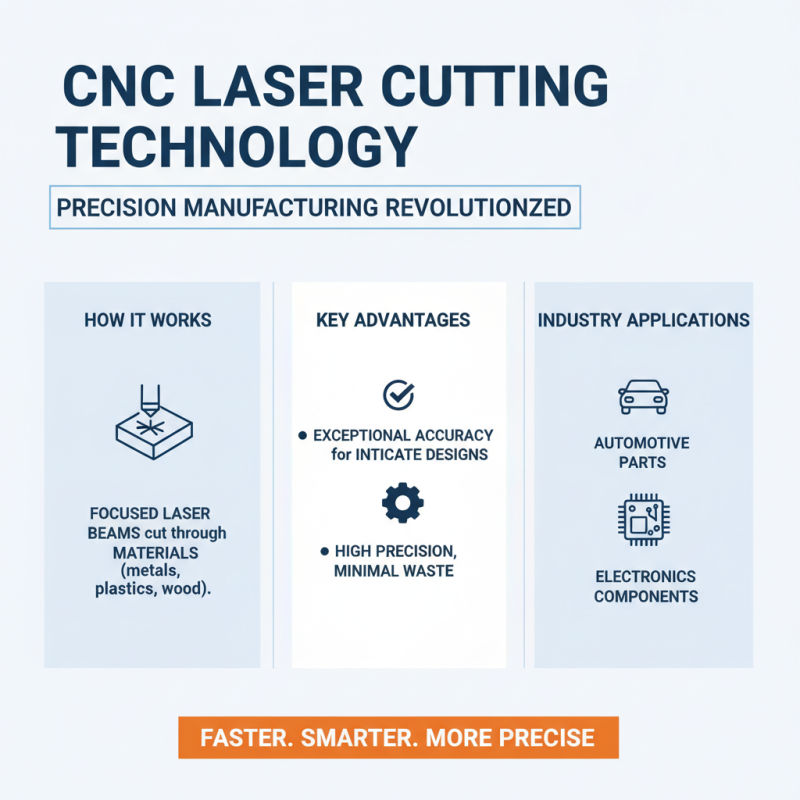
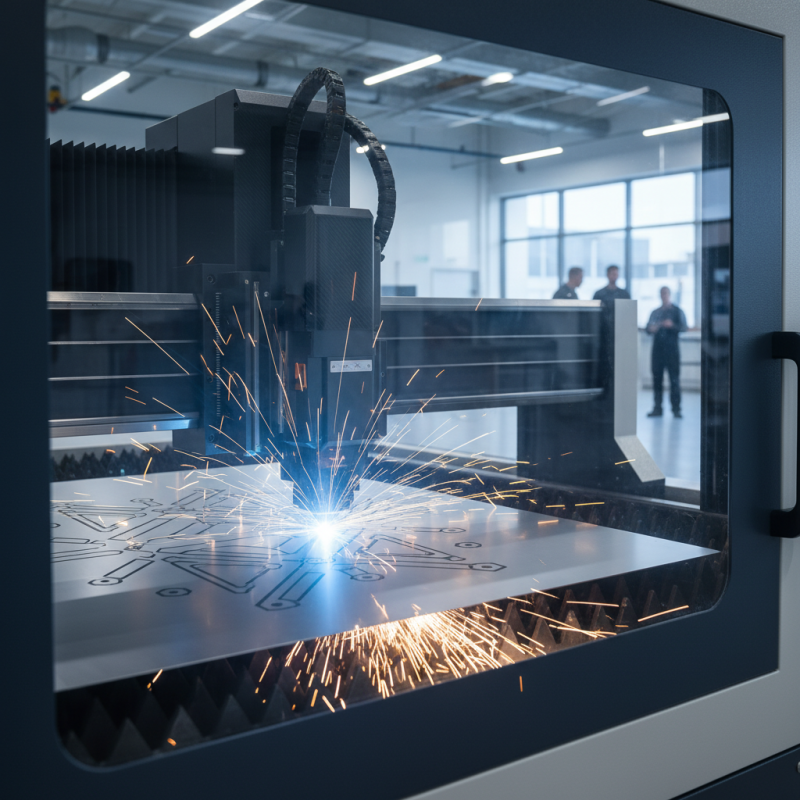
CNC laser cutting technology is revolutionizing precision manufacturing. This technique employs focused laser beams to cut through various materials. It offers exceptional accuracy, making it ideal for intricate designs. Many industries utilize this process, especially in automotives and electronics.
Understanding CNC laser cutting involves grasping its core principles. The computer-controlled machines guide the laser, adhering to precise specifications. However, operators must calibrate these machines carefully. A slight miscalibration can lead to errors, introducing flaws into the final product. Achieving perfection requires not just technology, but human oversight and continuous learning.
While CNC laser cutting can create complex shapes, it has limitations. It struggles with reflectivity in certain metals, leading to uneven cuts. Factors like material thickness and laser power also play a critical role. Manufacturers must frequently assess their methods to ensure consistent quality. This technology evolves, but it demands thoughtful execution to harness its full potential.
Key Benefits of CNC Laser Cutting for High-Precision Applications
CNC laser cutting has transformed precision manufacturing. This technology delivers exceptional accuracy. It uses focused laser beams to cut various materials. Metals, plastics, and wood can all be shaped precisely. This process allows for intricate designs, often impossible with traditional methods.
One key benefit of CNC laser cutting is the minimal material wastage. The precision of the cut means more usable pieces. This efficiency is financially beneficial for manufacturers. However, it requires proper programming and material considerations. An incorrect setup can lead to errors, wasting time and resources.
Moreover, the technology enables rapid prototyping. Manufacturers can quickly produce samples for testing. This speed fosters innovation, but it also poses challenges. Rapid changes may lead to inconsistencies in production quality. Balancing speed and precision remains critical. Each project demands careful attention to detail. Mistakes can have significant costs, both in materials and time.
Materials Suitable for CNC Laser Cutting: Versatility in Manufacturing
CNC laser cutting is a gameChanger in precision manufacturing. Its ability to work with various materials opens up endless possibilities. From metals to plastics, the versatility is impressive. Different materials respond uniquely to the laser, affecting cutting speed and quality. For example, thin sheets of aluminum cut effortlessly, while thicker materials may require multiple passes.
When considering materials for CNC laser cutting, remember that not every type is ideal. Acrylics and wood are popular choices due to their ease of cutting. However, some composite materials might not yield precise results. Always test a small sample before proceeding with larger batches.
Tips: Use proper settings for each material. Adjust the laser power and speed according to thickness. Monitor the cut quality closely. Keep in mind that even small errors can lead to significant production issues. Reflect on the outcomes and learn with each project. Adjusting processes based on feedback will enhance overall efficiency.
Materials Suitable for CNC Laser Cutting: Versatility in Manufacturing
Best Practices for Setup and Operation of CNC Laser Cutting Machines
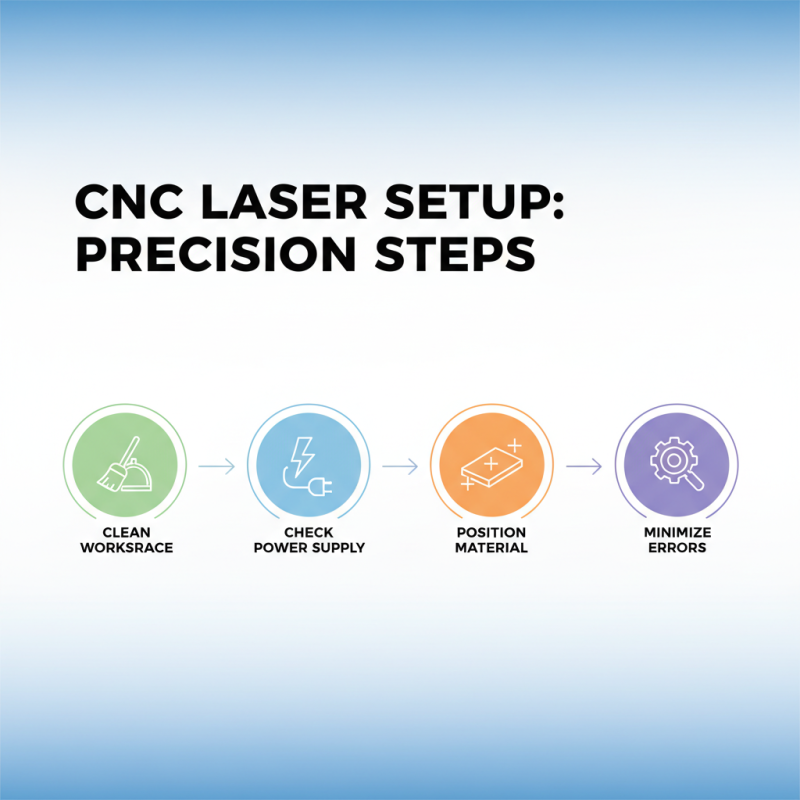
Setting up a CNC laser cutting machine requires meticulous attention to detail. Ensure the workspace is clean and organized. Dust and debris can affect precision. Check the power supply regularly to avoid interruptions during operation. Position the material correctly to minimize waste. This may seem simple, but small misalignments can lead to significant errors.
During operation, monitor the cutting process closely. Sometimes, the machine may behave unexpectedly. If you notice irregular cuts, pause and investigate. Adjust settings like speed and power if necessary. Observing the process allows for immediate corrections, which can save time and materials. Keep safety equipment accessible. Accidents can happen, even to experienced operators.
Feedback from operators can reveal areas for improvement. Engage the team in discussions about challenges faced. Not all setups will function perfectly the first time. Documentation of these experiences can enhance future practices. By embracing a mindset of continuous improvement, the precision of CNC laser cutting can reach new heights.
Future Trends in CNC Laser Cutting: Innovations and Industry Impact
The CNC laser cutting industry is evolving rapidly. Innovations are driving precision manufacturing to new heights. According to a recent report by MarketsandMarkets, the global CNC laser market is projected to reach $5.45 billion by 2025. This growth reflects an increasing demand for accuracy in various sectors, from automotive to aerospace.
Future trends indicate a shift towards automation and smart technologies. Integrating AI with CNC laser systems can enhance efficiency and reduce errors. Real-time monitoring solutions help manufacturers optimize their processes. A study by Grand View Research highlighted that the adoption of smart technologies can improve productivity by up to 30%. However, the need for operator training remains crucial, as not all employees understand these advanced systems.
**Tips:** Ensure your team receives regular training on new technologies. Invest in user-friendly interfaces to bridge the knowledge gap. Regularly assess your equipment to identify potential improvements. Addressing these points can prevent costly mistakes and enhance productivity. With the right strategies, companies can adapt and thrive in this evolving landscape, ultimately achieving greater precision in their manufacturing processes.
How to Use CNC Laser Cutting for Precision Manufacturing
| Dimension |
Description |
Future Trends |
| Precision Level |
Laser cutting can achieve extremely fine tolerances, often within ±0.1 mm. |
Increased automation and advancements in beam quality are enhancing precision. |
| Material Versatility |
Suitable for a wide range of materials, including metals, plastics, and composites. |
Emerging materials, such as high-temperature alloys, are being utilized. |
| Speed of Production |
High-speed processing allows for rapid prototyping and manufacturing. |
Improvements in laser technology are reducing cutting time significantly. |
| Cost Efficiency |
Laser cutting reduces waste and minimizes material costs. |
Investments in energy-efficient technology are lowering operational costs. |
| Software Integration |
CNC systems can integrate with CAD/CAM for seamless design to manufacturing. |
Incorporation of AI and machine learning for design optimization is on the rise. |