What is a Laser Cutting Machine and How Does It Work?
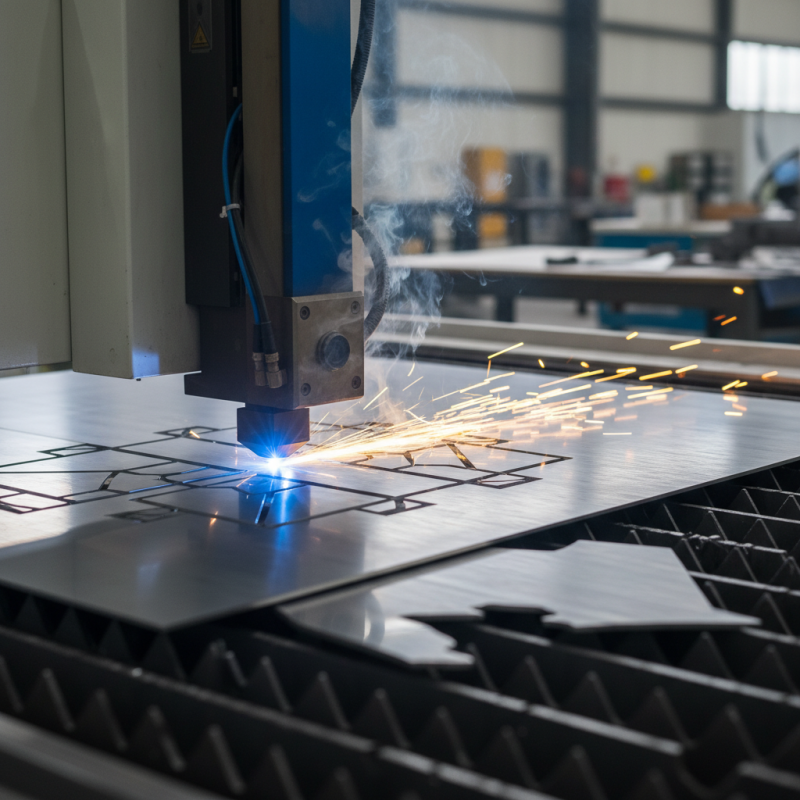
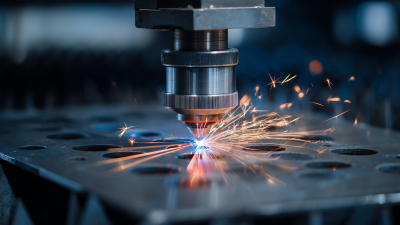
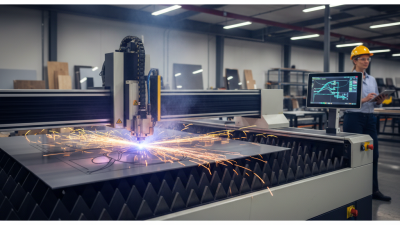
A laser cutting machine is a remarkable tool that has transformed manufacturing. It uses focused laser beams to cut through materials with exceptional precision. The process involves a laser generating intense heat, melting or vaporizing the material in its path. This technology can handle various materials, from metal to plastic.
These machines are popular in industries like automotive and aerospace. They offer high-speed cutting with minimal waste. However, they require skilled operators to maximize their efficiency. The setup can be complex, and mistakes can be costly. Understanding how a laser cutting machine works is essential for anyone in related fields.
While laser cutting machines are efficient, they also come with challenges. Maintenance is crucial for optimal performance. Constant advancements in technology mean operators must stay informed. This balance of precision and risk makes laser cutting an intriguing subject.
What is a Laser Cutting Machine?
A laser cutting machine is an innovative tool used to cut materials with precision. It employs a high-powered laser beam, which generates intense heat. This heat melts or vaporizes the material, creating clean and precise cuts. Commonly used materials include metal, wood, plastic, and fabric. Each material requires specific settings to achieve optimal results, which can complicate the setup process.
Understanding how a laser cutting machine works involves recognizing its components. The laser source generates the beam, while lenses and mirrors direct it toward the workpiece. Operators must carefully adjust the machine settings. Inadequate settings can lead to uneven cuts or excessive burning. Proper alignment is also crucial; misalignment can result in waste or rework.
Technicians often spend time troubleshooting issues, even with advanced machines. There may be instances where the laser intensity is too low or the speed too fast. These factors can compromise the quality of the cut. Overall, laser cutting machines are powerful, requiring a blend of technical knowledge and hands-on experience for optimal performance.
The History and Evolution of Laser Cutting Technology
Laser cutting technology has come a long way since its inception. The journey began in the 1960s with the invention of the first laser. Researchers quickly recognized the potential for industrial applications. By the 1970s, the technology started being used for metal cutting, transforming manufacturing processes. Early machines were bulky and expensive, limiting their use.
As technology evolved, laser cutters became more accessible. Advances in laser technology improved precision and speed. The introduction of computer numerical control (CNC) allowed for automated cutting designs. This led to greater creativity in design and fabrication. Many industries began exploring diverse materials, not just metals. Plastics and textiles also became common targets for laser cutting.
Despite these advances, challenges remain. Some users struggle with the initial learning curve. Ensuring safety around high-powered lasers is critical. The environmental impact of materials used can be overlooked. Manufacturers must balance efficiency with responsibility. As laser cutting technology continues to advance, reflection on these issues is essential for sustainable growth.
How Laser Cutting Machines Work: The Physics Behind the Process
Laser cutting machines are fascinating tools that utilize focused laser beams to slice through various materials. They rely on the principles of optics and thermodynamics to achieve precise cutting. The laser generates an intense beam of light that is concentrated onto a small area of the workpiece. This intense heat causes the material to melt or vaporize, creating a clean cut.
To understand the physics behind laser cutting, it helps to know about absorption and reflectivity. Different materials absorb laser light differently. Metals can reflect most of the light, while plastics absorb it well. This leads to a variation in cutting speeds and quality. The setup requires careful calibration, as even minor misalignments can produce uneven cuts. Some users may struggle with this, leading to wasted materials and time.
The cutting process generates significant heat, which can warp certain materials. Users must strike a balance between speed and precision. Too fast, and the cut may be poor; too slow, and excessive heat can ruin the piece. This constant adjustment demands attention and experience. Every cut is a lesson in the physics of light and materials. Perfecting this process takes time and patience.
What is a Laser Cutting Machine and How Does It Work?
| Feature |
Description |
| Laser Type |
CO2, Fiber, YAG |
| Cutting Thickness |
Up to 25 mm depending on material |
| Materials Cuttable |
Metal, Wood, Acrylic, Plastic, Leather |
| Speed |
Up to 1000 mm/s |
| Precision |
0.01 mm precision |
| Cooling System |
Water-cooled system |
| Applications |
Manufacturing, Arts, Prototyping, Sign Making |
| Safety Measures |
Protective eyewear, ventilation systems |
Types of Laser Cutting Machines and Their Applications
Laser cutting machines have gained popularity in various industries due to their precision and versatility. Different types of laser cutting technologies are available, each tailored for specific applications.
CO2 lasers are commonly used for cutting non-metal materials such as wood and acrylic. According to industry reports, they account for approximately 30% of the laser cutting market. Their ability to produce intricate designs makes them ideal for the signage and craft industries.
Another type is fiber lasers, which are mainly employed for cutting metals. They are known for their efficiency and speed. Recent studies show that fiber lasers have a higher cutting speed compared to traditional methods, increasing productivity by up to 25%. They can handle thick materials like stainless steel and aluminum much more effectively. However, the initial investment for fiber laser cutting machines can be significant, posing a potential barrier for small businesses.
Finally, there are diode lasers, often used in lower-precision tasks. These machines are cost-effective and suitable for applications like engraving. While they lack the efficiency of fiber and CO2 lasers, they serve niche markets where lower costs are essential. Reflecting on these choices, businesses must assess their unique needs and budget constraints, ensuring they select the type of laser cutting technology that aligns with their operational goals.
Benefits and Limitations of Using Laser Cutting Technology
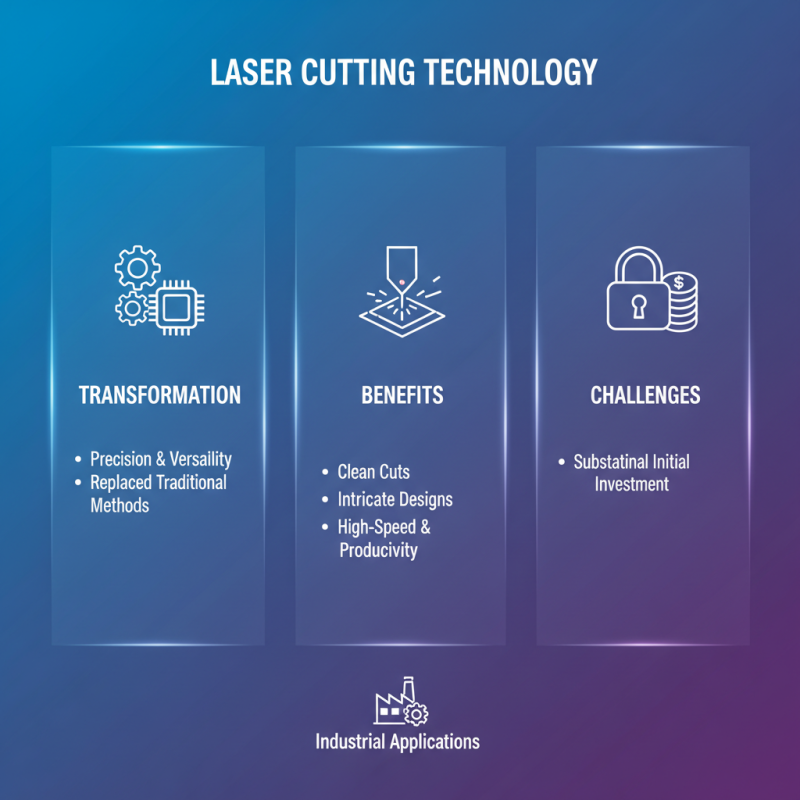
Laser cutting technology has transformed various industries. It offers precision and versatility unmatched by traditional cutting methods. The benefits of using laser cutting machines are significant. They provide clean cuts and intricate designs. They operate at high speeds, thus improving productivity. However, challenges exist as well. The initial investment for a laser cutting machine can be substantial.
One key advantage of laser cutting is its efficiency. It reduces material waste and lowers production costs over time. The ability to cut through various materials, including metals, plastics, and wood, makes it versatile. However, it's essential to consider the limitations. Thin materials may warp due to high heat. Additionally, thicker materials require more power and time.
**Tip:** When selecting materials, consider their thickness. Not all materials cut equally well with lasers.
Another limitation is the need for skilled operators. While technology simplifies processes, human oversight is crucial. Untrained personnel may cause errors, leading to waste and frustration. The learning curve can be steep, especially with complex shapes.
**Tip:** Invest in training for all operators. Their skills will directly impact the quality of your cutting work.
Embracing laser cutting technology requires careful thought. Weighing both benefits and limitations helps in making informed decisions.