
Top Bidet Toilet Suppliers for Global Buyers

Choosing a Bidet Toilet supplier is not only a price comparison. Global buyers must examine product quality, water efficiency, certifications, factory capacity, and after-sales support. A polished website proves very little. Factory records and customer references matter more.

Maya Chen, an independent sanitary-ware sourcing consultant with over fifteen years of procurement experience, says, “A reliable supplier makes every specification visible before the purchase order.” Her point is practical. Buyers should request clear details about seat materials, heating systems, spray controls, electrical safety, packaging, and replacement parts. They should also confirm whether the supplier can support different bathroom layouts and regional installation requirements.

Small details often expose larger risks. Does the remote control include clear instructions? Are spare filters available? Can the supplier provide stable production samples? These questions deserve written answers. Product testing should include water pressure, leakage, temperature stability, and daily cleaning performance. One sample is not enough.

Supplier comparisons can still be imperfect. Catalog claims may change, and factory audits cannot predict every shipment problem. That limitation deserves attention. However, disciplined verification reduces surprises. Experienced buyers can compare lead times, warranty terms, inspection procedures, and communication speed before selecting a partner.

This guide reviews leading Bidet Toilet suppliers for global buyers. It focuses on practical evidence, not impressive promises. The strongest companies combine engineering capability, consistent manufacturing, responsive service, and transparent documentation. In this market, trust is built gradually. One shipment at a time.
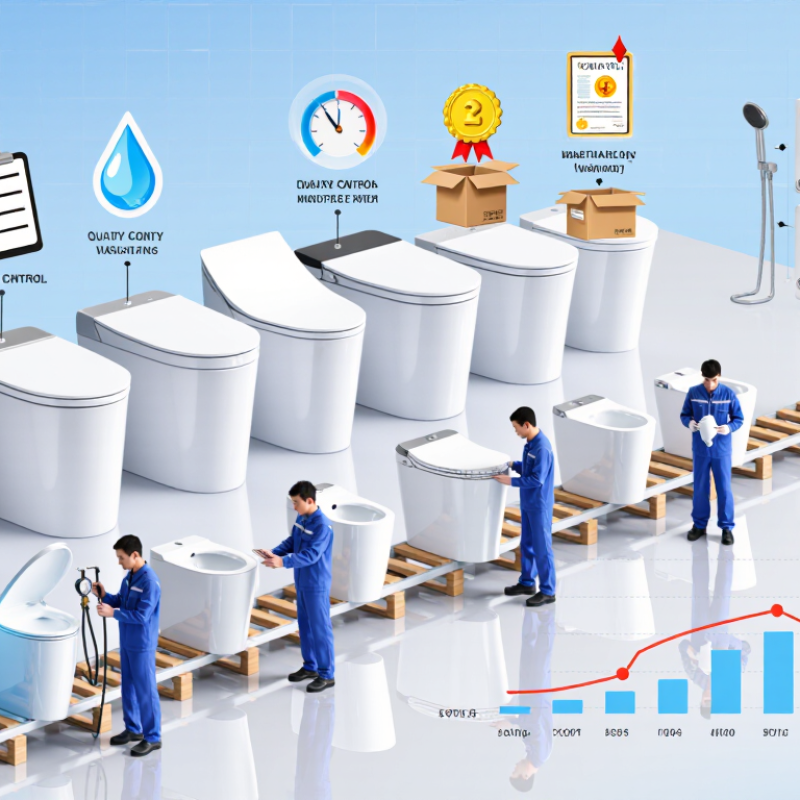
Top Bidet Toilet Suppliers for Global Buyers

What Defines a Reliable Bidet Toilet Supplier

A reliable bidet toilet supplier proves performance before promising scale. Experience matters on the factory floor: ask for production samples, water-pressure tests, wiring checks, and real installation records. A polished showroom is not enough.

The WHO/UNICEF Joint Monitoring Programme reported that 3.5 billion people lacked safely managed sanitation in 2022. This gap increases demand for hygienic, water-efficient bathroom systems. Grand View Research identifies hygiene functions, automated cleaning, and smart controls as major smart-toilet market drivers. A capable supplier should explain water consumption, heating time, nozzle materials, and cleaning cycles with measurable data. Request independent safety reports, an ISO 9001 certificate, and batch-level inspection records. Verify them.

Reliability also appears after delivery. Check whether the supplier keeps heating elements, valves, sensors, and remote controls available for several years. Clear warranty terms should state response times, replacement procedures, and exclusions. Packaging deserves attention too. A cracked ceramic bowl or damaged control panel can erase factory savings. Request a pilot order before negotiating large volumes.

No audit is perfect. A supplier may pass one factory visit and still miss small defects later. I would review defect rates monthly, not only during onboarding. Ask for corrective-action reports, not verbal assurances. The best partner welcomes difficult questions, shares limitations, and documents every change in materials or firmware. Availability matters. Fast replies matter more.

Key Product Types and Features for Global Buyers

Global buyers usually compare three bidet toilet types: integrated smart toilets, bidet seats, and handheld attachments. Integrated models combine the bowl, washing system, heated seat, dryer, deodorizer, and control panel. They suit new bathrooms but require more installation planning. Bidet seats are easier to retrofit on existing toilets and often offer adjustable water pressure, temperature, nozzle position, and seat heat. Handheld attachments cost less, yet they may provide fewer comfort features and need careful hose installation.

Practical sourcing experience shows that electrical compatibility matters as much as appearance. Buyers should check voltage, frequency, plug standards, water pressure, inlet size, and drainage requirements before placing orders. A reliable supplier should provide installation drawings, user instructions, spare-part information, and clear warranty terms. Useful safety features include leakage protection, child settings, self-cleaning nozzles, overflow control, and manual operation during power interruptions. Certification needs can vary by destination market, so documentation should be reviewed early.

Small details affect daily use. A soft-closing lid reduces bathroom noise, while a night light improves visibility without harsh lighting. Remote controls look convenient, but side buttons may be easier for older users. I have seen attractive models fail because replacement filters were unavailable. No feature list is perfect. Some air dryers also feel weak, especially in colder rooms. Buyers should request samples, test cleaning performance, inspect ceramic quality, and compare real power consumption instead of trusting catalog claims.

How to Evaluate Bidet Toilet Manufacturers and Exporters

Evaluating bidet toilet manufacturers requires more than comparing catalog prices. Check how long the factory has produced integrated bidet toilets. Ask for production photos, inspection records, and a live video tour. A serious supplier should explain water pressure limits, heating speed, nozzle materials, and seat durability in clear terms. Vague answers deserve caution.

Request a sample before placing a large order. Test the spray angle, drying performance, remote response, flushing strength, and noise level. Inspect the ceramic surface under bright light. Small defects often appear there. Confirm the sample matches mass production through approved drawings and written specifications. Independent testing can verify electrical safety, water resistance, and energy performance for the destination market.

Export capability matters just as much. Review packaging tests, spare-parts availability, warranty procedures, and response times. Ask whether the exporter handles customs documents, labeling, manuals, and container loading records. These details prevent avoidable delays. A supplier may offer attractive terms but lack dependable after-sales support. That weakness can become expensive after installation. No checklist is perfect. Factory visits also have limits, because one production day cannot represent every batch. Use payment milestones, pre-shipment inspection, and traceable quality records to reduce that uncertainty.

Top Bidet Toilet Suppliers for Global Buyers - How to Evaluate Bidet Toilet Manufacturers and Exporters
Evaluation Dimension Weight What a Qualified Supplier Should Demonstrate Practical Buyer Benchmark Documents or Evidence to Request Recommended Rating
Product Compliance 15% Products are designed and tested for the destination market, including electrical safety, water safety and applicable labeling requirements. Applicable national or regional requirements identified before production; test reports issued for the exact model or a technically equivalent model. Declaration of conformity where applicable, electrical safety test report, EMC test report, user manual and product label samples. 1–5
Quality Management 12% A documented quality system controls incoming materials, assembly, testing, nonconformities and corrective actions. Documented inspection plan covering incoming, in-process and final inspection; traceability for key electrical and plumbing components. Quality manual, inspection checklist, corrective-action records, calibration certificates and quality-system certification if available. 1–5
Water-Tightness and Plumbing Performance 12% The ceramic body, valves, hoses, water tank and connections are tested for leakage and stable water flow. 100% functional leak testing before shipment; test pressure, duration and acceptance criteria are documented for each production batch. Leak-test procedure, pressure-test records, valve specifications, plumbing diagrams and sample inspection results. 1–5
Electrical Safety 12% Heating elements, control boards, sensors and power cords are protected against electric shock, overheating and abnormal operation. Safety testing includes insulation, earth continuity where applicable, dielectric strength and abnormal-operation checks according to the target market requirements. Electrical schematic, component safety certificates, production-line electrical test records and rated-voltage information. 1–5
Heating and User Functions 10% Bidet functions operate consistently, including seat heating, water heating, nozzle movement, drying, deodorization and remote or side-panel controls where offered. All advertised functions verified on production samples; temperature, pressure and operating modes are specified in measurable terms. Product specification sheet, functional test records, sample approval report and video of complete operating-cycle testing. 1–5
Ceramic and Surface Quality 9% The ceramic body has consistent dimensions, smooth glazing, reliable flushing performance and controlled cosmetic quality. Approved limit samples define acceptable pinholes, color variation, warpage, glaze defects and dimensional tolerances. Approved reference sample, dimensional inspection report, glaze inspection criteria and flushing-test results. 1–5
Factory Capacity and Process Control 9% The manufacturer has suitable production equipment, trained operators, testing facilities and capacity for the buyer’s forecast. Capacity plan matches forecasted monthly demand, with identified bottlenecks and documented production lead times. Factory audit, production-flow chart, equipment list, workforce information, capacity statement and recent audit findings. 1–5
Export and Packaging Readiness 8% Products are packed to withstand international transport, container handling, humidity and multiple distribution channels. Export packaging includes impact protection, moisture control where necessary, carton markings, installation instructions and pallet or loading specifications. Packaging drawings, drop-test or transit-test records, container-loading plan, carton dimensions and gross/net weight data. 1–5
After-Sales and Spare Parts 7% The supplier can support installation, troubleshooting, warranty claims and replacement of serviceable components. Spare-parts list includes valves, sensors, remote controls, filters, hoses, seals and control components; warranty exclusions are clearly defined. Service manual, parts price list, warranty policy, troubleshooting guide and response-time commitment. 1–5
Commercial Transparency 6% Pricing, tooling, minimum order quantity, payment terms and lead times are clearly stated without hidden conditions. Quotation identifies model configuration, voltage, water inlet requirements, packaging, inspection terms, delivery basis and validity period. Formal quotation, proforma invoice, sales contract template, tooling agreement and Incoterms® 2020 delivery term. 1–5
Scoring method: rate each dimension from 1 to 5, multiply the rating by the stated weight, and compare suppliers using the weighted total. A supplier should not be approved solely on price; product compliance, electrical safety, leak testing, quality control and after-sales support should be treated as minimum qualification requirements.

International Standards, Certifications, and Quality Control

For global buyers, bidet toilet suppliers must prove more than attractive specifications. They should identify applicable standards for ceramics, water connections, electrical safety, and backflow protection. Common references include ASME A112.19.2, CSA B45.1, IEC 60335-2-84, and EN 1717. Requirements vary by destination.

Quality systems matter too. The ISO Survey 2023 recorded more than 1.26 million ISO 9001 certificates worldwide. However, certification does not guarantee consistent production. Buyers should verify the certificate scope, issuing body, and factory address. A certificate is only a starting point. It can become outdated.

Reliable suppliers should document incoming ceramic inspections, glaze checks, water-pressure tests, leakage tests, and electrical safety testing. Each production batch should have traceable records. Test toilets under repeated flushing, heated-seat cycles, nozzle movement, and abnormal voltage conditions. Ask for third-party laboratory reports, not only internal claims. EPA WaterSense criteria generally require products to use at least 20% less water than standard models, where the category applies. This offers a useful efficiency benchmark, but bidet toilets may need separate evaluation. Small details matter, such as a dry test label inside the carton and a serial number matching the inspection report. I would still sample products after arrival. Factories can improve, and they can also drift.

Ordering, Shipping, and After-Sales Support Considerations

Top Bidet Toilet Suppliers for Global Buyers

Ordering begins with technical clarity. Request samples early. Confirm inlet sizes, voltage, water pressure, ceramic dimensions, and carton strength. A supplier should provide drawings, inspection records, spare-parts lists, and installation instructions.

The 2023 World Bank Logistics Performance Index assessed 139 economies across customs, infrastructure, tracking, and timeliness. These measures matter when comparing suppliers, not just quoted prices. Ask for production lead times based on real capacity. A polished promise can still hide weak planning.

Shipping requires practical risk control. UNCTAD’s Review of Maritime Transport 2023 states that over 80% of global merchandise trade by volume moves by sea. Therefore, buyers should compare FOB, CIF, and delivered-cost quotations carefully. Confirm container loading plans, moisture protection, pallet limits, and required export documents.

Request photos before sealing the container. Agree on inspection points before production starts. Expect delays. Port congestion, damaged cartons, or customs questions can disrupt installation schedules.

I would also allow buffer stock for essential fittings, because one missing valve can stop an entire project.

After-sales support reveals supplier maturity. Require a written warranty, response targets, troubleshooting videos, and replacement-part availability. Record serial numbers and batch details at receipt.

For commercial projects, define who handles labor, freight, and failed components. ISO 10004:2018 provides guidance for monitoring and improving customer satisfaction, which supports a measurable complaint process.

Yet written procedures are not enough. Test the service with a few technical questions before ordering. Some suppliers answer quickly during sales, then become strangely quiet. That risk deserves attention.

Contact Us Today for a Free Quote

(800) 708-6036