10 Tips to Optimize Your CNC Laser Cutting for Better Results?
In the rapidly evolving world of manufacturing, optimizing CNC laser cutting is crucial for achieving excellence. According to a report from Smithers Pira, the global market for CNC laser technology is expected to grow by 12% annually, underscoring its increasing importance. Industry experts, like Dr. Emily Larson, emphasize the impact of efficient CNC laser practices on production quality. She stated, “Optimizing every aspect of CNC laser cutting can lead to significant cost reductions and improved outcomes.”
However, many businesses underestimate the nuances involved. Minor adjustments to speed, focus, and material thickness can vastly influence results. The difference between a good part and a flawless one often hinges on these factors. Consider how an inconsistency in focus can lead to unclean edges. This highlights the need for continuous improvement.
Reports also indicate that nearly 40% of companies experience difficulties with CNC laser performance. Understanding and implementing best practices is not just beneficial; it’s essential. Companies must reflect on their current processes and ask, “How can we do better?” As the CNC laser market grows, so does the responsibility to refine our techniques for optimal performance.

Understanding CNC Laser Cutting Technology and Its Applications
CNC laser cutting technology has revolutionized various industries, offering precision and speed that traditional methods struggle to match. This technology uses focused laser beams to slice through materials like metal, wood, and plastics. According to a report by MarketsandMarkets, the global laser cutting machine market is projected to reach $6.2 billion by 2025. This growth reflects the increasing demand for precision manufacturing.
In applications such as automotive and aerospace, the accuracy of CNC laser cutting is critical. A 2021 study highlights that laser cutting can achieve tolerances as tight as ±0.01 mm. This level of precision helps minimize waste and reduces production costs. However, improper setup can lead to issues like burn marks and uneven edges. Regularly calibrating the equipment and maintaining optimal settings is essential to achieving the best results.
Moreover, many operators overlook the importance of material thickness and feed rates. Ignoring these parameters can yield subpar cuts and delays. For example, thicker materials require slower feed rates to maintain cut quality. This oversight is a common pitfall in many shops, emphasizing the need for constant learning and adjustment in this evolving field. Understanding these factors can significantly impact production efficiency and output quality.
Key Factors Influencing Laser Cutting Quality and Efficiency
The quality and efficiency of laser cutting depend on several key factors. Material thickness plays a vital role. Thicker materials require more power, while thinner materials might burn if the settings are incorrect. Adjusting the focus of the laser beam is crucial. If the focus is off, you won’t achieve clean cuts. Sometimes, operators forget to check this, leading to wasted material.
Another factor is the speed of the cutting process. Too fast, and the cut may be incomplete; too slow, and you risk melting edges. Air assist can help improve the cut quality by blowing away molten material. However, the pressure needs to be optimized. Using excessive pressure can lead to blowouts, ruining the workpiece. It’s a delicate balance that often takes practice to perfect.
Lastly, the type of lens used can affect cutting performance. Different lenses offer various focal lengths, influencing cut precision. Operators may overlook the importance of regular maintenance, leading to degraded lens performance over time. Establishing a routine for inspection and cleaning can mitigate some of these issues. Improvements come through experience, but it’s essential to recognize when something isn’t working as intended.
Material Selection: Enhancing Cutting Performance with Appropriate Choices
Choosing the right material is crucial for optimizing CNC laser cutting. Different materials respond uniquely to the laser beam. For instance, metals can require different settings compared to plastics. Using unsuitable materials may lead to poor cuts or even damage to your equipment. It’s important to experiment with various options to discover what works best for your projects.
One tip is to consider the thickness of the material. Thicker sheets usually need more power, while thinner ones may require less. Adjusting the cutting speed according to material type is also vital. Slower speeds work well for dense materials. Faster speeds may be effective for lighter ones. Be ready to test different speeds to achieve the best outcome.
Another area to reflect on is the quality of the material. Low-quality materials can result in inconsistencies. They may produce unwanted outcomes such as excessive dross or unclean edges. Investing in higher-quality materials is often worth the effort. Additionally, always check for any contaminants on the surfaces. Even small imperfections can throw off your laser settings, leading to subpar results. Remember, your choice of material is a foundation for cutting success.
Settings Optimization: Power, Speed, and Frequency for Precision Cuts
Optimizing CNC laser cutting requires careful adjustments to settings like power, speed, and frequency. Each of these plays a critical role in achieving precise cuts. For example, power settings dictate the energy delivered to the material. Too high a power can burn edges, while too low may result in incomplete cuts. Finding the right balance is essential, yet many operators overlook this aspect.
Speed is another significant factor. Increasing the speed might save time, but it can also lead to subpar edges. Slower speeds often result in cleaner cuts, but it’s tricky to strike the right balance. Frequent adjustments and tests are necessary to achieve desired results. Regularly evaluating the cut quality helps refine these speed settings for various materials.
Frequency settings affect the pulse rate of the laser beam. A higher frequency delivers more pulses per second, which may be useful for thinner materials. Yet, using a frequency that is too high can produce excessive heat, causing distortions. Conversely, a lower frequency can result in slower cuts. Operators often need to experiment with frequencies to discover the best outcomes, just as they do with power and speed. Continuous experimentation leads to better adjustments and improved cutting results.
10 Tips to Optimize Your CNC Laser Cutting for Better Results
| Tip |
Power (W) |
Speed (mm/s) |
Frequency (Hz) |
Material Type |
Thickness (mm) |
| Adjust Focus |
150 |
10 |
5000 |
Acrylic |
5 |
| Optimize Settings |
100 |
12 |
2000 |
Wood |
10 |
| Material Compatibility |
200 |
8 |
1000 |
Stainless Steel |
3 |
| Run Tests |
120 |
15 |
3000 |
Cardboard |
5 |
| Use Assist Gas |
180 |
7 |
4000 |
Aluminum |
6 |
Routine Maintenance and Calibration for Consistent Laser Performance
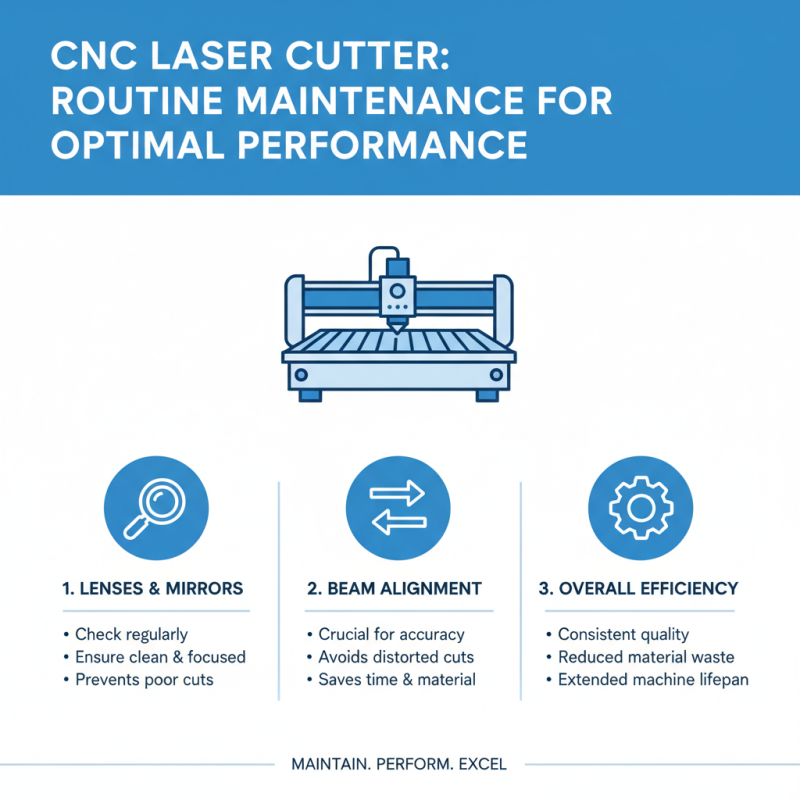
Routine maintenance is essential for CNC laser cutters to achieve optimal performance. Regularly checking components like lenses and mirrors ensures that the laser beam remains focused and efficient. Dirty lenses can lead to poor cutting quality, causing frustration and wasted materials. Checking alignment can feel tedious, but it is crucial for accuracy. A misaligned beam can distort cuts, resulting in hours of additional work.
Calibration should not be overlooked. Regular adjustments keep the machine operating at its best. It’s easy to forget about small tweaks, but they make a significant difference. Operators may notice inconsistent results after neglecting calibration. Taking time for frequent checks can save future headaches. Additionally, documenting maintenance and calibration schedules can help identify patterns over time. If performance issues arise, having this history aids in troubleshooting. Ultimately, investing time in these practices leads to better overall results.