
7 Tips for Choosing a Piglets Nursery House?

Choosing a Piglets Nursery House is not merely a construction decision. It shapes piglet comfort, growth, labor efficiency, and daily health monitoring. A warm room can still fail when damp corners, weak airflow, or slippery flooring remain unnoticed. Good design begins with the piglets, not only the building budget.

Dr. Temple Grandin, a respected livestock-welfare expert, has said, “Animals are very sensitive to the environment.” That observation matters inside every nursery. Piglets react to cold drafts, sudden noise, poor lighting, and uncomfortable resting surfaces. This guide examines seven practical selection points, including insulation, ventilation, flooring, temperature control, hygiene, pen layout, and maintenance access. Each point connects a design choice with what workers can see and measure.

Look closely at the details. Can a worker reach a sick piglet without disturbing the whole pen? Does the floor stay dry near drinkers? Can fresh air enter without blowing directly across sleeping piglets? These questions sound simple. They are not always simple in practice. A cheaper house may reduce initial costs, yet increase bedding use, repairs, or medication pressure later. Even experienced farmers can miss small design weaknesses during a busy season. Therefore, this overview encourages careful comparison, site observation, and advice from qualified swine specialists. The best Piglets Nursery House is not the most impressive one. It is the house that quietly supports healthy piglets every day.
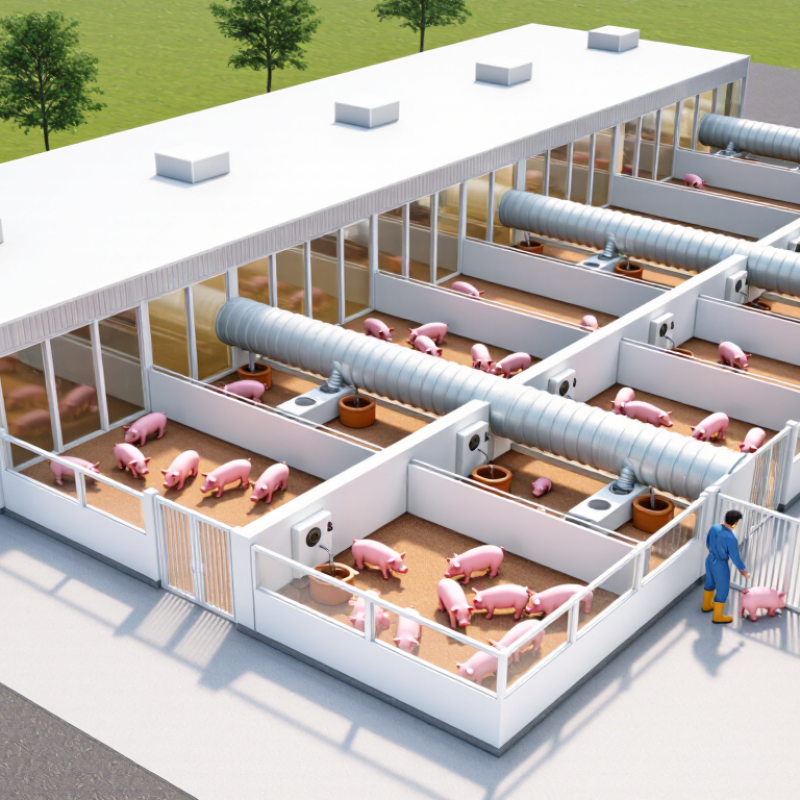
7 Tips for Choosing a Piglets Nursery House?

Define the Nursery House Requirements for Piglet Health and Growth

7 Tips for Choosing a Piglet Nursery House

Define nursery requirements around piglet health and growth, not just building cost. Begin with stable temperature, low drafts, and dry flooring. AHDB guidance recommends approximately 26–28°C for newly weaned pigs, then reducing temperature by about 2°C weekly. Install adjustable ventilation, because warm air can still feel uncomfortable when humidity and ammonia rise. Teagasc reports that poor air quality can reduce feed intake and increase respiratory risk. I would place sensors at piglet height, not near the ceiling.

Water access needs careful planning. Provide clean drinkers that piglets can reach without crowding. Check flow rates daily, especially after cleaning. Feeders should offer enough space for simultaneous eating. Solid dividers can reduce fighting, while visible inspection lines help workers notice empty feeders, coughing, or uneven growth. A simple layout often works better.

Biosecurity also shapes nursery design. Use washable surfaces, separate clean and dirty routes, and allow complete drying between groups. The EU’s farm animal welfare framework emphasizes suitable housing, hygiene, ventilation, and regular inspection. Those requirements sound basic, but they are often missed during busy turnover periods. My own weak point would be relying too heavily on automatic alarms. A human still needs to walk through the room, feel the floor, watch breathing, and record daily behavior. Growth targets should be checked against farm records and professional veterinary advice, rather than copied from another unit.

Evaluate Location, Layout, and Space for Efficient Piglet Management

7 Tips for Choosing a Piglets Nursery House?

Tip 1: Study the location before reviewing the building design. Choose elevated ground with reliable drainage, especially after heavy rain. The nursery should sit away from manure storage and dusty traffic routes. Fresh air matters, but strong drafts can chill young piglets. Check prevailing wind direction during different seasons. I once underestimated afternoon heat near a concrete wall. That mistake showed why a site visit should happen more than once.

Tip 2: Plan a simple, visible layout. Place feeding, watering, heating, and cleaning areas where staff can reach them quickly. Separate clean supply routes from waste movement. Wide service paths reduce injuries and make daily inspection easier. Avoid hidden corners. Piglets often gather where airflow, warmth, or bedding is uneven. A practical layout supports earlier detection of coughing, weakness, or poor feeding.

Tip 3: Measure usable space, not just floor area. Allow enough room for resting, walking, feeding, and social movement. Overcrowding increases competition and makes temperature control harder. Too much empty space can waste heat and complicate supervision. Use partitions that can be adjusted as piglets grow. Leave clearance around feeders and drinkers. Recheck these measurements after installing equipment. On paper, the plan may look balanced. In reality, doors, posts, and pipes can remove valuable working space.

7 Tips for Choosing a Piglet Nursery House: Evaluate Location, Layout, and Space for Efficient Piglet Management

Tip Evaluation Dimension Recommended Benchmark Why It Matters Practical Evaluation Checklist Priority
1 Select a Suitable Location Choose elevated, well-drained ground with reliable road access and adequate separation from other livestock areas. A suitable location reduces flood, mud, transport, and biosecurity risks while making feed delivery, pig movement, and waste handling more efficient. Confirm that the site is not prone to flooding;
provide all-weather vehicle access;
position clean and dirty traffic routes separately;
check availability of electricity and clean water.
High
2 Plan an Efficient Internal Layout Arrange rooms or pens in a logical flow: entry and changing area, receiving area, nursery pens, treatment area, feed storage, and manure route. A one-way workflow limits unnecessary movement and helps workers identify sick piglets, clean pens, and deliver feed more efficiently. Separate incoming piglets from outgoing animals;
provide a dedicated isolation or treatment pen;
avoid crossing feed paths with manure paths;
keep inspection routes visible and unobstructed.
High
3 Allow Adequate Floor Space Plan approximately 0.30–0.40 m² of usable floor space per nursery piglet, adjusted for body weight, climate, flooring, and management system. Overcrowding increases competition, fouling, heat stress, injuries, and disease pressure. Space requirements should be reviewed as piglets grow. Calculate usable pen area rather than total building area;
exclude feeders, drinkers, partitions, and fixed equipment;
set a maximum group size before stocking;
reserve space for growth toward the end of the nursery period.
High
4 Check Ventilation and Air Quality Use adjustable air inlets and exhaust capacity that provide fresh air without creating drafts at piglet level. Keep ammonia preferably below 10 ppm and investigate persistent levels above 20 ppm. Good ventilation removes moisture, dust, carbon dioxide, and ammonia while helping control temperature. Poor airflow can contribute to respiratory problems and uneven growth. Inspect airflow at piglet height;
avoid direct drafts on resting areas;
install sensors or regularly measure temperature, humidity, and ammonia;
provide backup ventilation or alarms where practical.
High
5 Design Temperature-Zoned Pens Provide a warm, draft-free resting zone and a cooler activity or dunging zone. Newly weaned piglets commonly need an initial room temperature around 24–28°C, adjusted according to weight, bedding, and behavior. Small or recently weaned piglets have limited ability to regulate body temperature. Zoning lets them choose a comfortable area and reduces chilling or overheating. Use heating plates, floor heating, or safe radiant heat where needed;
insulate the building envelope;
observe huddling, shivering, panting, and lying patterns;
install thermostatic controls and protective guards.
High
6 Evaluate Flooring, Drainage, and Hygiene Use non-slip, cleanable flooring with adequate drainage. Where slatted flooring is used, openings must be suitable for piglet size and must not create leg or hoof entrapment hazards. Dry, stable flooring supports mobility and reduces injury, skin damage, contamination, and heat loss. Effective drainage also shortens cleaning and drying time. Check floor traction when wet;
eliminate sharp edges and broken slats;
slope solid areas toward drains where appropriate;
verify that surfaces can be washed, disinfected, and dried between batches.
High
7 Provide Accessible Feed and Water Points Supply clean water continuously through correctly adjusted drinkers and provide enough feeder access to reduce competition, especially during the first days after weaning. Easy access to water and feed supports early intake, gut adaptation, uniform growth, and recovery from weaning stress. Test water flow and quality regularly;
place drinkers at suitable height for piglet size;
keep feeders away from dunging areas;
provide extra access during the transition period;
inspect equipment daily for blockage or leakage.
Medium–High

Compare Ventilation, Temperature Control, and Air Quality Systems

Choosing a piglet nursery house starts with air movement, not attractive panels. Walk inside at piglet height and notice drafts around bedding, corners, and drinkers. A reliable ventilation system removes moisture and harmful gases while keeping fresh air steady. Look for adjustable inlets, exhaust fans, and clear controls. Avoid sudden changes.

Temperature control should respond to piglet age, floor type, and outside weather. Newly weaned piglets need a warm, stable resting zone, while active areas can remain slightly cooler. Use calibrated sensors at animal level, not only near the ceiling. Check the room early morning, when condensation and cold pockets often appear. A warm lamp cannot fix poor insulation. That mistake is common.

Air quality deserves daily measurement, not occasional guesswork. Track carbon dioxide, humidity, dust, and ammonia with maintained instruments. Strong odors are a warning, but they are not a complete test. Fresh air should reach the pen without blowing directly onto sleeping piglets. Ask suppliers for airflow diagrams, maintenance schedules, alarm functions, and cleaning access. Review energy use too, because an over-ventilated house may stay clean but waste heat. I would test a new system through one cold week before expanding it. Real conditions expose weaknesses.

Inspect Flooring, Hygiene Features, and Biosecurity Measures

7 Tips for Choosing a Piglets Nursery House

A practical inspection starts with the floor. Choose a surface that is firm, non-slip, and easy to wash. Small piglets need secure footing, especially near feeders and drinkers. Check for cracks, sharp edges, loose panels, and areas where water remains after cleaning. A gentle slope toward covered drains can reduce standing moisture. The floor should feel dry, not merely look clean.

Hygiene depends on more than disinfectant. Look for washable walls, simple corners, removable feeding parts, and drainage that can be reached without moving heavy equipment. A nursery house should allow thorough cleaning between groups. Ask how long the room needs to dry. Wet surfaces can weaken an otherwise careful hygiene routine. Clean boots, dedicated tools, and handwashing points should be placed at the entrance. They must be convenient. If they are difficult to use, workers may skip them during busy periods.

Biosecurity also requires controlled movement. Separate clean and dirty zones, limit visitors, and keep a basic entry record. Inspect doors, screens, vents, and pest barriers for gaps. Good airflow matters, but direct drafts can chill young piglets. Temperature checks at piglet level are more useful than relying only on wall-mounted readings. I would not trust a perfect checklist alone. Walk through the house after a cleaning cycle, touch the corners, and inspect the drains. Small oversights often reveal the real weakness.

Assess Construction Quality, Operating Costs, and Future Expansion Needs

7 Tips for Choosing a Piglets Nursery House

Assess Construction Quality, Operating Costs, and Future Expansion Needs

Construction Quality

A reliable nursery house starts with its structure. Inspect roof joints, wall panels, concrete floors, and drainage channels closely. Small cracks can become expensive problems after repeated washing and seasonal temperature changes. Floors should provide grip without trapping manure or disinfectant. Doors must close tightly, yet open quickly during inspections. Good insulation reduces heat loss and helps maintain stable conditions for young piglets.

Operating Costs

Operating costs deserve more than a purchase-price comparison. Review heating demand, ventilation power, water use, labor time, and cleaning requirements. Efficient airflow matters, but oversized fans may waste electricity during mild weather. Ask for realistic maintenance records, not only estimated savings. In farm assessments, blocked air inlets often increase energy use and create uneven temperatures. That detail is easy to miss. It should not be.

Future Expansion Needs

Plan expansion before the first wall is built. Leave practical space for extra pens, feed lines, ventilation equipment, and electrical capacity. Drainage routes should support future sections without major excavation. A modular layout can reduce disruption, but expansion may still interrupt daily routines. I once underestimated service access in a layout review. It looked efficient on paper. It was inconvenient in practice. Keep enough room for workers, equipment, inspections, and emergency movement.

Evaluate seven areas together: structure, hygiene, airflow, heating, labor, maintenance, and future capacity.

Contact Us Today for a Free Quote

(800) 708-6036