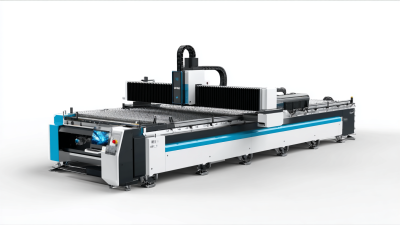
Top 10 Tips for Perfect Laser Cutting and Bending Techniques You Need to Know
Laser cutting and bending are critical techniques in modern manufacturing, enabling precision and efficiency in fabricating a wide array of materials. As industries continue to evolve, mastering these techniques becomes essential for anyone involved in design and production processes. Whether you're a seasoned professional or a newcomer to the field, understanding the nuances of laser cutting and bending can significantly impact the quality and cost-effectiveness of your projects.
This guide presents the top 10 tips that will help you enhance your laser cutting and bending skills. From selecting the right materials to optimizing machine settings, each tip is designed to equip you with the knowledge needed to achieve flawless results. Additionally, we'll explore ways to improve safety measures and maintain equipment, ensuring that your manufacturing processes are not only efficient but also secure.
By implementing these insights, you can elevate your laser cutting and bending techniques, transforming your approach to design and production while meeting the increasing demands of quality and precision in the industry. Join us as we delve into the essential practices that will help you unlock the full potential of laser technology.

Top 10 Essential Factors for Achieving Precision in Laser Cutting
Achieving precision in laser cutting requires an understanding of several essential factors. One of the foremost considerations is material selection. Choosing the right material not only impacts the quality of the cut but also influences the settings you will use for the laser. Different materials absorb laser energy differently, which can affect the precision of the cut. It's crucial to have a thorough knowledge of the materials in terms of thickness, composition, and how they respond to laser processing.
Additionally, optimizing settings such as power, speed, and frequency can make a significant difference. Each of these settings must be tailored to the specific material and thickness for the laser to perform optimally. For example, increasing the laser speed may reduce heat input, preventing distortion, but could also lead to incomplete cuts if set too high. A balance must be struck to achieve clean, precise edges. Regular calibration of the laser equipment is recommended to maintain optimal performance and ensure accuracy in every project.
Furthermore, maintaining a clean cutting environment is vital. Debris and contaminants can affect the quality of the cuts and lead to inconsistencies. Implementing regular maintenance schedules for the equipment, such as lens cleaning and alignment checks, ensures that the laser operates at peak performance. These tips will not only help in achieving precision in laser cutting but also improve the overall efficiency and quality of the production process.
Understanding the Importance of Material Selection for Laser Cutting Efficiency
When it comes to laser cutting, material selection plays a crucial role in ensuring efficiency and precision. Different materials react distinctively to laser technology, impacting the quality of the cut and overall process time. For instance, metals tend to absorb laser energy differently compared to plastics or wood. This characteristic can affect the cutting speed, kerf width, and edge quality. Thus, understanding the properties of each material, such as thickness, texture, and thermal conductivity, is essential for optimizing performance during the cutting process.
Moreover, the right choice of material can significantly reduce waste and enhance productivity. Selecting materials that are compatible with specific laser cutting techniques can lead to smoother operations and less downtime for maintenance. For example, materials with low reflectivity are less likely to cause issues such as beam scattering, which can lead to inaccuracies in cuts. In addition, prioritizing materials that are easier to work with allows for faster prototyping and manufacturing cycles. By focusing on material selection during the planning stage, businesses can ensure a more efficient laser cutting process, ultimately saving time and resources while achieving high-quality results.
Top 10 Tips for Perfect Laser Cutting and Bending Techniques You Need to Know - Understanding the Importance of Material Selection for Laser Cutting Efficiency
| Tip Number |
Technique |
Material Type |
Optimal Thickness (mm) |
Laser Power (W) |
| 1 |
Focus the laser beam |
Carbon Steel |
3 - 25 |
500 - 2000 |
| 2 |
Control cutting speed |
Stainless Steel |
1 - 20 |
1000 - 4000 |
| 3 |
Maintain the correct gas pressure |
Aluminum |
1 - 10 |
2000 - 3000 |
| 4 |
Select the right focal length |
Brass |
0.5 - 8 |
1500 - 5000 |
| 5 |
Optimize the kerf width |
Mild Steel |
2 - 12 |
1000 - 3000 |
| 6 |
Use proper cooling techniques |
Plastic |
1 - 30 |
500 - 1000 |
| 7 |
Adjusting beam divergence |
Copper |
1 - 6 |
4000 - 6000 |
| 8 |
Minimize thermal distortion |
Titanium |
1 - 15 |
2000 - 3000 |
| 9 |
Test different settings |
Nickel |
1 - 5 |
800 - 1500 |
| 10 |
Post-process for accuracy |
High-strength Steel |
3 - 20 |
3000 - 10000 |
Key Techniques for Optimal Laser Settings Based on Material Thickness
When it comes to achieving optimal laser cutting and bending, understanding the relationship between laser settings and material thickness is paramount. According to the International Laser Cutting Association, variations in material thickness can significantly impact both the quality of the cut and the efficiency of the process. For example, using the correct wattage for the thickness of materials—whether it be stainless steel, aluminum, or acrylic—ensures cleaner cuts and reduces the likelihood of burn marks or dross. Typically, a higher wattage is required for thicker materials; laser cutting of 10mm stainless steel may necessitate a laser with at least 2000W, while thinner materials can be effectively processed with lasers around 1000W.
In addition to wattage, adjusting the speed of the laser movement is crucial based on material thickness. Industry data indicates that a slower speed can produce a cleaner edge in thicker materials, allowing the laser to maintain a focused beam and penetrate deeper without compromising the material integrity. Conversely, faster speeds are often suitable for thin materials, enhancing productivity without sacrificing quality. Furthermore, factors such as assist gas type and pressure should not be overlooked, as they play a significant role in the cutting quality and material waste. By fine-tuning these parameters in relation to the material's thickness, fabricators can achieve precise results, reduce operational costs, and minimize rework.
Best Practices for Bending Processes to Minimize Stress and Deflection
When it comes to bending processes in laser cutting, minimizing stress and deflection is essential for achieving high-quality results. One effective approach is to carefully select the bending angle and radius. Gradual changes in geometry help distribute stress more evenly across the material, reducing the risk of deformation or failure. Additionally, utilizing proper tooling that fits the specific thickness and type of material being processed can significantly reduce the forces applied during the bending process, leading to smoother outcomes.
Moreover, controlling the temperature of the material before and during bending plays a critical role in minimizing stress. Pre-heating certain materials can enhance their ductility, allowing for easier bending with less force applied. It's also important to consider the order of operations in your workflow; strategically planning cuts and bends can prevent unnecessary stress concentrations. Incorporating these best practices into your bending operations not only enhances precision but also extends the lifespan of both the materials and the tools used.
Innovative Technologies Enhancing Laser Cutting and Bending Accuracy
Innovative technologies are revolutionizing the precision of laser cutting and bending techniques in manufacturing. With advancements in machine learning and artificial intelligence, manufacturers can now achieve unprecedented levels of accuracy. According to a recent report by the International Journal of Advanced Manufacturing Technology, laser cutting systems equipped with AI algorithms can enhance accuracy by up to 30%, significantly reducing the margin of error compared to traditional methods. This technology allows for real-time adjustments based on material properties and cutting conditions, resulting in cleaner edges and tighter tolerances.
Moreover, the integration of automated systems and digital twin technology plays a crucial role in enhancing bending accuracy. Digital twins allow manufacturers to create virtual replicas of their bending processes, enabling precise simulations and optimizations before actual production. A study published in the Journal of Manufacturing Processes indicates that companies employing digital twin technology have reported a reduction in material waste by approximately 20%, alongside a notable increase in productivity. By leveraging these innovative technologies, the manufacturing industry can not only improve the quality of laser cutting and bending but also streamline operations for better overall efficiency.