
Top 10 Police Drone Detector Suppliers for Global Buyers

Selecting a reliable Police Drone Detector requires more than comparing advertised detection ranges. Police departments, airport operators, and critical infrastructure teams need equipment that performs consistently in real environments. Concrete walls, moving vehicles, rain, urban radio congestion, and crowded airspace can all affect results.

This guide reviews the Top 10 Police Drone Detector Suppliers for Global Buyers through a practical, evidence-based lens. It considers detection methods, operating range, response speed, software usability, system integration, maintenance, training, and supplier support. Documented field experience matters. So do independent tests, transparent specifications, recognized quality systems, and clear warranty terms. A strong supplier should explain limitations instead of promising perfect coverage.

No ranking is perfect. A spreadsheet cannot reproduce every airport apron or public event. Experienced evaluators may still overlook false alerts, battery limits, installation constraints, or difficult weather. That is why buyers should request demonstrations, reference projects, trial periods, and written compliance information before purchasing. Local aviation, privacy, procurement, and radio-frequency requirements must guide every deployment. Responsible use also requires trained personnel, defined access controls, careful data handling, and regular performance reviews.

The suppliers featured here represent different strengths, from compact monitoring units to integrated command-center platforms. Their suitability depends on mission size, terrain, budget, and existing security systems. Details matter. A detector that works well beside a warehouse may need different configuration near a stadium. This introduction sets a practical foundation for comparing vendors with professionalism, caution, and realistic expectations.
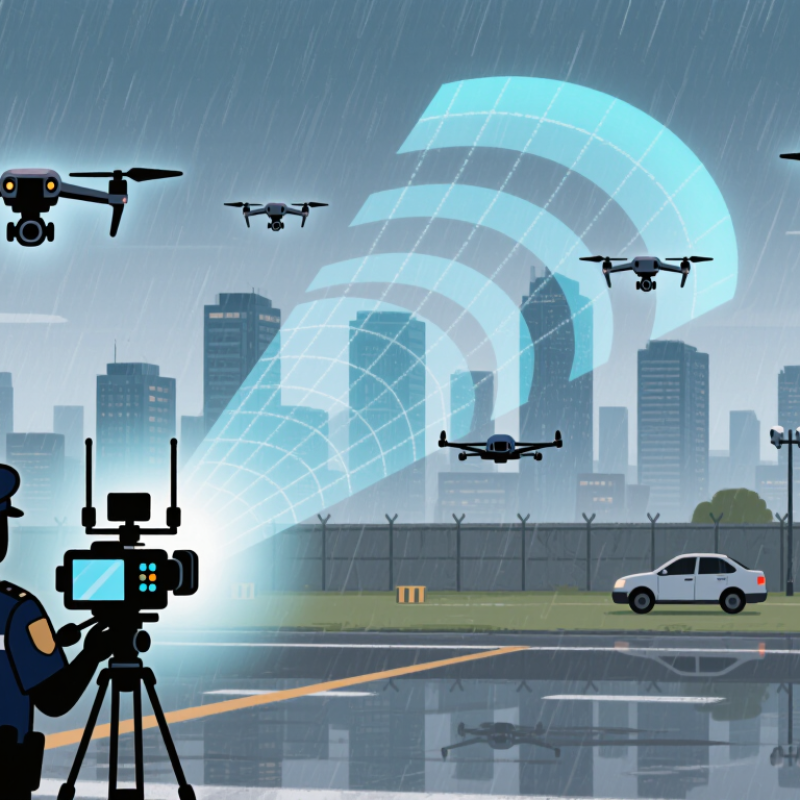
Top 10 Police Drone Detector Suppliers for Global Buyers

Understanding Police Drone Detection Systems and Their Core Functions

Police drone detection systems help authorized teams identify and assess nearby unmanned aircraft. Their main purpose is awareness, not automatic intervention.

A capable system may combine radio-frequency sensing, radar, acoustic analysis, and optical verification. Radio sensors can recognize control signals and estimate direction. Radar can track movement, altitude, and speed. Cameras may confirm the aircraft type in daylight, while thermal imaging can support low-light observation. Acoustic sensors add value in quiet areas, but nearby traffic can reduce accuracy. No sensor is perfect.

Strong suppliers provide tested detection ranges, update policies, installation requirements, and clear performance limits. Global buyers should request evidence from controlled trials and realistic field environments. They should also examine data protection, operator training, maintenance support, and compatibility with existing command systems. False alarms matter. They consume attention and may weaken trust during busy operations.

A practical evaluation uses several scenarios, including buildings, open ground, rain, and radio interference. Results should record detection time, tracking stability, identification confidence, and missed events. Legal review remains essential because monitoring practices differ by jurisdiction. Systems should support authorized observation and privacy safeguards. Procurement teams sometimes focus too heavily on range. In practice, usability and reliable alerts may matter more. The best specification is still a compromise.

Key Criteria for Evaluating Global Drone Detector Suppliers

For global buyers comparing the top 10 police drone detector suppliers, technical performance should come before promotional claims.

MarketsandMarkets estimates that the counter-UAS market will grow from USD 1.9 billion in 2023 to USD 3.8 billion by 2028. This expansion makes supplier selection more difficult, not easier.

Ask for independently measured detection range, alert latency, false-alarm rates, and performance in rain, dense buildings, and radio interference. A wide range is useless if alerts arrive late.

Look for layered sensing, such as radio-frequency analysis, radar, and optical verification. Each method has weaknesses.

The National Institute of Standards and Technology repeatedly emphasizes measurable, repeatable testing for security technologies. Therefore, request test conditions, sample sizes, and failure records.

Do not accept only laboratory demonstrations. Field evidence matters. Very much.

Check whether the system supports open interfaces, encrypted data, role-based access, and secure software updates. These details affect daily operations more than impressive dashboard images.

Supplier reliability also depends on training, spare parts, regional maintenance, and transparent warranty terms. The 2024 SANS State of Security Operations report highlights persistent staffing and integration pressures across security teams.

A detector that needs constant specialist attention may underperform after deployment. Review compliance documentation for each target market, including radio-spectrum and data-protection requirements.

Some evaluation assumptions may be wrong. Reassess them after a pilot, using local traffic patterns, weather, and building layouts.

Profiles of Leading Police Drone Detector Manufacturers

Police drone detector suppliers are evolving from simple radio scanners into integrated awareness platforms. MarketsandMarkets’ 2024 Counter-UAS Market report projects strong growth through 2028, driven by public safety and critical infrastructure needs. Buyers should examine ten supplier profiles across detection, analytics, integration, and field support.

The first group develops passive radio-frequency sensors. These systems can identify control signals without transmitting, which supports quieter operations. Radar-focused manufacturers add tracking for low-altitude objects, even in cluttered urban airspace. Optical specialists provide confirmation through thermal and daylight cameras. Acoustic developers can help in narrow streets, but wind and traffic remain difficult variables.

Other leading manufacturers combine several sensors in one command interface. Their software may classify flight patterns, record evidence, and connect with existing emergency networks. A 2024 report from the European Union Aviation Safety Agency stresses risk-based drone management and operational coordination. That matters during crowded public events. Buyers should also inspect detection range, false-alert rates, weather resistance, update policies, and training quality. Short demonstrations can mislead. Real streets are messier. Independent testing under trees, rain, and heavy wireless traffic is more convincing than a polished brochure. Privacy controls, audit logs, and clear operator permissions should be standard evaluation points. Industry forecasts are useful, but they are not field proof.

Police Drone Detector Suppliers: Key RF Bands Covered by Detection Systems

The chart shows commonly encountered radio-frequency bands relevant to police drone detection and counter-UAS operations. The listed frequencies are standard ISM or regionally allocated bands used by unmanned aircraft, controllers, telemetry links, and wireless video systems. Actual coverage varies by jurisdiction, drone model, antenna configuration, and detector design.

Comparing Detection Technologies, Coverage, and Deployment Options

For global buyers comparing the top ten police drone detector suppliers, technology fit matters more than product ranking. Passive radio-frequency detection can identify control links quietly, while radar measures distance, direction, and movement. Electro-optical and infrared cameras add visual confirmation. Acoustic sensors may help in urban areas, but traffic noise can reduce accuracy. Sensor fusion usually gives stronger evidence than one sensor working alone.

Coverage claims need careful testing. A 2024 MarketsandMarkets forecast estimates the counter-drone market could grow from about 1.3 billion dollars in 2023 to 3.8 billion dollars by 2028. IDTechEx also expects strong long-term growth, driven by airports, public venues, and critical infrastructure. These figures show demand, not guaranteed performance. A supplier’s stated range may assume clear air, low interference, and direct visibility.

Deployment options should match the site. Fixed systems suit stadium roofs and restricted facilities. Vehicle-mounted units support temporary events. Portable kits help teams inspect changing locations. Ask for detection range, update speed, weather resistance, false-alert rates, and open integration standards. Require independent trials with small aircraft, dense buildings, and moving crowds. I would not trust a single impressive demonstration. Real streets are messier. Even experienced buyers can overlook maintenance, operator training, and local spectrum conditions. A lower-cost detector may become expensive when calibration and software support are added.

Procurement, Compliance, and Support Considerations for Police Buyers

Top 10 Police Drone Detector Suppliers for Global Buyers

Police procurement teams should assess drone detectors through documented field performance, not impressive brochures. Detection range may change near buildings, trees, radio towers, and crowded events. Request controlled demonstrations using approved training equipment. Record detection time, false alerts, operator workload, and system stability. Test it locally.

Compliance deserves equal attention. Buyers should verify radio approvals, privacy safeguards, cybersecurity controls, product traceability, and applicable aviation regulations. Procurement files should include certificates, user manuals, software update policies, and clear warranty terms. Suppliers must explain how collected signals or system logs are stored and protected. Requirements also vary between countries and agencies. A checklist can miss local details.

Support often determines whether equipment remains useful after delivery. Ask about installation, operator training, calibration, spare parts, repair timelines, and multilingual technical assistance. Confirm whether support is available during major public events and outside normal office hours. A practical service agreement should define response times and replacement procedures. No evaluation matrix is perfect. Some teams may overweight detection distance while ignoring setup time. Others may accept unclear maintenance costs. Experienced buyers should invite independent technical review and keep testing results auditable. That approach strengthens accountability and reduces unpleasant surprises during operational use.

Top 10 Police Drone Detector Suppliers for Global Buyers - Procurement, Compliance, and Support Considerations for Police Buyers

Supplier Profile Primary Detection Approach Typical Detection Range* Key Procurement Strength Integration Options Compliance Evidence to Request Indicative Warranty Support Model Indicative Lead Time* Buyer Verification Priority
Supplier Profile 01 RF spectrum monitoring with protocol and signal classification 1–5 km, environment dependent Fast deployment for fixed-site perimeter protection IP network, API, event alarms, command software Radio approvals, cybersecurity documentation, data-processing terms 12–24 months Regional technical partner and remote diagnostics 6–12 weeks False-alarm rate in dense RF environments
Supplier Profile 02 RF detection combined with Remote ID and telemetry analysis 0.5–3 km, dependent on aircraft transmission Useful for evidence-led identification and incident logging Browser dashboard, REST API, CSV/PDF reporting Remote ID support statement, privacy impact materials, audit logs 12 months Business-hours support with software updates 4–10 weeks Compatibility with locally authorized drone identification rules
Supplier Profile 03 RF detection plus passive direction finding using multiple sensors 2–8 km, line-of-sight conditions required Wide-area coverage through networked sensor nodes Secure Ethernet, cellular backhaul, map-based command interface Radio conformity, encryption architecture, penetration-test summary 24 months for hardware; software terms separate 24/7 incident escalation available by contract 8–16 weeks Sensor synchronization and geolocation accuracy
Supplier Profile 04 Passive RF monitoring with portable, vehicle, and fixed configurations 0.5–4 km, terrain dependent Flexible deployment for patrols, events, and temporary operations Local console, tablet interface, alarm relay, exportable reports Ingress protection rating, battery safety documents, local radio approval 12 months Remote support with optional on-site commissioning 5–12 weeks Weight, battery endurance, and operator training time
Supplier Profile 05 RF detection with optional passive radar or electro-optical cueing 1–6 km, configuration dependent Layered detection for sensitive public facilities Video management interface, GIS, alarm management, API Sensor performance test, environmental specifications, export-control review 12–36 months, component dependent Dedicated project manager and scheduled maintenance 10–20 weeks Performance in rain, urban clutter, and RF interference
Supplier Profile 06 RF sensing with machine-learning-assisted signal recognition 1–5 km, dependent on signal availability Automated classification and reduced operator workload Cloud or on-premise dashboard, API, role-based access Model governance, software bill of materials, cyber-risk assessment 12 months plus subscription support Online help desk, firmware releases, periodic model updates 6–14 weeks Explainability of classifications and data-retention controls
Supplier Profile 07 Multi-band RF detection for commercial and custom-built aircraft 0.5–3 km, aircraft and antenna dependent Cost-conscious option for municipal and regional deployments Alarm outputs, web interface, standard network protocols Frequency coverage declaration, EMC test report, supply-chain disclosures 12 months Distributor-led support with paid service options 4–8 weeks Total cost of ownership, licensing, and replacement-part availability
Supplier Profile 08 Networked RF sensors with direction finding and central command software 2–10 km for coordinated sensor networks Scalable architecture for airports, campuses, and large events GIS, incident management, video systems, API gateway Network security controls, access logs, radio and electrical compliance 24 months Service-level agreement with preventive maintenance 12–24 weeks Interoperability testing and resilient communications links
Supplier Profile 09 Portable RF detector with spectrum recording and operator alerts 0.3–2 km, portable configuration dependent Rapid response and low infrastructure requirements Mobile application, local storage, secure report export Battery transport documentation, EMC evidence, privacy controls 12 months Telephone and email support with online training 3–8 weeks Battery life, ruggedness, and usability with protective equipment
Supplier Profile 10 Hybrid RF and protocol-aware detection with optional sensor fusion 1–7 km, terrain and sensor mix dependent Customizable solution for national or multi-site tenders Open API, command platform, GIS, evidence-management export Country-specific approvals, secure-development evidence, data residency terms 24 months, subject to contract 24/7 critical-support option and local service training 12–24 weeks Acceptance testing, sovereign data requirements, and lifecycle funding
Procurement note: Ranges, lead times, warranty periods, and support arrangements are indicative tender-planning values rather than supplier claims. Police buyers should validate performance through controlled demonstrations, site surveys, acceptance tests, radio-licensing reviews, cybersecurity due diligence, privacy assessments, and country-specific import and procurement rules before award.

Contact Us Today for a Free Quote

(800) 708-6036