
Top 10 SBMA Connector Suppliers for Global Buyers

Choosing an Sbma Connector supplier is a practical engineering decision, not just a price comparison. These compact RF interfaces may sit inside test equipment, communications hardware, or other assemblies where fit and repeatable performance matter. A connector that looks right can still create delays if its mating dimensions, materials, or electrical specifications do not match the design. Small parts matter.

The wider connectivity market offers useful context, but it should not be mistaken for direct SBMA demand data. Ericsson’s June 2024 Mobility Report estimated 5G subscriptions at 1.9 billion at the end of 2023 and forecast 6.3 billion by 2029. That signals continuing network expansion; it does not prove a specific growth rate for SBMA connectors. Buyers should still verify each supplier’s drawings, test information, traceability, production capacity, and sample consistency. Ask for evidence, not only a polished catalogue.

This Top 10 supplier guide is intended to help global buyers compare capabilities and identify questions worth asking. Look closely at interface compatibility, plating options, operating conditions, lead times, and support for custom requirements. Supplier claims deserve review. A shortlist is not a verdict, and the lowest quote may not be the lowest-cost choice after testing, delays, or rejected parts. The comparison should be revisited against the actual application; no single ranking can replace engineering validation.
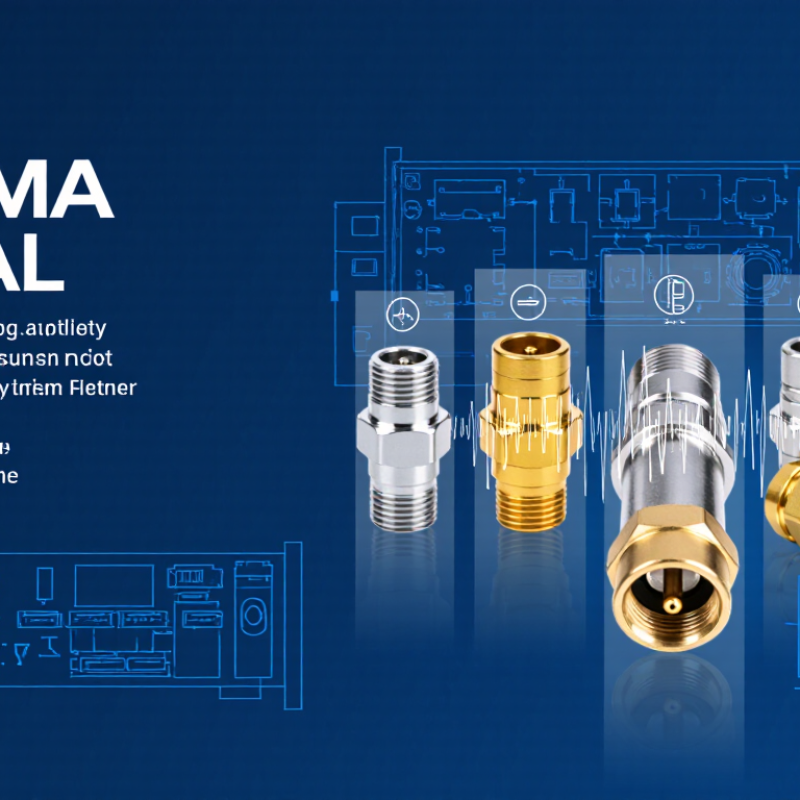
Top 10 SBMA Connector Suppliers for Global Buyers

What Is an SBMA Connector and Where Is It Used?

An SBMA connector is a compact coaxial interface designed for blind-mate connections. It joins RF paths when equipment modules slide together, often without direct visual access to the mating point. Its spring-supported contact and guided coupling can accommodate limited alignment variation, though the allowed movement depends on the connector design.

That matters.

SBMA connectors are used in modular radio-frequency assemblies, including communication equipment, antenna systems, test fixtures, and some aerospace or defense electronics. In a rack, for example, a technician may insert a replaceable module and connect several RF channels at once. This can reduce manual cable handling and save space where standard threaded connectors are awkward.

Not every SBMA connector performs alike. Frequency range, impedance, power handling, and durability vary by construction and application. Buyers should check the equipment interface drawing, mating-cycle requirement, and operating environment before choosing a part. Salt air, vibration, or repeated insertion can expose weaknesses that a clean bench test will miss. A practical fit test is still worthwhile; catalog dimensions alone may not reveal how smoothly a real assembly mates.

How to Evaluate SBMA Connector Suppliers for Global Sourcing

For global buyers comparing SBMA connector suppliers, start with the interface, not the catalogue. Confirm the drawing, impedance, frequency range, mating dimensions, and required performance. Request measured insertion loss, return loss, and voltage standing wave ratio across the operating band. Ask how samples were tested and whether the reports identify equipment, calibration dates, and acceptance limits. Small details matter: a slightly loose coupling or poorly controlled plating thickness can disrupt assembly.

Check quality controls beyond certificates. Ask for lot traceability, material declarations, change-notification procedures, and inspection records for contact dimensions and plating. Confirm which test methods apply to the specific connector; IEC 61169-1 provides general requirements and test methods for RF connectors, but the product specification must define the relevant limits. A useful supplier comparison includes lead-time history, minimum order quantities, sample availability, and corrective-action response times. Paperwork alone is not proof.

Market context helps explain why capacity deserves scrutiny. Fortune Business Insights valued the global connector market at USD 84.32 billion in 2023 and projected USD 144.62 billion by 2032. This broad category is not an SBMA forecast, but it signals a growing, competitive supply environment. Request evidence of production capacity and contingency planning, then compare it with realistic order volumes. One awkward point: supplier data can look complete while test conditions differ. Normalize those conditions before ranking candidates.

How to Evaluate SBMA Connector Suppliers for Global Sourcing

Suggested evaluation weights for comparing suppliers. These are a buyer-defined scoring framework, not measured market statistics or supplier rankings.

Score each prospective supplier against these criteria using documented evidence, such as test reports, quality records, compliance documents, and delivery data. Adjust the weights to match your application and sourcing priorities.

Key Markets and Manufacturing Regions for SBMA Connectors

SBMA connector sourcing follows broader RF and precision-interconnect supply chains, but public reports rarely separate SBMA from other connector types. Fortune Business Insights estimated the global connector market at about US$87.6 billion in 2024, with Asia Pacific holding the largest regional share. This is useful context, not an SBMA sales estimate. China, Japan, South Korea, and Taiwan have deep electronics manufacturing networks, including precision machining, plating, and cable assembly. North America and Europe remain important buyer markets for aerospace, test equipment, and industrial systems. Buyers should compare regional strengths with their required tolerances and delivery schedules.

Manufacturing capability varies by process, even within one region. A supplier may machine the coupling body accurately yet struggle to maintain stable contact resistance across batches. Ask for dimensional inspection records, material specifications, and sample test results. Check whether the supplier controls plating thickness and provides repeatable mating-cycle data. These details matter when connectors face vibration or frequent handling. One limitation: market reports describe the wider connector sector, so they cannot confirm SBMA-specific production capacity.

Tips: Request samples from more than one production lot. Compare connector fit, finish, and measured electrical performance—not just catalog values. Allow time for qualification; a small mismatch can cause rework.

Profiles of 10 SBMA Connector Suppliers for Global Buyers

SBMA connector suppliers vary widely in tooling, cable support, and production scale. One precision-machining supplier may offer closely controlled connector bodies, useful when panel alignment leaves little room for error. Another specializes in cable assemblies, with cut-to-length leads and documented continuity checks. A third focuses on RF test components and can provide measured insertion-loss data. A small-batch workshop may accommodate unusual housing dimensions, though lead times can fluctuate. Fit matters.

A high-volume manufacturer may suit repeat orders and stable specifications, provided buyers review inspection records and lot traceability. A regional distributor can simplify sampling and routine replenishment, but its technical support may depend on the upstream factory. An engineering-led supplier can help resolve interface or cable-routing questions before tooling begins. A ruggedized-component supplier may offer stronger strain relief for equipment exposed to vibration. Details count.

A specialist in miniature assemblies may help where installation space is tight, while a broad-line connector supplier may provide more options for matching cables and accessories. Compare drawings, interface dimensions, frequency range, and test methods before requesting quotations. Ask for sample parts and inspect mating feel, finish, and cable retention. These profiles are starting points, not verified rankings; supplier capabilities can change, and published specifications deserve independent checking.

Top 10 SBMA Connector Suppliers for Global Buyers - Profiles of 10 SBMA Connector Suppliers for Global Buyers

Anonymous sourcing profiles, not a ranked list of named companies. SBMA interface details and product limits can vary by design; confirm each supplier’s current datasheets, test reports, and commercial terms before purchase.

Profile Buyer-focused supplier type SBMA product details to verify Best fit for Key procurement checks
Supplier Profile 01 RF connector manufacturer Confirm the exact SBMA interface, nominal impedance, operating frequency range, and mating dimensions from the product drawing. Buyers needing a direct source for standard connector components. Request controlled drawings, revision history, inspection criteria, and traceability options.
Supplier Profile 02 Blind-mate interconnect specialist Check allowable radial and axial misalignment, engagement travel, retention, and repeated-mating performance for the specified assembly. Equipment designs where connectors must mate during module insertion. Ask for interface tolerances, alignment guidance, and test conditions behind cycle-life claims.
Supplier Profile 03 RF cable-assembly supplier Verify cable type, connector termination, assembly length, impedance compatibility, and measured performance across the required band. Buyers sourcing ready-to-install cable assemblies rather than loose connectors. Specify cable part details, bend requirements, labeling, and acceptance-test documentation.
Supplier Profile 04 Precision machining and connector supplier Confirm body and contact materials, plating system, dimensional tolerances, and any application-specific corrosion requirements. Custom mechanical configurations or drawings with tight interface tolerances. Review material declarations, plating specifications, first-article inspection, and change-control procedures.
Supplier Profile 05 High-frequency RF component supplier Do not assume a universal frequency limit: verify the specific SBMA product’s tested frequency range, return loss or VSWR, and insertion loss. RF paths where performance must be demonstrated over a defined frequency band. Request test plots or reports with stated fixtures, calibration method, and measurement conditions.
Supplier Profile 06 Environmental and ruggedized connector supplier Check rated temperature range, vibration and shock evidence, sealing provisions, and whether those ratings apply to the complete assembled interface. Applications exposed to demanding environmental or mechanical conditions. Match every requested rating to a test report and the exact ordered configuration.
Supplier Profile 07 High-volume production supplier Confirm consistent configuration control, production inspection, lot identification, and availability of the required SBMA variants. Recurring programs with forecasted volume and repeat orders. Evaluate capacity, lead-time commitments, minimum order quantities, and continuity planning.
Supplier Profile 08 Prototype and low-volume supplier Check whether samples match production materials and processes, and whether custom dimensions or termination options are available. Design validation, pilot builds, and low-volume maintenance needs. Clarify sample lead time, tooling charges, engineering support, and transition terms for production.
Supplier Profile 09 Compliance-documentation-focused supplier Determine which declarations and material or quality documents are available for the specific part and manufacturing site. Buyers with formal supplier-approval or product-compliance requirements. Verify document scope, validity, part-number coverage, and whether certificates are independently auditable.
Supplier Profile 10 Global distribution and fulfillment supplier Confirm the exact manufacturer part specification, packaging, storage conditions, and authenticity documentation for stocked items. Multi-region purchasing, consolidated orders, or urgent replenishment. Check authorized sourcing, inventory status, export documentation, shipping terms, and returns policy.

Buyer note: “SBMA” alone is not enough to establish interchangeability. Match the interface drawing, electrical limits, mechanical envelope, and test evidence to the application before approving a substitute.

How to Compare Suppliers on Quality, Compliance, and Delivery

For global buyers comparing SBMA connector suppliers, request evidence tied to the exact part number, not a general quality brochure. Check dimensional inspection records, contact-resistance results, and mating-cycle test conditions against your drawing and application. IEC 60512 provides test methods for electrical connectors, but the relevant tests depend on the product specification. Ask suppliers to identify the methods used and share recent lot-level results. Paperwork matters. So does repeatability.

Compliance and delivery need equal scrutiny. Request material declarations, traceability details, and certificates relevant to your destination market; verify their scope and expiry dates. The World Bank’s 2023 Logistics Performance Index assessed 139 economies across six dimensions, including shipment tracking and timeliness. It is a country-level benchmark, not a supplier score, but it shows why logistics visibility deserves attention. Ask for actual on-time delivery history, stated lead times, and a clear process for handling shortages. A polished quote cannot reveal production drift.

Tips: Compare samples from more than one production lot. Record the test conditions, not just “pass.” Check whether quoted lead times include inspection and packing; this detail is easy to miss. No scorecard is perfect, and a first audit may not catch every weak spot.

Article Source:

Contact Us Today for a Free Quote

(800) 708-6036