
2026 Top Titanium Bar Suppliers for Global Buyers

Choosing a Titanium Bar supplier in 2026 takes more than comparing price and delivery dates. Buyers need to understand how raw-material supply, alloy grade, manufacturing controls, and documentation affect the finished product. The U.S. Geological Survey’s Mineral Commodity Summaries 2025, in its titanium chapter, tracks global titanium mineral and sponge production. These upstream indicators help explain supply exposure, but they do not measure finished-bar availability or supplier performance. That distinction matters.

For product requirements, ASTM B348/B348M sets specifications for titanium and titanium-alloy bars and billets, including chemical and mechanical requirements. Buyers should confirm the applicable revision, grade, dimensions, condition, and inspection documents directly with each supplier. Ask for heat-level traceability and test certificates, then check whether the quoted product and records match the purchase specification. A polished certificate alone is not proof of consistent production.

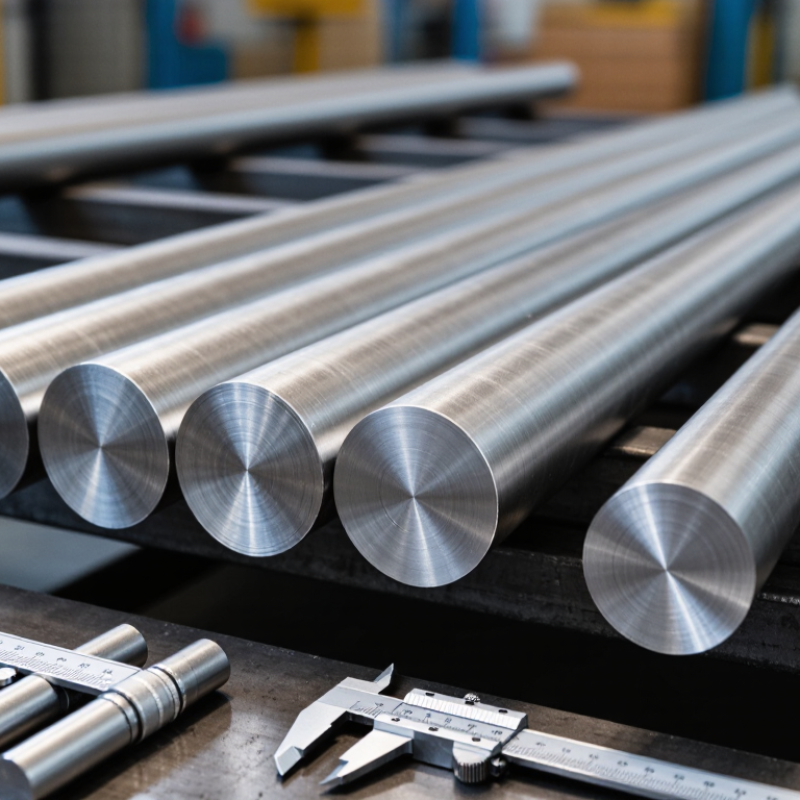
Details count. A bar may look uniform on a rack, while its paperwork reveals a different grade or condition. That is why supplier comparisons should consider production capability, quality controls, dimensional tolerances, and delivery history—not just catalog claims. In this guide, we assess leading suppliers for global buyers using practical sourcing criteria and available evidence. No ranking can replace a buyer’s own technical review; supplier capabilities and lead times can change. Still, a careful shortlist is a useful start.
2026 Top Titanium Bar Suppliers for Global Buyers

What Titanium Bars Are and How They Are Used

2026 Top Titanium Bar Suppliers for Global Buyers

What Titanium Bars Are and How They Are Used

A titanium bar is a solid, elongated metal product, commonly supplied in round, square, or flat shapes. Buyers select dimensions and material grades to match the finished component and its service conditions. Titanium combines relatively low weight with strong corrosion resistance, though performance varies by grade and processing method. That matters. Bars may be forged or otherwise worked, and their surface condition can affect later machining. Not every bar suits every job.

Manufacturers machine titanium bars into shafts, fasteners, fittings, and structural parts. These components may serve aerospace equipment, marine systems, chemical-processing machinery, or medical devices. Each use has distinct requirements for strength, temperature, cleanliness, and traceability. A corrosion-resistant bar is not automatically right for a hot, highly loaded component. That distinction is easy to overlook when comparing material by weight or price alone.

Tips: Confirm the grade, diameter, length, and applicable inspection documents before ordering. Check surface defects and allow for machining waste. For critical parts, ask a qualified engineer to review the material specification. A small mismatch can create avoidable rework.

How to Evaluate Titanium Bar Suppliers in 2026

Evaluating titanium bar suppliers in 2026 means checking more than price and delivery promises. The U.S. Geological Survey’s Mineral Commodity Summaries 2025 estimates global titanium sponge production at about 330,000 metric tons in 2024. Sponge is an upstream input, not finished bar, but concentrated production makes supply-chain visibility important. Ask where melting, forging, and testing occur. Then verify that the supplier can trace each bar back to its heat number.

Request material test reports and check chemistry, tensile properties, dimensions, and inspection methods against the purchase specification. ASTM B348 covers titanium and titanium-alloy bars and billets; confirm the applicable grade and edition rather than accepting a generic “ASTM compliant” claim. Ask for sample reports before placing a large order. Traceability matters. Check whether the supplier has calibrated equipment, documented nonconformance procedures, and a clear process for handling delayed or rejected material. A polished certificate is not proof that every bar was tested as stated. No single audit catches everything; small buyers may need to prioritize critical checks and record what remains unverified.

2026 Top Titanium Bar Suppliers for Global Buyers: How to Evaluate Suppliers

Compare the minimum tensile-strength requirements for commonly specified titanium grades. When evaluating a supplier, confirm that the quoted grade and bar product meet the applicable specification and are supported by a mill test certificate.

Reference values shown in MPa are minimum tensile-strength requirements associated with ASTM B348/B348M grades. Confirm the current edition, product form, and applicable purchase specification before ordering.

Leading Titanium Bar Suppliers for Global Buyers

Leading titanium bar suppliers for global buyers do more than quote a grade and a price. In 2026, buyers should confirm alloy designation, diameter, length tolerance, and material condition before ordering. A mill test certificate should match the heat number marked on the bars or bundle. That detail matters. Suppliers should also explain how they inspect dimensions and handle surface defects, rather than relying on vague assurances.

Practical support can prevent costly delays. Ask whether the supplier can provide cut-to-length bars, maintain consistent stock records, and protect material with suitable wrapping and end covers during shipment. For machining projects, discuss expected surface condition and any extra allowance needed for finishing. Ask for evidence. Clear answers about lead times, packing, and document control help buyers compare suppliers on more than headline price.

A reliable supplier will make it easy to verify specifications and raise questions before production starts. Even experienced teams can overlook a small mismatch between a drawing and a purchase order; I would check both again. One weakness in supplier evaluations is assuming a polished catalogue proves consistent quality. Request sample inspection records or a pre-shipment check when the application demands tighter control, and confirm that changes to material or dimensions are approved in writing.

How to Verify Supplier Quality and Certifications

A titanium bar supplier should provide more than a polished certificate. Ask for a mill test report linked to the exact bar lot you plan to buy. Match its heat number to the tags on the bars and the packing list. Small mismatches matter. Check that the report lists chemistry, tensile properties, dimensions, and the applicable material specification. For demanding uses, request test results from an independent laboratory, not just a sales statement.

Certifications need careful checking, too. Confirm the certificate is current and covers the supplier’s actual site and activities. Ask the issuing body to verify its status if the document is unfamiliar. A scanned logo proves little. Compare the certificate’s scope with your purchase requirements, and confirm that inspection or testing methods are clearly identified. If practical, arrange a pre-shipment inspection to measure bar diameter and review markings against the paperwork. Keep the records with your order documents. I have seen tidy files that still left one question unanswered: which test result belongs to which bundle? Reconcile that link before approving shipment, especially when several heats are packed together.

How to Compare Pricing, Lead Times, and Shipping Terms

2026 Top Titanium Bar Suppliers for Global Buyers

A useful price comparison starts with the same specification sent to every supplier. Include titanium grade, bar diameter, length, tolerance, quantity, and required inspection documents. A quote for a different grade or looser tolerance may look cheaper but create extra machining costs. Ask whether the price includes cutting, testing, and protective packaging. Small gaps add up.

Compare lead times by asking for separate dates for production, inspection, and dispatch. Confirm whether the quoted schedule applies to the full order or only a sample batch. For example, a supplier may have stock for a few bars but need several weeks to produce the remaining lengths. Request written updates if the schedule changes. A comparison can still miss practical details, so confirm them before placing an order.

Tips: Compare shipping terms on the same basis. Check the named delivery point, freight charges, insurance, and who handles export documents. Ask how bars will be bundled and protected from moisture or impact during transit. These details affect landed cost and arrival condition. Don’t assume “shipping included” means every destination charge is covered.

2026 Top Titanium Bar Suppliers for Global Buyers - How to Compare Pricing, Lead Times, and Shipping Terms

Comparison Dimension What to Verify Practical Benchmark or Standard Questions to Ask Each Supplier
Material grade Confirm the exact grade and applicable product specification. ASTM B348 covers titanium and titanium-alloy bars and billets. Commonly requested grades include commercially pure Grade 2 and Ti-6Al-4V Grade 5. Which standard and grade will appear on the certificate of conformity and material test report?
Product dimensions Compare diameter, length, dimensional tolerances, and straightness. Availability and tolerances depend on grade, manufacturing route, diameter, and whether the bar is hot worked, cold worked, or machined. Is the quoted size a standard stock dimension or a custom production size? What tolerances are included?
Price basis Make sure quotations use the same material, dimensions, quantity, finish, and delivery basis. Titanium bar prices are quote-dependent; there is no single universal price. Grade, size, order volume, processing, testing, and freight can all affect the total. Is pricing per kilogram, per piece, or per length? Are testing, cutting, packaging, and freight included?
Lead time Separate production time from inspection, packing, and transit time. Lead time varies with stock availability, production capacity, order quantity, required testing, and destination. Stock material is generally quicker to dispatch than custom production, but a confirmed schedule should come from the supplier. What are the confirmed dispatch date and estimated transit time? Is any quantity available from stock?
Quality documents Check traceability and the inspection documents supplied with the order. Request a material test report identifying the heat or lot and reporting applicable chemical and mechanical test results. Additional inspection or certification requirements should be agreed before ordering. Will each bundle or piece be traceable to its heat number? Can documents be provided before shipment?
Surface condition Specify whether the bar is supplied as-rolled, machined, ground, or with another finish. Surface condition affects appearance, dimensional control, machining allowance, and inspection requirements. Define acceptable surface defects and any required finishing in the purchase specification. What surface finish is included, and how are surface quality and defects inspected?
Packaging Confirm protection suitable for the bar dimensions, surface, and transport route. Packaging should prevent movement and avoid damage or contamination during handling and transit. Export packing requirements should be stated in the purchase order. How are bars bundled, protected, marked, and secured for international transport?
Shipping terms Compare the named Incoterm, named place or port, and the version used. Incoterms® 2020 allocate specified delivery obligations, costs, and risks between buyer and seller. EXW, FCA, FOB, and CIF have different responsibilities; the named place or port matters. Which Incoterm® 2020 rule and named location are included in the quotation? Who arranges freight and insurance?
Import and delivery costs Estimate landed cost, not just the quoted material price. Depending on the agreed shipping term and destination, the buyer may need to account for freight, insurance, customs clearance, duties, taxes, and local delivery. Which charges are excluded from the offer, and which party handles export and import clearance?
Payment and quotation validity Compare payment milestones, currency, and the period for which the offer remains valid. Payment conditions and quotation validity are commercial terms rather than universal titanium-industry standards; they should be stated clearly in the written offer. What are the payment terms, accepted currency, and quotation expiry date?
Buyer note: Treat lead times and prices as order-specific until confirmed in a written quotation. Compare offers on the same grade, dimensions, quantity, documentation, Incoterm® 2020 rule, and named destination.

Contact Us Today for a Free Quote

(800) 708-6036