
What Type of Turbo Intercooler Is Best?

Choosing the best Turbo Intercooler is not about finding the biggest core or the most expensive setup. It is about matching heat control to the engine, vehicle, and driving conditions. A street car cruising between traffic lights has different needs from a track car making repeated, high-boost runs. The wrong choice can add weight, pressure drop, or heat soak without delivering useful cooling.

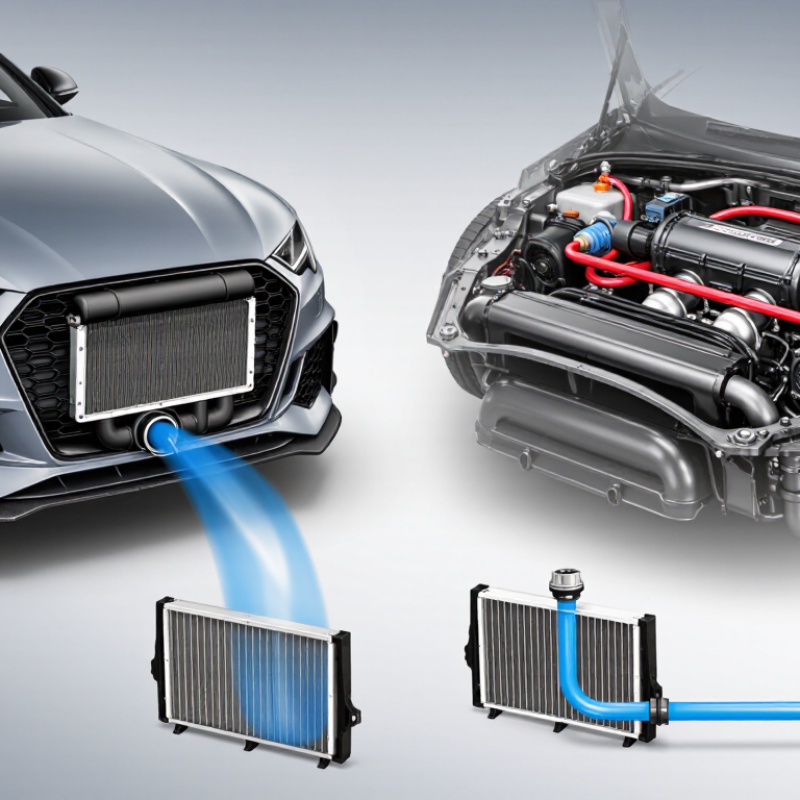
Corky Bell, author of Maximum Boost, is a respected voice in turbocharging. As a practical paraphrase of his engineering approach: “Choose the system that manages charge temperature without creating unnecessary restriction.” This is not a verbatim quotation. It captures a useful principle: compare the whole system, not just its advertised cooling capacity. Air-to-air intercoolers are often simpler and rely on vehicle airflow. Air-to-water designs can package well in tight spaces, but they add a pump, coolant, and more connections to inspect.

Details matter. Core size, fin design, ducting, ambient temperature, and boost pressure all affect results. So does the route: a front-mounted core may see clean airflow, while a poorly sealed duct can leave part of it underused. Measure intake temperatures and pressure drop under realistic conditions when possible. Numbers help.

There is no universal winner. That answer can feel unsatisfying, and comparisons are often incomplete when test conditions differ. The right choice depends on repeatable performance, available space, maintenance tolerance, and the way the vehicle is actually driven.
What Type of Turbo Intercooler Is Best?

How a Turbo Intercooler Works

A turbocharger compresses incoming air, and compression raises its temperature. Hot air is less dense, so each cylinder may receive less oxygen than expected. The intercooler transfers heat from the compressed air to the surrounding air or a circulating coolant. Cooler air becomes denser before it enters the engine. That can support consistent power and reduce thermal stress. The effect is practical, not magical. On a warm day, the intercooler’s surface may feel hot after a drive because it is shedding heat.

Air-to-air intercoolers use outside airflow through a finned core. They are often simpler, but their performance depends on placement and vehicle speed. Water-to-air systems move heat into coolant, which can help when packaging space is tight. They add pumps, hoses, and another heat exchanger. There is no universally best type. Core size alone does not tell the whole story: restrictive passages can create pressure loss, while a small core may heat-soak during repeated acceleration. Fit, airflow, and measured temperatures matter. Even readings can mislead if sensors sit in different locations. A careful installation check should look for secure connections and unobstructed airflow.

Main Types of Turbo Intercoolers

What Type of Turbo Intercooler Is Best?

Main Types of Turbo Intercoolers

Air-to-air intercoolers pass compressed intake air through a finned core, where road airflow removes heat. They are relatively simple, lightweight, and effective when the front of the vehicle receives steady airflow. Their weakness appears in slow traffic or a tightly packed engine bay. Heat-soaked fins cannot cool as well. Air-to-water systems move intake heat into liquid, then reject it through a separate radiator. They package neatly and respond quickly, but add a pump, hoses, coolant, and possible failure points. Some engines use integrated liquid-cooled cores; these are compact, though often more complex to service.

Compare both designs using core effectiveness and pressure drop, measures used in SAE International heat-exchanger research. The ideal-gas relation also shows why temperature matters: at equal pressure, cooling charge air from 150°C to 50°C could raise its theoretical density by about 31%. This is a calculation, not a guaranteed dyno gain; actual results depend on humidity, airflow, and system losses. A larger core is not automatically better.

Tips: For frequent highway use, air-to-air may suit the available airflow. For short bursts, tight packaging, or low-speed driving, liquid cooling can be practical. Check measured outlet temperatures and pressure drop under repeatable conditions. Don’t overlook pump flow or radiator placement; those details are easy to underestimate.

How Intercooler Designs Compare

Air-to-air intercoolers use outside air to cool compressed intake air. They are relatively simple, with no pump or coolant lines to maintain. Their performance depends on clean airflow through the core. A front-mounted unit may work well on a road car, but a blocked grille or poor ducting can limit its cooling. It is simple.

Air-to-water designs transfer heat into circulating coolant, then release it through a separate heat exchanger. Their compact core can suit tight engine bays and short intake routes. The trade-off is added weight and complexity: pumps, hoses, and coolant all need attention. In repeated hard driving, heat can build up in the coolant. That matters. A system sized for brief acceleration may behave differently during long climbs or track sessions.

Core construction also changes the comparison. Tube-and-fin cores are often lighter and can allow good airflow, while bar-and-plate cores are generally sturdier and may store more heat. Neither is automatically superior; core size, fin layout, pressure drop, and installation all affect results. A larger core is not always better. It can obstruct airflow to the radiator, and a poorly sealed duct can waste cooling potential. Compare measured intake temperatures under similar conditions, and check that the chosen design fits the vehicle’s airflow and space constraints.

What Type of Turbo Intercooler Is Best? - How Intercooler Designs Compare

Comparison point Air-to-Air, Tube-and-Fin Air-to-Air, Bar-and-Plate Water-to-Air
How it works Charge air flows through tubes while ambient air passes over external fins, carrying heat away. Charge air passes through stacked passages separated by plates; ambient air flows through the other passages to remove heat. Charge air transfers heat to a liquid coolant in a compact core. The warmed coolant then releases heat through a separate heat exchanger.
Typical strengths Often offers low weight, a relatively simple installation, and effective cooling when mounted in a strong airflow. Often provides a robust core and substantial heat-transfer area in a given frontal size; suitable designs can handle demanding use. Can place the charge-air cooler close to the engine, allowing short intake plumbing and flexible packaging.
Packaging and airflow Needs a position with good ambient airflow, such as the front of the vehicle. Long charge-air pipes may be needed depending on the layout. Also depends on airflow through the vehicle’s front end. Core thickness and placement must be balanced against airflow to other heat exchangers. The charge-air core can be located where space is available, but the system still needs a coolant heat exchanger with adequate airflow.
Heat management in repeated use Can perform consistently when it receives adequate airflow and is correctly sized. Heat soak can occur at low vehicle speed or during repeated high-load operation. Performance depends on core design, airflow, and sizing. A larger or denser core is not automatically better if it restricts airflow or adds excessive pressure loss. Coolant provides a buffer against short heat spikes, but repeated high-load use can warm the coolant. Sustained performance depends on the coolant radiator, pump, and system capacity.
Charge-air plumbing Pipe length and routing depend on the vehicle layout; longer pipes can add volume and create packaging challenges. Usually uses a similar charge-air routing approach to other air-to-air systems; the core construction itself does not determine pipe length. Can use shorter charge-air pipes when the core is mounted near the engine, though coolant lines and electrical or mechanical pump connections are added.
System complexity Generally the simplest of these layouts: the charge-air core and airflow path are the main requirements. Generally similar in system complexity to a tube-and-fin air-to-air arrangement; construction and core design affect cost and weight. More components are required, typically including a coolant pump, reservoir or fill point, hoses, and a separate heat exchanger.
Weight and maintenance considerations Often a lighter option, although actual weight depends on core size and materials. Keep the core clear of debris and inspect for leaks or damage. Can be heavier than a comparable tube-and-fin core, depending on its construction and size. Inspect for impact damage, leaks, and blocked airflow. Adds coolant and components, increasing system complexity and potentially weight. Coolant condition, pump operation, and hose connections need attention.
Often a good fit for Road vehicles with good front-end airflow, where simplicity, low weight, and straightforward servicing are priorities. Applications needing a sturdy air-to-air core, provided there is enough space and airflow for the selected core. Vehicles with limited space for long charge-air pipes, or layouts where a remotely mounted coolant heat exchanger is practical.
Main trade-off Cooling effectiveness relies strongly on ambient airflow and suitable core placement. Core strength and heat-transfer area must be weighed against size, weight, airflow restriction, and pressure drop. Compact charge-air packaging comes with added components and the need to manage coolant temperature under sustained load.
Best choice depends on Engine output, duty cycle, available space, ambient conditions, airflow, allowable pressure drop, charge-pipe layout, and the quality of the complete installation. No design is best for every vehicle.

Note: Tube-and-fin and bar-and-plate describe core construction, while air-to-air and water-to-air describe how heat is transferred. Actual cooling capacity, pressure drop, weight, and durability vary with core dimensions and design.

Factors That Affect Intercooler Performance

Intercooler performance depends on more than core size. An air-to-air design relies on clean airflow through its front face, so a large core can disappoint when a bumper opening is blocked or ducting lets air escape around it. A water-to-air system can fit tighter spaces, but its pump, heat exchanger, and coolant volume add complexity. Neither wins everywhere.

Fin density and internal passage design affect both heat transfer and pressure drop. Tightly packed fins may shed heat well at speed, yet collect debris and restrict airflow when conditions are poor. A core that is too small may struggle during repeated acceleration; one that is oversized can add unnecessary weight and piping volume. There is no magic dimension.

Installation matters just as much. Sharp bends, long pipes, loose couplers, and poor seals can reduce the benefit of a good core. Ambient temperature and vehicle speed change the results, too. On a hot day in slow traffic, an air-to-air unit may receive little cool airflow. Measure intake temperature and pressure before and after the intercooler under repeatable conditions. Check again after several pulls, not just one. I would not trust a single reading; sensor placement and changing weather can mislead.

How to Choose the Best Type for Your Setup

Choosing the best turbo intercooler means matching it to your driving conditions, available space, and airflow—not simply buying the largest core. For steady road use, an air-to-air unit is often a practical choice because it uses outside air and has fewer components. Check that the core receives clean airflow behind the grille. A tightly packed bumper can leave even a large intercooler struggling in slow traffic.

An air-to-water system can suit a compact engine bay or a setup needing short charge-air piping. It also needs a pump, heat exchanger, coolant, and room for service access. That extra complexity matters. Consider pressure drop, core dimensions, end-tank design, and how the car is used. Track sessions, towing, and short street trips create different heat loads. It is tempting to choose by core size alone, but that shortcut can overlook airflow and fitment. I would check measurements twice; they are easy to misread.

Tips: Measure the mounting area and pipe routes before ordering. Look for stable intake temperatures during repeated pulls, not just one quick test. Keep sensor locations and maintenance access in mind. A setup that fits neatly is not always the one that cools best.

Contact Us Today for a Free Quote

(800) 708-6036