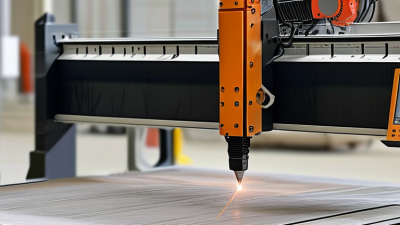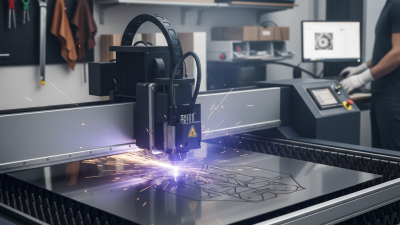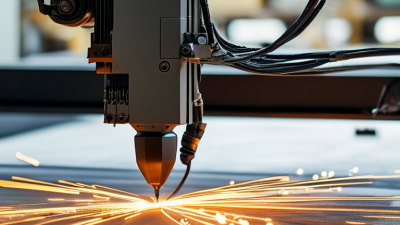
Choosing the best laser table for global buyers requires more than comparing prices and product photos. It requires practical judgment.
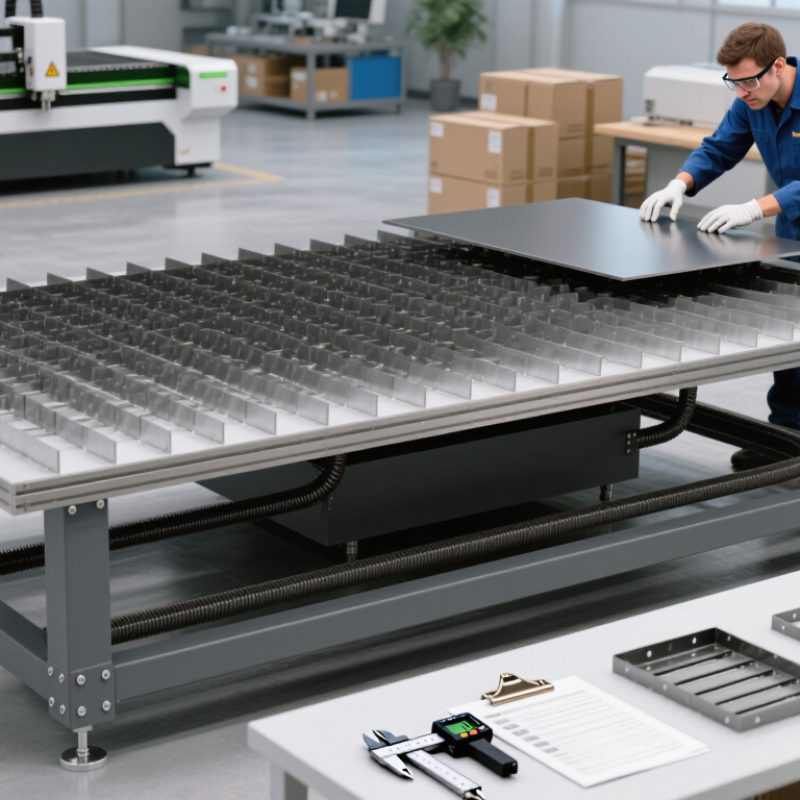
A dependable laser table should match the machine type, working area, material thickness, and expected production volume. Buyers should examine the frame, slat design, surface flatness, load capacity, and compatibility with their laser system. A table that looks strong may still vibrate during cutting. That small movement can affect edge quality and alignment.
Real operating details matter.
Experienced users often check welded joints, adjustable feet, drainage paths, and access for cleaning. Carbon steel supports heavy industrial work, while stainless steel may suit environments requiring better corrosion resistance. Replaceable support parts can also reduce long-term maintenance costs. These details are easy to overlook.
Supplier quality deserves equal attention. Global buyers should request material specifications, dimensional drawings, inspection records, warranty terms, and clear installation instructions. Independent testing or a pre-shipment inspection can provide stronger evidence than marketing claims. Export packaging, spare parts, and responsive technical support also influence the total buying experience.
No table is perfect.
A low-cost model may perform well in light production but fail under continuous heat and heavy loads. A premium design may offer unnecessary capacity for a small workshop. Buyers should compare verified requirements rather than follow attractive specifications. They should also confirm electrical, workplace safety, import, and environmental requirements in the destination market.
This guide evaluates laser table options through performance, durability, safety, serviceability, and supplier reliability. It recognizes that choosing correctly involves trade-offs. Careful questions, practical testing, and honest reflection can lead to a safer and more dependable investment.
Choosing a laser table starts with the material, not the machine’s advertised power. CO₂ lasers use a 10.6 μm wavelength, which suits acrylic, wood, leather, rubber, paper, and many fabrics. Their heat can create smooth edges, but it may also darken wood or melt thin plastics. Start with the material.
Fiber lasers operate near 1.06 μm and are better suited to metals. They can mark stainless steel, aluminum, brass, and coated components with fine detail. Cutting performance depends on power, assist gas, lens quality, and table stability. A rigid bed matters. Vibration can turn a clean serial mark into a blurred line. Global buyers should request sample tests using their actual metal thicknesses.
Diode lasers, commonly around 450 nm, often offer a compact and economical entry point. They work well for engraving wood, coated surfaces, cardboard, and some dark materials. However, their cutting depth and speed are usually limited. In workshop testing, I have seen attractive engraving samples hide slow production times. That is an easy mistake. Ask for measured cycle times, not only photographs. Also inspect ventilation, emergency stops, enclosure design, electrical documentation, and replacement-part access. A table that fits one wavelength may perform poorly with another, so the optical source should match the daily workload, material mix, and operator skill.
What Is the Best China Laser Table for Global Buyers?
Core specifications matter more than marketing language. A 300–3,000 W fiber laser table can cover thin stainless steel, carbon steel, aluminum, and thicker plate work. However, power alone does not guarantee clean edges. Cutting speed, gas pressure, lens condition, and operator settings also influence results. The figures are not magic.
Grand View Research estimated the global laser cutting machine market at approximately USD 7.27 billion in 2023, with continued growth expected through 2030. This expansion reflects demand for faster, automated metal processing. Buyers should compare rated output with real production samples. A 1,500 W system may outperform a 3,000 W system on thin sheet if its motion control and beam delivery are better calibrated.
Accuracy deserves careful reading. A stated ±0.05 mm positioning accuracy sounds impressive, but thermal drift, frame rigidity, and maintenance can change results during long shifts. Ask for test data, repeatability records, and calibration procedures. Bring your own drawings. Measure small holes, corners, and long straight cuts.
Work area is equally practical. A 1,500 × 3,000 mm table suits common sheet sizes, while larger beds reduce repositioning for oversized panels. Yet a bigger table needs more floor space and may increase loading time. TÜV and ISO-based quality practices can improve confidence, but certificates do not replace factory acceptance testing. I would request cut samples in the intended material before approving any purchase.
A global buyer should choose a laser table by material range, not advertised wattage alone. Grand View Research estimates the global laser cutting machine market at about US$7 billion, with growth near 8% annually through 2030. That expansion reflects broader demand for flexible processing equipment. Fiber sources suit steel, stainless steel, and aluminum. CO2 sources generally perform better on wood, acrylic, rubber, and many fabrics. Clear acrylic needs careful focus control for polished edges. Fabric needs low power and clean extraction because scorching happens quickly. Stone is more complicated. Many systems engrave stone effectively, but cutting thickness and cracking vary sharply.
A practical table should support stable focus, adjustable speed, strong ventilation, and repeatable alignment. In production trials, a small test grid often reveals more than a specification sheet. Try several power and speed combinations on the actual material. A neat material chart can still mislead. Resin content, moisture, pigment, and surface coating change the result. I would not assume one lens handles every job. That assumption becomes expensive.
Tips: Ask for sample cuts before purchase. Request test files for metal, plywood, acrylic, fabric, and stone. Check the usable bed area, extraction capacity, replacement parts, training, and electrical requirements. For international shipping, confirm voltage compatibility and documented safety certification. Keep rejected samples; they often expose the machine’s real limits.
What Is the Best China Laser Table for Global Buyers?
Global demand is growing. MarketsandMarkets projected the laser processing market to reach about USD 30 billion by 2029. That growth makes safety verification more important, not less. A serious laser table should support IEC 60825-1 Class 4 controls, documented risk assessment, and traceable testing. Class 4 systems can cause severe eye or skin injury, even through hazardous diffuse reflections. They may also ignite nearby materials. Small gaps matter.
CE marking is not a standalone laser safety certificate. It shows conformity with applicable European requirements, supported by a technical file and declaration. FDA compliance in the United States requires attention to 21 CFR 1040.10 and 1040.11, including product reporting, labeling, and protective features. ISO 12100 adds the risk-reduction method. Designers should identify hazards, reduce them through engineering controls, and document remaining risks.
Look for a fully enclosed work area, monitored interlocks, emergency stop access, key control, beam containment, warning labels, and reliable extraction. The enclosure should remain safe during maintenance, not only during normal operation. The U.S. Bureau of Labor Statistics continues to record thousands of serious occupational eye injuries annually, although not all involve lasers. That figure is a useful warning, not a laser-specific measurement. A polished certificate can still hide weak installation practices. I would inspect the actual table, test the interlocks, and request recent reports before purchase.
| Buyer Evaluation Dimension | Recommended Target for a Global-Buyer Laser Table | Relevant Requirement or Standard | Evidence to Request Before Purchase | Global Buying Consideration |
|---|---|---|---|---|
| Laser safety classification | Treat the complete machine as a Class 4 laser system when hazardous accessible emissions may occur during operation, alignment, servicing, or enclosure opening. | IEC 60825-1 classification and labeling requirements. | Laser classification report, measured wavelength and accessible emission data, warning labels, and user manual. | Class 4 systems require controlled operating procedures, trained users, and suitable engineering controls. |
| Protective enclosure | A fully enclosed processing area with access panels designed to prevent hazardous laser radiation from escaping during normal operation. | IEC 60825-1 engineering controls; risk reduction principles under ISO 12100. | Enclosure design drawings, material specifications, access-panel test records, and laser safety assessment. | The enclosure should match the laser wavelength and application; transparent viewing windows require appropriate protective filtering. |
| Safety interlock system | Interlocked doors and removable panels that stop or inhibit hazardous laser emission when opened. | IEC 60825-1 safety control expectations; applicable machinery safety principles. | Interlock circuit diagram, functional test procedure, fault-response description, and maintenance instructions. | An interlock must not be treated as a substitute for a complete risk assessment or safe service procedure. |
| Emergency stop function | Clearly visible emergency-stop controls that bring hazardous motion and laser emission to a safe state. | ISO 12100 risk reduction; applicable machinery-control requirements in the destination market. | Electrical schematics, stop-category description, reset procedure, and emergency-stop verification record. | Emergency stop should require a deliberate reset and should not automatically restart the machine. |
| CE conformity for the European market | A complete technical file and a properly issued EU Declaration of Conformity for the supplied machine configuration. | Applicable EU legislation may include the Machinery Directive or Machinery Regulation transition requirements, EMC, Low Voltage, and RoHS rules, depending on the product and date of placing on the market. | EU Declaration of Conformity, risk assessment, technical construction file summary, test reports, and user instructions. | CE marking is a manufacturer’s conformity declaration, not a universal third-party safety certificate. |
| U.S. FDA laser compliance | Documentation demonstrating compliance with applicable U.S. laser product performance requirements before commercial distribution in the United States. | 21 CFR 1040.10 and 21 CFR 1040.11, as applicable to the laser product and configuration. | Product classification, compliance test data, required labels, user information, and applicable FDA reporting or notification records. | FDA requirements are separate from CE requirements; verify obligations with the U.S. importer or regulatory specialist. |
| ISO 12100 risk assessment | A documented risk assessment covering laser radiation, mechanical movement, electricity, fire, fumes, heat, noise, maintenance, and foreseeable misuse. | ISO 12100 principles for machinery safety risk assessment and risk reduction. | Hazard analysis, risk-reduction measures, residual-risk information, and verification records. | The assessment should cover the actual supplied configuration, accessories, software, tooling, and operating environment. |
| Electrical safety | Correctly rated power supply, protective earthing, over-current protection, accessible disconnecting means, and documented electrical tests. | Applicable destination-market electrical and machinery safety requirements. | Wiring diagrams, insulation and earth-continuity test results, component ratings, and power-consumption data. | Confirm voltage, frequency, plug type, grounding arrangement, and local electrical installation requirements. |
| Fume extraction and fire protection | Application-appropriate extraction, filtration, airflow monitoring where needed, and safeguards against ignition of combustible materials. | ISO 12100 risk reduction and local workplace, fire, and ventilation requirements. | Airflow specifications, filtration data, compatible-material list, fire-risk assessment, and maintenance schedule. | PVC and other chlorine-containing materials can generate hazardous or corrosive fumes and should not be processed unless specifically assessed and approved. |
| Laser wavelength and process suitability | Select wavelength and power according to the material, thickness, cutting or engraving method, and required production rate. | IEC 60825-1 wavelength-specific classification and protective-filter considerations. | Laser source specifications, wavelength tolerance, rated output, beam-quality data, and material test results. | Do not compare machines using wattage alone; optical output, spot size, motion accuracy, cooling, and material compatibility also affect performance. |
| Documentation and language support | Complete manuals covering installation, operation, cleaning, alignment, maintenance, emergency procedures, and residual risks. | Documentation obligations associated with applicable CE, FDA, IEC, and machinery-safety requirements. | English manual, destination-language safety information where required, wiring diagrams, spare-parts list, and training materials. | Incomplete documentation can delay customs clearance, installation, operator training, and conformity review. |
| Acceptance testing before shipment | Factory acceptance testing covering laser emission, enclosure leakage, interlocks, emergency stop, motion limits, extraction, and sample output. | Verification and validation principles supporting IEC 60825-1 and ISO 12100 compliance evidence. | Signed test checklist, dated photographs or videos, measurement records, and final configuration details. | Test the exact machine configuration, because later changes to the laser source, enclosure, software, or extraction system may affect conformity. |
A practical buyer evaluation should begin with return on investment, not the lowest quotation. Compare purchase cost with expected cutting speed, energy use, maintenance, and operator training. A machine earning revenue for eight hours daily needs a different design from one used occasionally. Calculate payback using realistic order volumes, not optimistic projections. A spreadsheet helps.
Duty cycle deserves close attention. Ask how many continuous operating hours the table can handle, and which components require cooling or scheduled rest. Request test data for your actual materials and thicknesses. A machine may cut quickly during a demonstration, yet perform differently in a warm workshop. That detail matters. It is easy to overlook.
Warranty terms should state coverage periods, excluded parts, response times, and shipping responsibilities. Software should support familiar file formats, parameter libraries, nesting, diagnostics, and user permissions. Check whether updates remain available after the initial purchase. Support quality is equally important. Confirm remote troubleshooting, spare-part availability, installation guidance, and training language. Contact existing users in similar markets when possible. Their experience may reveal delays that sales documents do not mention. However, references can be selective, so treat them as evidence, not proof. A careful comparison records every promise in writing and leaves room for unexpected downtime. My own evaluation would still include a small risk allowance, because real workshops are rarely as clean as demonstrations.