7 CNC Cutting Machine Buying Tips for Global Buyers

A cnc cutting machine can shape a workshop’s output for years. The wrong choice can also leave expensive capacity idle. Global buyers must look beyond cutting speed and headline price. They need to match the machine to real materials, part sizes, tolerances, and production volumes.

CNC educator Mike Lynch has written extensively about CNC programming and machine operation. This guide takes a practical, measurable approach to buying. W. Edwards Deming, a quality-management expert, is often quoted as saying, “Quality comes not from inspection, but from improvement of the production process.” That idea matters here: a machine should support repeatable results, not just impressive demonstrations.

Look closely at the details. Will the table fit a full sheet, or require extra handling? Can the spindle, laser, or plasma system process your most common material at the required thickness? Ask for sample cuts, cycle-time estimates, and clear service terms. Check controller usability, software compatibility, installation needs, training, and access to spare parts in your region. Small details matter.

A brochure is not a production trial. Compare total ownership costs, including tooling, maintenance, power, and downtime. Request references from buyers with similar workloads, and verify support response times before signing. A supplier’s answers should be specific and testable. If a claim sounds unusually broad, ask for evidence. Even then, forecasts can miss the mark. This outline helps global buyers assess seven practical factors before choosing a cnc cutting machine—without mistaking a low quote for long-term value.
7 CNC Cutting Machine Buying Tips for Global Buyers

Define Your Materials, Applications, and Production Requirements

Before comparing CNC cutting machines, list the materials you actually process: grade, thickness, sheet size, and surface condition. The World Steel Association’s World Steel in Figures 2024 reports 1,892.2 million tonnes of crude steel production in 2023. The International Aluminium Institute reports about 70.6 million tonnes of primary aluminium production that year. These figures show why “metal cutting” is not one specification. A 3 mm aluminium panel and a 20 mm steel plate need different cutting processes, power, and edge-quality targets. Small details matter. Record your thickest regular job, not just the occasional maximum.

Then define the finished part and the production rhythm. Is the priority a clean edge, tight tolerances, low heat distortion, or fast throughput? Specify these needs alongside daily cutting hours, batch sizes, and sheet-loading limits. A machine’s advertised maximum speed may mean little if operators spend time repositioning sheets or removing dross. For example, a shop cutting decorative panels may value fine detail, while a fabricator producing repeated brackets may need reliable nesting and quick changeovers. Match the cutting process to the material and finish requirements, then check whether the machine can sustain your normal workload. It is easy to overestimate future volume; compare the purchase against real job records, and revisit the estimate after a few months.
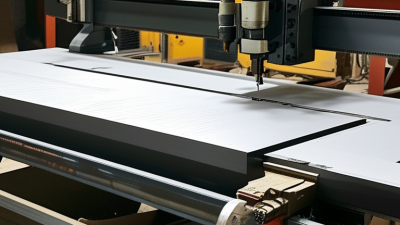
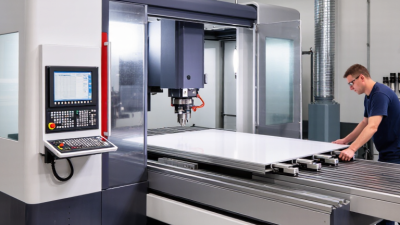
7 CNC Cutting Machine Buying Tips for Global Buyers: Define Your Materials, Applications, and Production Requirements

Example material profile: define the maximum thickness you need to cut for each material before comparing machine types and rated capacities.

Illustrative buyer requirements only—not universal machine limits. Cutting capacity depends on the machine type, tooling, material grade, and required edge quality. Confirm rated capacity with the supplier for your specific application.

Compare CNC Machine Types, Work Areas, and Key Specifications

Choosing a CNC cutting machine starts with the material and cut, not the largest advertised work area. A router suits wood, plastics, and some composites; a milling machine handles rigid metal parts. Plasma cutters process conductive plate quickly, while lasers make precise cuts in suitable sheet materials. Waterjet cutting avoids heat distortion, but can involve higher operating and maintenance costs. Each process has limits.

Grand View Research valued the global CNC machine market at USD 101.22 billion in 2023 and projected a 9.5% compound annual growth rate from 2024 to 2030. The scale of investment makes specification checks worthwhile. Compare usable work area with your actual sheet size, clamps, and loading space. A wider table is not automatically better. Check Z-axis clearance, spindle power or cutting capacity, repeatability, feed rate, and duty cycle. Also ask about dust extraction, cooling, and service access. On paper, two machines may look similar. Ask the supplier to cut your own material and thickness, then inspect edge quality, dimensions, and cycle time. I would not rely on maximum speed alone; production results can be less tidy than a catalogue suggests.

Assess Accuracy, Software Compatibility, Safety, and Automation

7 CNC Cutting Machine Buying Tips for Global Buyers

Assess Accuracy, Software Compatibility, Safety, and Automation

For global buyers, a CNC cutting machine’s stated accuracy is only a starting point. Request a repeatability report and run a test cut on your own material. Measure several parts, including one after a longer production cycle; heat and vibration can reveal issues that a short demonstration misses. Small details matter. A perfect brochure still proves little.

Check that the machine works with your CAD/CAM software, file formats, and controller. Ask for the correct postprocessor and test a real toolpath before purchase. Simulate cutting, then inspect the output for collisions and unexpected tool changes. A file that opens is not necessarily a file that cuts correctly. Keep the test simple, but document the results.

Safety and automation deserve the same scrutiny as speed. Inspect guarding, interlocks, emergency stops, and access around the cutting area; request the machine’s risk documentation and operator training plan. The International Federation of Robotics reported 4,281,585 industrial robots in operation worldwide in 2023, up 10% from 2022, in World Robotics 2024. Automation is growing, but integration can be uneven. Confirm how the machine handles loading, alarms, and recovery after a stoppage. Deloitte’s 2024 Smart Manufacturing Survey found 86% of surveyed manufacturing executives expected smart manufacturing to drive competitiveness over the next five years. Ask what data the CNC actually shares, and with which systems.

7 CNC Cutting Machine Buying Tips for Global Buyers — Assess Accuracy, Software Compatibility, Safety, and Automation

Buying factor What to assess Practical evaluation Questions for the supplier
1. Cutting accuracy and repeatability Separate positioning accuracy, repeatability, and finished-part tolerance. Results depend on the machine, material, tooling, setup, and process. Request test cuts using representative materials and geometry. Check measured parts across multiple runs rather than relying only on a headline specification. How are accuracy figures measured, under what conditions, and can you provide a documented sample test?
2. Material and cutting capacity Confirm the machine is designed for the materials, thicknesses, sheet or workpiece sizes, and cutting methods your jobs require. Compare the usable work area and recommended operating range with your actual parts. Test the most demanding common material before purchase. Which materials and thickness ranges are supported, and what process settings or tooling are needed?
3. Software compatibility Check CAD/CAM workflow, accepted file formats, controller requirements, post-processors, and whether software and licenses are included. Send a representative design file and confirm that it can be imported, prepared, simulated, and run correctly on the proposed system. Which file formats and post-processors are supported? Are there recurring software, update, or licensing fees?
4. Safety and compliance Review guarding, emergency stops, interlocks, extraction or fume controls where applicable, operating instructions, and the requirements of the destination market. Ask for risk and compliance documentation relevant to the machine configuration and intended use. Confirm who is responsible for local installation and verification. Which safety standards and documents apply in my market, and what safety features are included as standard?
5. Automation and workflow Assess loading and unloading, material handling, tool changing, job setup, monitoring, and integration with existing production systems. Estimate the labor and throughput impact for your production mix. Verify which automation options are included and which require additional equipment. Which tasks can run unattended, what operator involvement is still needed, and can the system integrate with our workflow?
6. Installation, service, and training Consider site preparation, power and air requirements, commissioning, operator training, maintenance guidance, spare parts, and technical support access. Compare the complete installation plan and support coverage for your location, including expected response channels and availability of replacement parts. What must be prepared at the site, what training is provided, and how are service requests and spare parts handled?
7. Total cost and operating requirements Look beyond the purchase price to include tooling or consumables, software, energy, extraction, maintenance, shipping, duties, and installation. Build a cost comparison using your expected operating hours and production volume. Confirm which items are included in the quoted price. Can you provide an itemized quotation, utility requirements, recommended maintenance schedule, and warranty terms?

Verify Supplier Experience, Certifications, and International Support

Before comparing prices, verify that the supplier has built machines for materials and workloads like yours. Ask for references from buyers processing similar sheet thicknesses, metals, or production volumes. Request a sample cutting plan and inspect the finished edge, including burrs and heat marks. Details matter. Confirm the supplier’s experience covers installation and operator training, not only machine assembly.

Check each certificate’s scope, issuing body, site address, and expiry date. The ISO Survey 2022 counted more than 1.2 million ISO 9001 certificates worldwide. That scale makes one point clear: a certificate alone does not prove a particular machine’s performance. Paperwork is not proof. Ask how quality checks are recorded, and whether electrical and machinery-safety documentation matches the machine you will receive. I would still verify these details directly; supplier brochures can leave important gaps.

International support deserves equal scrutiny. Get written response times, service languages, remote-diagnostic options, and local technician coverage before paying a deposit. Ask which wear parts are stocked nearby, how quickly parts can ship, and who handles commissioning across time zones. A two-day reply may sound acceptable until a production line is idle. Request a recent support case, with sensitive customer details removed, and check whether the promised escalation path is practical for your location.

Estimate Total Costs, Shipping, Installation, and Ongoing Maintenance

A CNC cutting machine’s purchase price is only one line in the budget. Request separate quotes for crating, freight, cargo insurance, port handling, customs clearance, and delivery to your workshop. Confirm the packed dimensions and weight; an oversized crate may require special handling.

Drewry’s World Container Index reported an average spot rate of US$5,901 per 40-foot container on July 11, 2024, illustrating how sharply freight can move. Treat this as market context, not a machine-shipping quote. Small details matter.

Installation costs can include a reinforced floor, electrical upgrades, compressed air, dust extraction, and operator training. Ask the supplier what is included, and get written confirmation of travel, labor, and commissioning fees. Then estimate annual costs for electricity, consumables, filters, lubrication, tooling, and replacement parts.

The U.S. Department of Energy’s Operations & Maintenance Best Practices Guide estimates that improved maintenance can reduce energy use by 5–20% in relevant facilities; this is a broad benchmark, not a CNC-specific promise.

Compare service response times and spare-parts availability, not just hourly rates. A machine waiting days for a common component still costs money. Keep a small contingency for exchange-rate changes, port delays, and site work.

My estimate would not be perfect; freight and installation quotes can change after inspection. Record assumptions beside each figure, so a low purchase price does not hide a high operating cost.

Contact Us Today for a Free Quote

(800) 708-6036