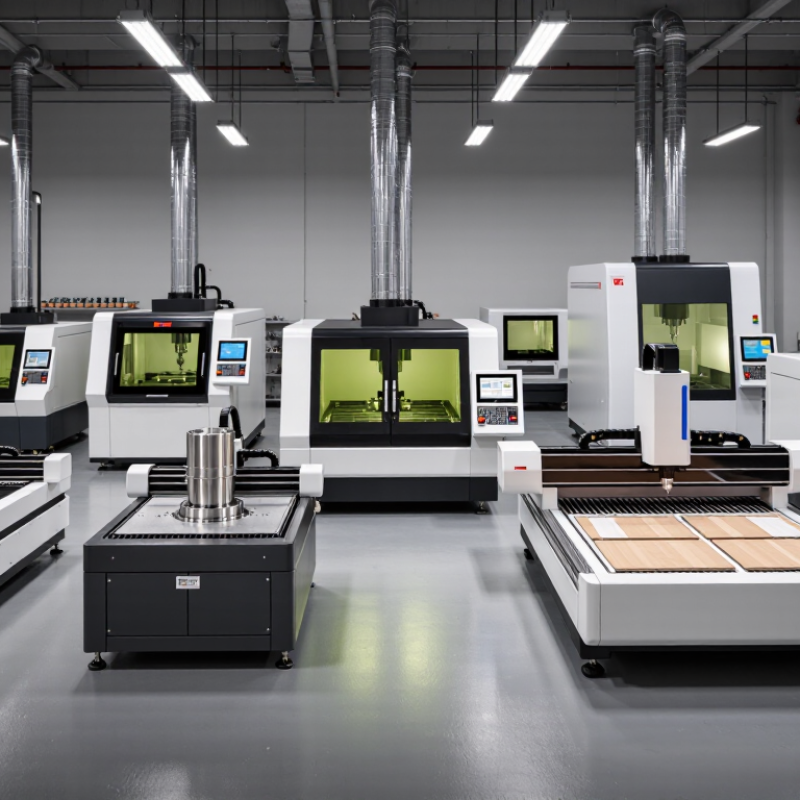
Choosing among the top 10 laser etching machines for global buyers requires more than comparing prices and power ratings. Each machine must match the material, production volume, marking depth, software, and service expectations. A compact fiber laser may excel on stainless steel parts, while a CO₂ system often suits wood, acrylic, leather, or coated surfaces. Details matter.
Professor Reinhart Poprawe, a respected laser technology researcher and former director of Fraunhofer ILT, has said, “Laser technology is a key technology for the future of manufacturing.” His view reflects the growing role of laser etching in traceability, branding, serial numbering, and industrial quality control. However, advanced technology does not automatically guarantee reliable results. Operators still need correct focus, stable ventilation, suitable fixtures, and tested parameters.
This guide examines ten machines from a buyer’s practical perspective. It considers laser source, working area, accuracy, speed, safety design, maintenance, software compatibility, and supplier support. It also considers shipping realities. Spare lenses, replacement filters, training, and local technical assistance can affect long-term costs.
No ranking is perfect. A machine that looks impressive on paper may underperform in a humid workshop or a busy factory. Some listings also present optimistic specifications. That assumption fails. Buyers should request sample markings, confirm warranty terms, and test their actual materials before purchasing. The selected machines represent different budgets and production needs, helping global buyers compare capabilities without ignoring everyday limitations.
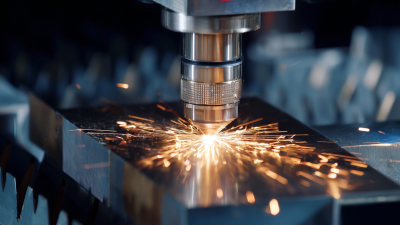
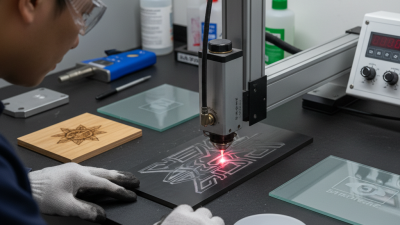
Laser etching machines use a focused light beam to remove or alter a thin surface layer. This creates permanent text, numbers, patterns, or codes without ink. The beam follows digital artwork supplied by specialized control software. Operators adjust power, speed, frequency, and focus for each material. Small changes can affect contrast and edge quality. It takes testing. A dark mark is not always a strong mark. Excessive heat may warp plastic or discolor metal.
Their core functions include marking serial numbers, barcodes, production dates, measurements, and decorative designs. Some systems use rotary attachments for bottles, tubes, or cylindrical parts. Others include enclosed work areas, extraction units, cameras, or automatic loading tables. Materials may include stainless steel, aluminum, wood, glass, coated surfaces, and selected polymers. Not every machine handles every material. That limitation matters. A first test may look acceptable, then fail after abrasion or cleaning.
Applications appear across electronics, tools, automotive components, medical equipment, packaging, and small craft production. Durable marks support traceability and reduce labeling errors. Global buyers should check working area, laser power, software compatibility, maintenance access, and operator training requirements. Safety interlocks and suitable ventilation are essential. Ask for sample tests using the actual material, not a similar substitute. Specification sheets can sound impressive. They rarely show surface variation, setup time, or failed samples. A reliable evaluation includes repeatability, service documentation, and realistic production trials.
Comparing the top 10 laser etching machines requires more than checking advertised speed. Start with the laser source, wavelength, rated power, pulse duration, and spot size. Fiber systems around 1,060–1,070 nm suit many metals, while CO2 systems near 10.6 microns suit wood, acrylic, and coated materials. The best choice depends on the workpiece, not the ranking.
Marking speed is useful, but acceleration, positioning accuracy, and repeatability matter more in production. Compare marking fields, lens options, software compatibility, and maximum part height. Check whether the quoted speed uses simple lines or dense graphics. A 2024 Grand View Research market report identifies automation and traceability as major growth drivers in laser marking equipment. That makes interface support, barcode verification, and data connection practical specifications, not optional extras.
Tips: Ask for sample tests using your real material and artwork. Request results at the stated power and speed. Review enclosure classification, extraction capacity, emergency controls, and IEC 60825-1 compliance. Cooling design also deserves attention; air-cooled units simplify maintenance, but water-cooled systems may support heavier duty cycles. Power consumption and replacement optics influence total ownership cost. Published figures can be overly tidy. I would leave room for doubt, especially when suppliers omit pulse width, duty cycle, or accuracy conditions. A careful comparison sheet should record every missing value before purchasing.
This comparison uses commonly published specification levels for industrial and professional laser etching configurations. The chart compares maximum marking speed, while laser type and rated power provide additional context for evaluating material compatibility, productivity, and operating cost.
Fiber systems are generally preferred for metals, UV systems for plastics and sensitive materials, and CO₂ systems for wood, acrylic, glass, leather, and other non-metal surfaces. Actual performance depends on lens selection, material, engraving depth, and operating conditions.
Top 10 Laser Etching Machines for Global Buyers
Top 10 Laser Etching Machines for Different Materials and Industries
The best laser etching machine depends on the material, detail, and production speed. A fiber laser suits stainless steel, aluminum, tools, and automotive parts. A CO2 laser handles wood, glass, leather, and coated packaging. UV lasers create low-heat marks on plastics, medical components, and electronics. Green lasers work well on copper and delicate reflective surfaces. MOPA fiber systems offer stronger contrast on anodized aluminum. Diode lasers fit light-duty wood and craft production. Ultrafast picosecond and femtosecond lasers support microtexturing and precision electronics. Three-dimensional systems mark curved components. Galvo scanning machines improve speed. Integrated conveyor systems support high-volume factories.
According to Grand View Research, the global laser marking machine market is expected to grow at a strong compound annual rate through 2030. MarketsandMarkets also identifies electronics, automotive, and aerospace as major demand areas. These reports show expansion, but “top” is not universal. A fast machine may produce poor contrast on transparent plastic. I have seen test samples pass visually, then fail after abrasion testing. That detail matters. Reported market forecasts can also vary because suppliers classify systems differently.
Tips: Test the exact material before purchasing. Check marking depth, cycle time, fume extraction, software control, and maintenance access. Ask for abrasion, heat, and chemical-resistance results. For safety, verify enclosure design and compliance with applicable laser standards. A smaller machine may be wiser when floor space and operator training are limited.
Choosing a laser etching machine for global operations requires more than comparing power ratings. Grand View Research estimated the global laser marking machine market at about USD 3.3 billion in 2023. That growth reflects demand for traceability, not just decorative marking. Define your materials first. Plastics, stainless steel, coated aluminum, and ceramics may need different wavelengths, pulse widths, or focus settings.
Production evidence matters. The International Federation of Robotics reported 541,302 industrial robots installed worldwide in 2023. Your machine should support automation through stable interfaces, barcode readers, and repeatable positioning. Test a real production sample, including curved surfaces and oily parts. Ask for measured cycle times, not brochure estimates. Small errors become expensive across multiple countries.
Global deployment also requires practical safety and service planning. Check alignment with IEC 60825-1, local electrical requirements, enclosure protection, and operator training. Confirm voltage ranges, software languages, remote diagnostics, spare-part availability, and response times. A fast machine can still fail operationally. In factory audits, teams often overlook fume extraction and lens contamination. That mistake reduces contrast and shortens maintenance intervals. Total cost should include installation, consumables, calibration, training, and downtime. A spreadsheet may hide those costs. My own selection criteria would remain open to revision after a three-shift pilot, because laboratory results rarely match every factory floor.
Choosing among the top 10 laser etching machines requires more than comparing power and price. Safety should guide every international purchase. Look for a fully enclosed work area, door interlocks, emergency stops, and suitable ventilation. The machine should include clear risk warnings and operating instructions. Never rely on appearance alone.
Maintenance affects engraving quality and worker safety. Inspect lenses, mirrors, extraction filters, cables, and cooling systems on a fixed schedule. Dust can weaken airflow and distort fine details. Keep a maintenance log with dates, symptoms, and replaced parts. A small fault can become expensive. Do not ignore unusual noise.
International buyers must verify voltage, plug type, shipping protection, customs documents, warranty limits, and local technical support. Ask for electrical diagrams, training materials, spare-part lists, and installation requirements before payment. Confirm whether the supplier can support remote diagnosis across time zones. Certification documents should match the machine’s actual configuration, not a generic model. This detail is often missed. I would also request a sample test using your material, because advertised results may not reflect your workshop conditions. No checklist is perfect. Leave room for operator training, language differences, and unexpected maintenance delays.
Comparison of widely used machine configurations for international purchasing. Specifications are typical market ranges for new equipment and should be confirmed in the supplier’s technical quotation.
| Rank | Machine Configuration | Typical Laser Source & Wavelength | Typical Power | Common Working Area | Suitable Materials | Typical Throughput | Safety Requirements | Routine Maintenance | Electrical & Utility Requirements | International Purchasing Checks | Best-Fit Applications |
|---|---|---|---|---|---|---|---|---|---|---|---|
| 1 | Enclosed Fiber Laser Marker | Fiber laser, approximately 1,064 nm | 20–50 W | 100 × 100 mm to 175 × 175 mm | Stainless steel, aluminum, copper, brass, coated metals, engineering plastics | Fast serial-number and text marking; typically suitable for high-volume batch work | Class 1 enclosure recommended Interlocked door, emergency stop, warning label, fume extraction, and suitable protective eyewear during service |
Clean optics and work area; inspect door interlock and extraction; check focus and galvo alignment periodically | Usually single-phase power; confirm 100–240 V or local voltage, frequency, plug type, grounding, and compressed-air needs | Verify enclosure safety documentation, spare scan lens availability, software language, warranty scope, and export packing | Industrial identification, QR codes, barcodes, tools, electrical components, and metal parts |
| 2 | Desktop Fiber Laser Marker | Fiber laser, approximately 1,064 nm | 20–30 W | 70 × 70 mm to 110 × 110 mm | Most bare and coated metals; selected plastics depending on formulation | Medium to high marking speed for small components | Enclosure strongly preferred Use a local exhaust system and prevent access to the beam path; follow the laser safety classification supplied with the machine |
Lens cleaning, dust removal, focus verification, and periodic inspection of the lift column and rotary-axis connections | Low utility demand; normally requires a grounded single-phase outlet and a stable computer connection | Check packed dimensions, bench-load requirements, regional power cable, customs classification, and replacement-lens cost | Workshops, laboratories, repair centers, prototypes, nameplates, and small metal parts |
| 3 | CO₂ Laser Engraver and Marker | CO₂ laser, approximately 10.6 µm | 30–100 W | 300 × 200 mm to 600 × 400 mm | Wood, acrylic, leather, paper, cardboard, rubber, glass coating, and some plastics | Medium speed; depends substantially on material, engraving depth, and image complexity | Class 1 enclosure recommended Effective exhaust is essential; never process PVC or unknown plastics because corrosive and toxic gases may be produced |
Clean mirrors and lens; maintain tube cooling; inspect belts, rails, air-assist lines, and exhaust filters | Single-phase power; water chiller or closed-loop cooling may be required; exhaust ducting and compressed air are commonly needed | Confirm tube type and replacement availability, cooling specifications, duct diameter, local voltage, and prohibited-material guidance | Signs, packaging, gifts, wood products, acrylic displays, leather goods, and non-metallic labels |
| 4 | Desktop UV Laser Marker | Ultraviolet solid-state laser, approximately 355 nm | 3–10 W | 70 × 70 mm to 110 × 110 mm | Plastics, glass, ceramics, semiconductor materials, painted metals, and sensitive electronic components | Medium speed with low-heat, high-contrast marking on many delicate materials | Strict enclosure and UV protection required Use interlocks, extraction, warning signs, and approved protective eyewear for any exposed-beam maintenance |
Keep optics and cooling system clean; monitor laser power stability; inspect extraction and enclosure interlocks | Stable single-phase supply; temperature-controlled environment and clean, low-dust installation area are beneficial | Confirm UV source service life, replacement cost, cooling method, software compatibility, and availability of trained service support | Electronics, medical components, glassware, high-value plastics, and fine product markings |
| 5 | MOPA Fiber Laser Marker | MOPA fiber laser, approximately 1,064 nm | 20–60 W | 100 × 100 mm to 175 × 175 mm | Anodized aluminum, stainless steel, titanium, coated metals, and selected plastics | High flexibility; pulse duration control supports color marking and heat-sensitive work | Class 1 enclosure recommended Use interlocked guarding, extraction, emergency stop, and controlled access during setup and service |
Clean lens and worktable; verify focus; inspect cooling, scan head, grounding, and software parameter backups | Usually air-cooled and single-phase; verify operating temperature, humidity limits, and line-voltage tolerance | Request sample tests, parameter files, pulse-width range, software license terms, and documented service procedures | Color marking on aluminum, black marking on plastics, electronics, medical tools, and precision components |
| 6 | 3D Rotary Fiber Laser Marker | Fiber laser, approximately 1,064 nm, with rotary or 3D focusing system | 20–50 W | Flat field commonly 100 × 100 mm to 175 × 175 mm; rotary diameters often 20–100 mm | Metal rings, cylindrical tools, tubes, shafts, and irregular metal components | Medium speed; setup time depends on part fixturing and surface geometry | Enclosed workstation preferred Secure the rotary fixture, maintain interlocks, and use extraction for coatings and contaminated surfaces |
Clean optics; lubricate or inspect rotary bearings as specified; check chuck alignment and cable routing | Single-phase supply; stable workbench and suitable fixturing are required; compressed air is optional depending on process | Confirm maximum part diameter and length, chuck standards, axis software, fixture compatibility, and shipping protection | Rings, bearings, shafts, cylindrical tools, drinkware, tubes, and curved industrial parts |
| 7 | Large-Format Fiber Laser Marking Workstation | Fiber laser, approximately 1,064 nm | 30–100 W | 300 × 300 mm to 600 × 600 mm | Large metal panels, frames, tools, machinery parts, and coated industrial products | Medium to high productivity for large components; marking speed varies with field size and detail | Full guarding and extraction required Use access interlocks, emergency stop circuits, visible status indicators, and a controlled operating zone |
Clean scan lens; inspect linear guides, cable chains, grounding, extraction, and positioning accuracy | Single-phase or three-phase depending on configuration; floor space, ventilation, and lifting access must be planned | Confirm crated dimensions, floor loading, installation access, local electrical code, and on-site commissioning responsibility | Large panels, industrial equipment, automotive components, machinery, and traceability markings |
| 8 | Portable Handheld Fiber Laser Marker | Fiber laser, approximately 1,064 nm | 20–50 W | Typically 100 × 100 mm to 150 × 150 mm | Steel, stainless steel, aluminum, brass, and other common metals | Flexible for one-off or oversized parts; production speed depends on operator handling | Use only with controlled guarding A handheld head must not be operated toward people or reflective surfaces; use a guarded fixture, interlock, extraction, and trained operators |
Clean lens; inspect focusing mechanism, head cable, grounding, and protective window before each operating shift | Single-phase supply; verify head weight, cable length, cooling method, and required work-support fixture | Check transport case, customs requirements, operator training, liability documentation, spare protective windows, and service response time | Large fabricated parts, field identification, maintenance work, steel structures, and repair operations |
| 9 | Laser Engraving and Cutting System for Non-Metals | CO₂ laser, approximately 10.6 µm | 60–150 W | 600 × 400 mm to 1,300 × 900 mm | Wood, acrylic, textiles, leather, paper, cardboard, rubber, and approved plastics | Medium to high cutting productivity; thickness depends on material, power, optics, and air assist | Enclosed system with strong exhaust required Do not cut PVC, fluorinated materials, or unknown plastics; use air assist and fire-prevention procedures |
Clean optics and mirrors; inspect honeycomb bed, belts, rails, exhaust filters, cooling system, and air-assist nozzle | Single-phase power; water or air cooling may be required; dedicated exhaust duct, air assist, and adequate workspace are essential | Confirm material restrictions, fire-safety features, tube replacement logistics, ducting adapters, and local building requirements | Signage, packaging, displays, models, furniture components, textiles, and craft production |
| 10 | Integrated Automated Laser Marking Cell | Usually fiber laser at approximately 1,064 nm; UV or CO₂ options may be specified | 20–100 W, depending on material and cycle-time target | Application-specific; commonly 100 × 100 mm to 300 × 300 mm | Metals, plastics, coated parts, electrical components, and engineered assemblies | High repeatability and high production potential with automatic loading, vision, or conveyor integration | Machine safety integration required Use a complete guarded cell, safety PLC or equivalent controls, interlocked access, emergency stops, extraction, and risk assessment |
Preventive maintenance schedule for laser, scan head, conveyors, sensors, pneumatics, vision system, and safety circuits | Electrical supply may be single-phase or three-phase; compressed air, network connection, exhaust, and factory-floor integration may be needed | Define acceptance tests, cycle time, communication protocol, spare-parts list, training, remote support, Incoterms, and installation scope | Automotive, electronics, medical-device traceability, contract manufacturing, and high-volume production |