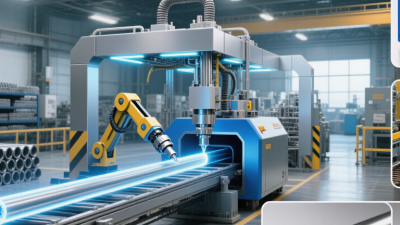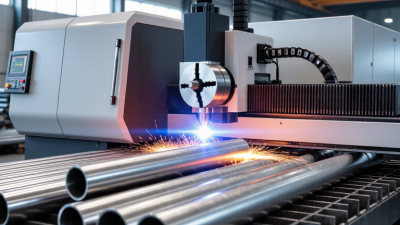
Top Tube Laser Cutting Machines for Global Buyers

Choosing among the top tube laser cutting machines requires more than comparing wattage or purchase price. Global buyers must examine cutting accuracy, automation, software compatibility, service coverage, and long-term operating costs. A machine may look impressive in a showroom, yet struggle with thin stainless steel, reflective aluminum, or long structural tubes.

Professor Frank Vollertsen, a respected laser-manufacturing researcher, has emphasized, “A laser is only as good as the process around it.” That observation remains highly relevant. Tube laser cutting depends on the complete system, including the chuck design, rotary axis, nesting software, piercing control, and fume extraction. Small weaknesses can create large production losses.

Real workshops reveal the difference.

This guide compares leading machine categories for manufacturers, fabricators, and distributors serving different markets. It considers fiber-laser power, tube diameter, loading methods, cutting heads, safety features, and technical support. It also examines practical details, such as whether an operator can change from round tubing to square profiles without wasting excessive setup time.

Specifications still matter. They are not everything.

Buyers should also question advertised speed, because maximum speed rarely represents every material or wall thickness. Some machines deliver excellent results but require highly trained technicians. Others offer simpler operation but provide fewer customization options. That trade-off deserves honest attention.

No single model fits every factory. Budget, production volume, available floor space, local maintenance, and expected material mix can change the final decision. The recommendations ahead aim to make that decision clearer, while acknowledging that even reliable equipment can produce disappointing results when installation, programming, or operator training is overlooked.
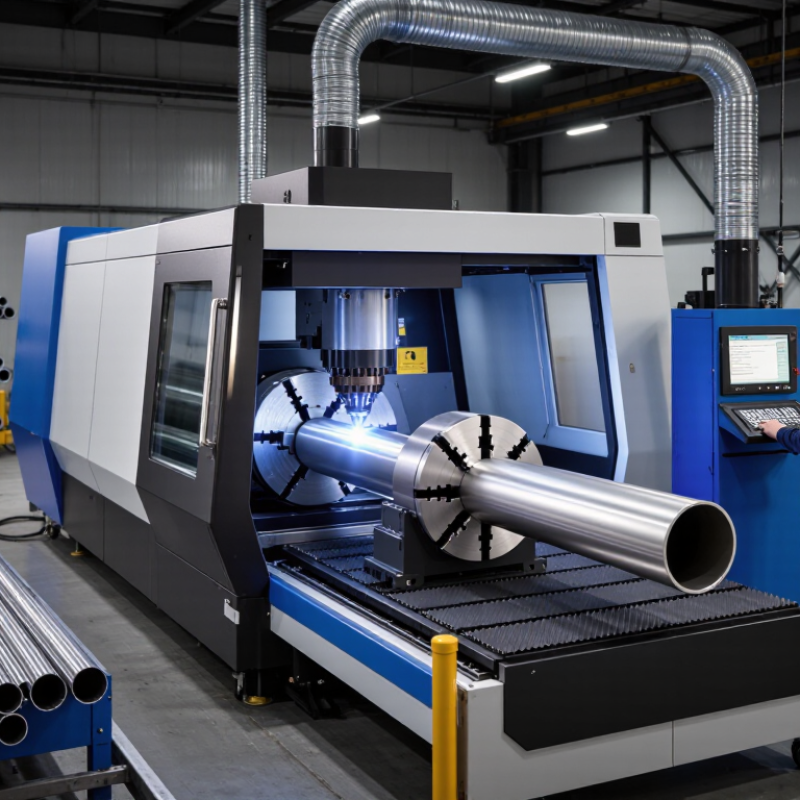
Top Tube Laser Cutting Machines for Global Buyers

Tube Laser Cutting Machine Basics and Core Technologies

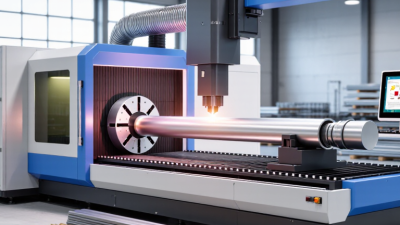
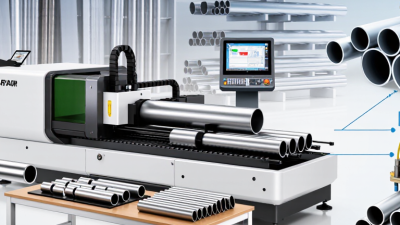
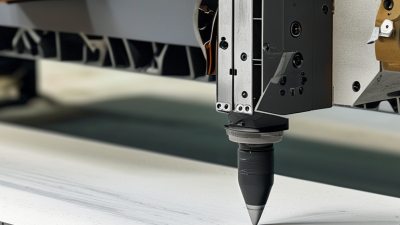
Tube laser cutting machines use a focused laser beam to process round, square, rectangular, and oval profiles. Fiber lasers dominate newer systems because they offer high electrical efficiency and lower routine maintenance than many older sources. A typical setup combines a laser head, automatic chuck, servo-driven axes, and a cutting bed designed to control tube movement. The details matter.

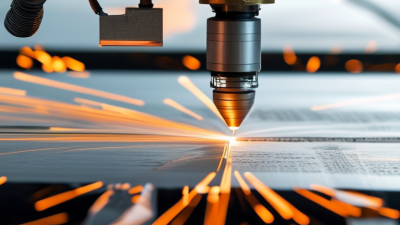
Assist gas changes the cut. Nitrogen supports cleaner stainless-steel edges, while oxygen can increase cutting speed on mild steel. Piercing power, focal position, nozzle height, and gas pressure must match wall thickness. Automatic nesting reduces scrap, but it cannot correct poor tube straightness or inaccurate loading. Operators still inspect burrs, heat marks, and hole positions with gauges. Speed is not everything.

Industry data also shows why this technology attracts global buyers. Fortune Business Insights valued the global laser cutting machine market at about USD 5.93 billion in 2023 and projected continued growth through 2032. Grand View Research identifies automation, fiber-laser adoption, and demand for precision metal fabrication as major growth drivers. These reports cover laser cutting broadly, not tube systems alone, so buyers should avoid treating the figures as a tube-machine forecast. In practical trials, repeatability, chuck alignment, software stability, and service response often matter more than advertised wattage. A machine may cut rapidly on thin steel, yet perform poorly on long, flexible profiles. That weakness deserves testing.

Key Features to Compare When Selecting a Tube Laser Cutter

Top Tube Laser Cutting Machines for Global Buyers

Key Features to Compare When Selecting a Tube Laser Cutter

Choosing a tube laser cutter requires more than comparing cutting speed. Tube diameter range, wall thickness, and material compatibility should match your daily production needs. A machine designed for thin stainless steel may struggle with heavier carbon steel. Check the rated capacity, not only the maximum advertised value.

Cutting accuracy depends on the laser source, motion system, chuck design, and software control. Ask for test cuts using your own tube sizes and profiles. Small errors can become serious when frames need precise assembly. Automatic loading can reduce handling time, while an adjustable chuck helps prevent slipping during rotation. It matters.

I have found that neglected maintenance often reduces real productivity. Examine nozzle access, lens protection, lubrication points, and replacement-part availability. A clear maintenance schedule supports reliable operation across different regions. Electrical requirements, safety functions, operator training, and accepted conformity documentation also deserve careful review. Local service response is valuable, especially when production deadlines are tight.

Software should import common design files and manage round, square, rectangular, and irregular profiles. Simulation tools can reveal collisions before cutting begins. Energy use and compressed-air demand affect long-term costs, although these figures are sometimes underestimated. A detailed acceptance test, warranty scope, installation plan, and training agreement can expose gaps before payment. The cheapest machine may not be the least expensive choice.

Leading Machine Types for Different Tube Cutting Applications

Top Tube Laser Cutting Machines for Global Buyers

Leading Machine Types for Different Tube Cutting Applications

Tube laser cutting machines should match the material, profile, and production rhythm. A two-dimensional chuck machine suits round, square, and rectangular tubes. It performs well for furniture frames, shelving, and light structural parts. For thin-wall stainless steel, stable clamping matters more than extreme power. Excess pressure can deform the tube.

Three-dimensional laser machines handle angled cuts, slots, and beveled edges. They support applications such as construction joints, vehicle components, and welded assemblies. Five-axis systems offer greater freedom around complex profiles. However, advanced movement increases programming demands. A fast machine is not always the most productive choice. I have seen buyers overlook setup time and focus only on cutting speed.

Tips: Check the largest tube diameter, wall thickness, and loading length before purchasing. Ask for sample cuts using your real material. Inspect hole edges, bevel accuracy, and heat marks. Automatic loading systems can reduce labor for long production runs. Yet, they require enough floor space and consistent tube quality. Confirm local service coverage, operator training, spare parts access, and software compatibility. A useful comparison should include energy use, maintenance intervals, and actual cycle time. The cheapest quotation may become expensive when alignment problems repeat.

Top Tube Laser Cutting Machines for Global Buyers - Leading Machine Types for Different Tube Cutting Applications

A practical comparison of common tube laser cutting machine configurations, typical capabilities, and suitable applications for international buyers.

Machine Type Typical Tube or Profile Range Common Laser Power Typical Cutting Materials Best-Suited Applications Automation Level Main Advantages Key Buying Considerations
Compact Round-Tube Laser Cutter Round tubes approximately 20–120 mm in diameter; wall thickness commonly up to 4–6 mm for mild steel 1.5–3 kW Mild steel Stainless steel Aluminum Furniture frames, exercise equipment, lighting components, small mechanical parts Manual or semi-automatic loading; basic chuck system Small footprint, lower investment, simple operation, and efficient processing of standard round tubes Confirm tube straightness, chuck accuracy, short-part handling, and the maximum usable tube length
Standard Three-Chuck Tube Laser Cutter Round tubes approximately 20–220 mm in diameter; square and rectangular profiles commonly up to about 160 mm 2–6 kW Mild steel Stainless steel Aluminum Brass General fabrication, structural components, agricultural machinery, metal furniture Automatic focusing and nesting; optional bundle loader and unloader Good balance of capacity, flexibility, productivity, and operating cost Check profile compatibility, chuck clamping range, remnant management, and cutting-head protection
Heavy-Duty High-Power Tube Laser Cutter Round tubes approximately 20–350 mm in diameter; large square or rectangular profiles up to roughly 250 mm 6–12 kW Carbon steel Stainless steel Aluminum Heavy machinery, construction equipment, steel structures, thick-wall industrial components Fully automatic loading, multiple-chuck support, and automated unloading options High throughput and faster processing of thick-wall sections and large profiles Evaluate power demand, foundation requirements, assist-gas consumption, heat management, and service support
Fiber Laser Cutter for Square and Rectangular Tubes Square or rectangular profiles commonly 20–200 mm; capacity depends on profile geometry and wall thickness 2–6 kW Mild steel Stainless steel Aluminum Racking systems, solar-support structures, display frames, doors, windows, and machine frames Automatic profile recognition with programmable rotation and positioning Accurate hole, slot, notch, and end-cut processing on non-round profiles Verify diagonal measurement limits, corner-radius compatibility, profile deformation control, and nesting software
Open-Type Tube and Sheet Combination Laser Cutter Tube diameters commonly up to 200–220 mm; sheet formats often around 1,500 × 3,000 mm 2–6 kW Mild steel Stainless steel Aluminum Job shops and manufacturers processing both flat sheet and moderate-size tubes Shared cutting system with interchangeable or integrated tube-processing functions One machine serves two production needs and can improve equipment utilization Compare sheet-cutting area, tube changeover time, table accessibility, and software workflow
Enclosed Tube Laser Cutting Machine Round tubes commonly 20–220 mm; larger capacities are available in specialized configurations 2–6 kW Mild steel Stainless steel Aluminum Factories prioritizing operator protection, clean production areas, and stable high-volume processing Automatic loading and unloading with enclosed cutting chamber Improved laser safety, fume containment, environmental control, and production consistency Consider enclosure access, extraction performance, loading layout, maintenance space, and compliance requirements
Precision Small-Tube Laser Cutter Small round tubes and profiles approximately 6–80 mm, depending on the chuck and feeding system 1–3 kW Stainless steel Mild steel Brass Aluminum Medical components, electrical enclosures, instrument parts, bicycle components, and precision fittings Servo feeding, automatic focusing, and high-accuracy rotary positioning Fine kerfs, accurate small holes, low material waste, and repeatable batch production Check minimum tube size, runout compensation, feed accuracy, micro-part collection, and edge-quality requirements
Five-Axis or Bevel-Cutting Tube Laser System Medium and large tubes or profiles; actual range depends on the rotary axis and cutting-head design 3–12 kW Carbon steel Stainless steel Aluminum Complex joints, structural nodes, pipe intersections, bevels, and components prepared for welding Advanced multi-axis interpolation with automated tool-path generation Produces complex contours and weld-ready bevels while reducing secondary machining Assess software capability, axis synchronization, bevel accuracy, programming expertise, and maintenance complexity
Fully Automatic High-Volume Tube Processing Line Usually configured for a defined range of round, square, rectangular, or special profiles 3–12 kW Mild steel Stainless steel Aluminum Automotive components, storage systems, high-volume furniture, agricultural equipment, and standardized production Automatic bundle loading, tube separation, cutting, sorting, and finished-part collection Reduced labor demand, consistent cycle times, high repeatability, and improved material traceability Calculate return on investment, line utilization, product mix, material handling needs, and integration requirements

Note: The ranges shown are typical industry values for orientation only. Actual cutting capacity, speed, accuracy, and automation depend on laser source power, material grade, wall thickness, tube geometry, machine configuration, assist gas, and software settings.

Global Buying Factors: Standards, Costs, Service, and Delivery

Top Tube Laser Cutting Machines for Global Buyers

Global buyers should treat standards as a production requirement, not a paperwork exercise. Ask for electrical certificates, machine safety documents, and test records before comparing prices. Check whether the tube laser supports your local voltage, frequency, and installation conditions. A machine may cut accurately in a showroom but perform differently in a dusty workshop. Request sample cuts using your actual steel grades, tube diameters, and wall thicknesses. Inspect edge quality, hole position, and heat distortion. Small details matter.

The purchase cost includes more than the machine. Calculate shipping, insurance, customs charges, installation, training, tooling, software, and replacement optics. A low quotation can become expensive after delivery. Service quality also deserves measurable terms. Confirm response times, spare-parts availability, remote diagnosis, and technician coverage in your region. Ask for a written maintenance schedule, not vague promises. Delivery dates should include production, inspection, packing, port handling, and inland transport. Build a buffer.

I prefer clear evidence over impressive claims. Still, no forecast is perfect. One overlooked connector or delayed document can stop commissioning for days. Require a detailed packing list and pre-shipment video. Keep payment milestones linked to verified progress. A thoughtful buyer also checks whether operators can use the control system comfortably. Complex features are not automatically useful. Sometimes, simpler software produces fewer mistakes.

Top Tube Laser Cutting Machines for Global Buyers

Global Buying Factors: Standards, Costs, Service, and Delivery

This chart organizes four practical checkpoints commonly used when comparing tube laser cutting machines internationally. Each category contains four measurable review items: compliance documents, total-cost components, after-sales support elements, and delivery controls. Equal coverage does not imply equal importance; buyers should adjust priorities according to local regulations, application requirements, and production volume.

How to Evaluate Suppliers and Choose the Right Machine

Top Tube Laser Cutting Machines for Global Buyers

Supplier evaluation should begin with evidence, not showroom claims. Grand View Research reported that the global laser cutting machine market was valued at approximately USD 5 billion in 2023, with continued growth expected through 2030. This expansion attracts capable manufacturers and weak resellers. Request cutting samples using your actual tube grades, diameters, and wall thicknesses. Measure burr height, kerf consistency, hole position, and cycle time independently.

Check the machine’s working range, chuck design, loading method, laser source specifications, and cutting-head protection. A powerful laser is not automatically the best choice. Thin stainless steel may need different settings from carbon steel. Ask for a documented tolerance range, not a single perfect sample. The supplier should provide factory acceptance records, maintenance schedules, spare-parts availability, and operator training. Verify compliance with ISO 12100 for machinery risk assessment and IEC 60204-1 for electrical equipment safety.

Total ownership cost deserves careful attention. The U.S. Department of Energy notes that industrial motor systems can represent a major share of factory electricity use, so auxiliary motors and compressors should be included in energy calculations. Compare power consumption, gas usage, software licensing, downtime response, and five-year service costs. I would also contact existing users in a similar climate and production volume. One weakness remains easy to miss: online demonstrations rarely show recovery after a collision or unstable material. Ask for that test. A slower, transparent supplier may prove more reliable than a faster sales promise.

Contact Us Today for a Free Quote

(800) 708-6036