7 Tips for Choosing a Tube Laser Machine?

Choosing a tube laser machine is not simply a matter of comparing laser power or purchase prices. The right system must match your materials, tube profiles, production volume, tolerances, and workshop space. A machine that cuts stainless steel beautifully may perform poorly on reflective metals or small, thin-wall sections. Real production exposes those differences quickly.

John Powell, a respected laser-processing author and industry specialist, has emphasized, “The laser is only one part of the cutting process.” That idea deserves attention. Optics, chuck design, software, fume extraction, operator training, and after-sales support can influence results just as strongly. A reliable supplier should explain these details clearly and provide sample cuts using your actual tube sizes.

This guide presents seven practical tips for choosing a tube laser machine. It examines laser source, cutting capacity, automation, accuracy, software, maintenance, and total ownership cost. Bring real drawings and unfinished production parts to the discussion. Ask how the machine handles loading errors, leftover tube, heat distortion, and changing jobs during a busy shift.

Small details matter.

I have seen buyers focus too heavily on wattage. That choice can create unnecessary expense. Sometimes, a simpler machine with better support delivers steadier output. Sometimes, the opposite is true. Your decision should come from measured production needs, not impressive brochures. A careful comparison may take longer, but it can prevent costly downtime, inconsistent cuts, and a machine that quietly limits future growth.
7 Tips for Choosing a Tube Laser Machine?

Set Capacity First: Tube Diameters of 20–220 mm and 0.5–10 mm Walls

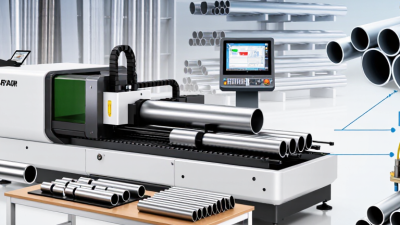
Choosing tube laser capacity starts with actual stock, not the largest brochure number. Define outside diameter, wall thickness, material grade, and finished length. A practical range of 20–220 mm diameter and 0.5–10 mm walls covers light furniture tube, structural sections, and heavier industrial pipe. The World Steel Association reported 1.89 billion tonnes of crude steel production in 2023 in World Steel in Figures 2024. This scale reflects varied grades and cutting behaviors. Record your five most common sizes.

Thin 0.5 mm walls need stable feeding, accurate focus, and low heat input. Excessive power may create burrs, distortion, or a collapsed edge. Ten-millimeter walls require stronger piercing performance, reliable assist-gas control, and adequate laser power. Do not judge capacity by diameter alone. Check chuck clearance, tube weight, rotary-axis torque, and usable cutting length. A 220 mm tube may fit physically but still exceed the machine’s supported mass. That assumption needs testing.

ISO 9013:2017 provides a useful reference for thermal-cut quality classifications, but real results depend on material and process settings. The U.S. Department of Energy’s Industrial Decarbonization Roadmap identifies iron and steel among the country’s most energy-intensive industries. Energy use deserves attention during machine trials. Request sample cuts at both extremes: 20 mm by 0.5 mm and 220 mm by 10 mm. Inspect kerf width, squareness, burr height, and cycle time. I would also test one awkward grade, because clean samples can hide inconvenient problems.

Select Laser Power by Material: 1–6 kW Covers Common Steel-Tube Jobs

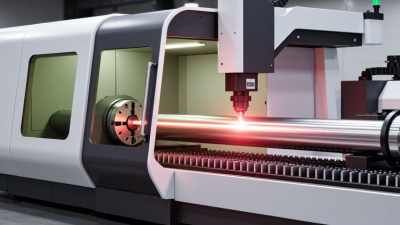
Choosing a tube laser machine starts with matching laser power to the material and wall thickness. For common carbon-steel tubes, 1–2 kW is often suitable for thin walls, light frames, furniture parts, and small structural components. Cutting speed, gas pressure, and beam quality still affect the result. More power does not automatically mean better production.

A 3–4 kW system offers a useful middle range. It can handle thicker steel tubing, repeated fabrication work, and mixed profiles with fewer speed limitations. For demanding sections, 5–6 kW may provide better productivity and cutting stability. However, the machine must also support the required tube diameter, length, weight, and profile shape. A powerful source cannot compensate for weak clamping or poor alignment.

Check real samples before making a decision. Ask for test cuts using your actual steel grade and wall thickness. Inspect the edge for dross, taper, heat marks, and deformation around small holes. In practice, a 2 kW machine may outperform a 4 kW system when its settings are better matched. I have seen buyers focus too heavily on wattage and overlook loading time, software control, and maintenance access. That choice can become expensive. Leave room for uncertainty, especially when your future orders may involve thicker or reflective materials.

Tube Laser Power Selection by Material

Typical maximum cutting thickness for common tube materials at different fiber-laser power levels

A 1–6 kW fiber laser range covers many steel-tube applications. Mild steel generally supports the greatest thickness, while stainless steel and aluminum require lower practical thickness limits at the same power. Actual results depend on tube profile, assist gas, material grade, focal setup, nozzle condition, and required edge quality.

Verify Precision: Compare ±0.05 mm Positioning and ±0.03 mm Repeatability

When choosing a tube laser machine, do not treat accuracy figures as decoration. Positioning accuracy of ±0.05 mm describes how closely the axis reaches a commanded location. Repeatability of ±0.03 mm shows how consistently it returns to that location. The second number is tighter, but it does not replace the first. A machine may repeat well while missing the target.

Ask for a documented test, not a verbal promise. Cut several short tubes with holes at different positions, then measure them with a calibrated gauge or coordinate measuring machine. Check the first cut, the tenth cut, and the result after a warm-up cycle. Record X, Y, and rotary-axis errors separately. In practical work, I also inspect the chuck, support rollers, and tube movement. A small clamp shift can erase impressive controller specifications.

Request test conditions, including tube diameter, wall thickness, cutting speed, temperature, and measurement method. Compare results against your own tolerance needs, especially for holes, slots, and welded assemblies. ±0.03 mm repeatability sounds excellent, yet production stability may suffer from vibration, dirty rails, or poor calibration. I once trusted a clean sample too quickly; later checks exposed setup variation. That mistake changed my buying process. Leave room for maintenance, operator skill, and real material behavior.

Assess Automation: Match 6–12 m Stock Lengths with Loading Systems

When choosing a tube laser machine, automation deserves more attention than headline cutting speed. Your stock length sets the starting point. Six-meter tubes need different handling than twelve-meter bundles. A compact loading system may suit short runs and limited floor space. Longer material usually needs powered conveyors, alignment guides, and stable bundle support.

Watch the loading cycle in person. A brochure cannot show every jam.

Check how the system separates one tube from a bundle. Look for sensors that detect diameter, shape, and remaining stock. Poor separation can stop production before the laser begins. For six-meter stock, a simple side loader may be enough. For 9–12 m stock, automatic loading can reduce lifting, waiting, and handling errors.

However, more automation is not always better. It may need more space, maintenance, and operator training. Measure the full footprint, including bundle staging and finished-part removal. This is often missed.

Ask suppliers for cycle data using your actual tube sizes and wall thicknesses. Request a live test with mixed profiles, not only ideal round tubes. Confirm whether the loader handles square, rectangular, and thin-wall material reliably. A skilled operator still matters. Automation cannot correct badly bundled stock or inaccurate measurements.

Test recovery after a misfeed. That awkward moment reveals more than a polished demonstration. Leave room for improvement.

A machine that runs slightly slower but loads consistently may deliver better daily output.

Audit Economics: Compare Cycle Time, Gas Flow, Kerf, and Energy per Part

7 Tips for Choosing a Tube Laser Machine?

Audit economics before comparing machine prices. Record actual cycle time for each tube size, including loading, piercing, cutting, unloading, and repositioning. A machine cutting at 12 seconds per part may lose its advantage if setup adds 20 seconds. My first audit missed handling time. That mistake changed the payback calculation.

Measure gas flow at the regulator, not only the machine’s rated value. The U.S. Department of Energy reports that compressed-air leaks can waste 20–30% of compressor output in poorly maintained systems. A stable nitrogen supply also protects cut quality and reduces rejected parts. Check oxygen or nitrogen consumption per part, then multiply it by your verified local cost. Small leaks become expensive overnight.

Kerf width affects nesting, hole accuracy, and material yield. Ask for measured kerf data on your actual steel grade and thickness. Do not trust a brochure value alone. Track energy per part with a power meter, including the chiller and compressor. The U.S. DOE’s Manufacturing Energy and Carbon Footprints reports show that process utilities are meaningful contributors to industrial energy use. Compare watt-hours per finished part, not only laser power. A lower-rated source may still consume more energy during long idle periods. The spreadsheet should be questioned. Real production is rarely perfectly clean.

Contact Us Today for a Free Quote

(800) 708-6036