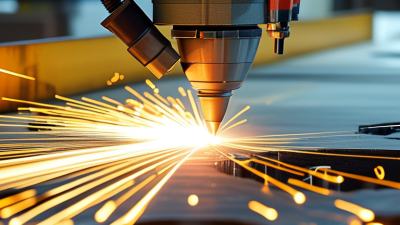
2026 Top CNC Fiber Laser Cutting Machine Which Is Best?
Choosing the 2026 top CNC fiber laser cutting machine requires more than comparing wattage or promotional prices. A serious evaluation should connect cutting performance, machine stability, safety, service, and total ownership cost. The best model depends on material thickness, production volume, part geometry, and available workshop space. A compact 3 kW machine may outperform a 12 kW system in a small fabrication shop. Bigger is not always better.
Industry data shows why this market deserves careful analysis. Fortune Business Insights estimated the global laser cutting machine market at approximately USD 5.64 billion in 2023, with strong growth projected through 2032. Grand View Research also identifies automation, high-speed processing, and fiber-laser adoption as major market drivers. These reports indicate expanding demand, but they do not prove that every new machine delivers equal value. Vendor claims still require verification.
This guide compares leading 2026 machines through practical criteria. These include laser source reliability, acceleration, positioning accuracy, pierce performance, nesting software, maintenance access, and after-sales response. Operators should inspect sample cuts, not only brochures. A clean 10 mm stainless-steel edge tells more than a dramatic factory video. Safety also matters. Buyers should review enclosure design, guarding, and compliance with IEC 60825-1 and applicable machine-safety requirements.
Some specifications remain difficult to compare fairly. Published accuracy may reflect ideal testing conditions. Real production includes vibration, dust, heat, and operator variation. That limitation deserves attention. The strongest choice is therefore not simply the fastest CNC fiber laser cutting machine. It is the system that delivers repeatable results, measurable uptime, trained support, and predictable costs over several years.
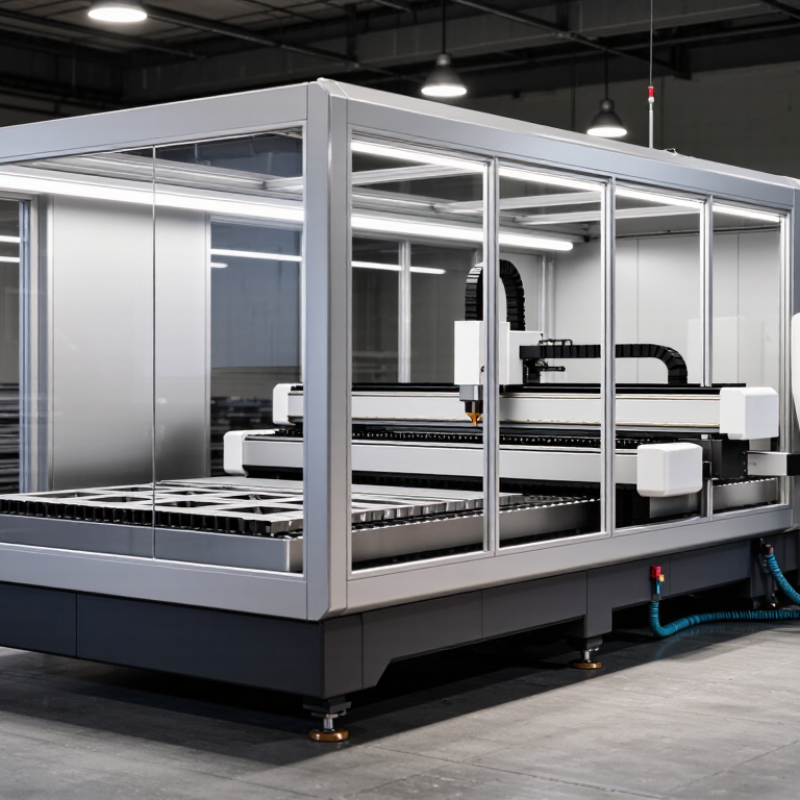
What Defines a Top 2026 CNC Fiber Laser: 1.06–1.08 μm and 1–30 kW
A top 2026 CNC fiber laser cutting machine starts with its beam source. The 1.06–1.08 μm wavelength suits common industrial metals, including carbon steel, stainless steel, aluminum, brass, and copper. It transfers energy efficiently into the workpiece. This supports clean kerfs, stable piercing, and predictable edge quality when the optics are correctly aligned.
Power choices from 1 to 30 kW create a wide production range. A 1 kW system can handle thin sheet and detailed parts efficiently. Higher power can cut thicker plate faster, but power alone does not guarantee better results. Cutting speed depends on material grade, thickness, focal position, nozzle condition, assist gas pressure, and CNC motion control. A poorly maintained 12 kW machine may perform worse than a carefully calibrated 6 kW system.
Real evaluation requires test cuts. Measure kerf width, burr height, piercing time, dimensional accuracy, and heat distortion. Watch the machine during long cycles, not only during a showroom demonstration. Operators should inspect lens cleanliness and gas stability every shift. The 30 kW class can be impressive, yet it may increase energy use, maintenance demands, and setup sensitivity. I would choose capacity from actual production data, not ambition. Some specifications look excellent on paper. Shop-floor results can disagree.
How Power Affects Cutting Capacity: 1–50 mm Steel Thickness Ranges
2026 Top CNC Fiber Laser Cutting Machine Which Is Best?
Laser power sets the practical ceiling, but it does not guarantee a clean edge. In daily production, a 1–3 kW fiber laser handles thin steel from 1 to 8 mm efficiently. It can cut thicker plate, but speed drops sharply. A 6 kW system commonly manages carbon steel around 12–20 mm, depending on the gas, nozzle, and required edge quality.
Higher power expands the range. Machines rated at 12 kW may cut carbon steel near 25–35 mm, while 20 kW equipment can approach 40–50 mm under controlled conditions. These figures are not universal promises. Stainless steel usually needs different settings and may require more power for the same thickness. Reflective materials also demand careful process control.
In real workshops, 50 mm steel is slow work. Oxygen assistance can increase cutting ability, while nitrogen often produces a cleaner surface on thinner sheets. Focus position, pierce time, plate flatness, and lens condition matter more than many buyers expect. A worn nozzle can ruin an otherwise capable machine.
Test cuts reveal the truth.
Ask for samples using your actual steel grade, thickness, and tolerances. Check dross beneath the plate, taper on the cut wall, and the time needed per part. I have seen a high-power machine underperform because its settings were poorly matched. More power is useful, but stable calibration and experienced operation often decide the result.
2026 Top CNC Fiber Laser Cutting Machine: How Power Affects Steel Cutting Capacity
Typical capacity increases with laser power. The values below represent practical cutting ranges for mild steel under optimized conditions using suitable assist gas, nozzle settings, focus position, and material quality. Actual results may vary, especially near the maximum thickness.
How to Compare Speed, Accuracy, and Kerf Width: Up to 100 m/min
2026 Top CNC Fiber Laser Cutting Machine Which Is Best?
A cutting speed of up to 100 m/min sounds impressive, but it usually applies to thin sheet and straight-line motion. In shop testing, actual speed drops around corners, small holes, and complex profiles. I compare machines using identical material, nozzle size, assist gas, and programmed paths. This prevents marketing figures from replacing practical evidence.
Speed is only one part of the result. A fast machine may leave dross when acceleration is too aggressive. Accuracy depends on frame stiffness, servo response, beam quality, and thermal stability. I measure hole diameter, corner position, and repeatability after several continuous cycles. Small errors become obvious.
Kerf width needs direct measurement. On thin stainless steel, a clean cut may show a kerf near 0.08–0.15 mm, but the value changes with power, focus, gas pressure, and plate thickness. Wider kerf can reduce fitting accuracy and increase material waste. My first comparison focused too heavily on maximum speed. That was incomplete. A slower setting sometimes produced cleaner edges and more consistent dimensions. Buyers should request test samples, cutting logs, and measurements from their own materials before choosing a machine.
2026 Top CNC Fiber Laser Cutting Machine Which Is Best? - How to Compare Speed, Accuracy, and Kerf Width: Up to 100 m/min
| Machine Class |
Typical Laser Power |
Maximum Rapid Traverse |
Typical Cutting Speed |
Positioning Accuracy |
Repeatability |
Typical Kerf Width |
Recommended Applications |
| Compact Sheet-Cutting System |
1–3 kW |
60–80 m/min |
20–45 m/min for thin mild steel |
±0.03 mm/m |
±0.02 mm |
0.08–0.15 mm |
Thin mild steel, stainless steel, aluminum sheets, signage, and general fabrication |
| Mid-Range Production System |
3–6 kW |
80–100 m/min |
30–60 m/min for 1–3 mm sheet |
±0.03 mm/m |
±0.02 mm |
0.10–0.18 mm |
Job shops and medium-volume production requiring a balance of speed and flexibility |
| High-Speed Thin-Sheet System |
6–12 kW |
90–100 m/min |
45–80 m/min for thin stainless steel and mild steel |
±0.02–0.03 mm/m |
±0.015–0.02 mm |
0.08–0.16 mm |
High-volume processing of thin sheet where cycle time and throughput are priorities |
| Heavy-Plate Fiber Laser System |
12–30 kW |
60–90 m/min |
8–35 m/min, depending on material and thickness |
±0.03–0.05 mm/m |
±0.02–0.03 mm |
0.15–0.35 mm |
Carbon-steel plate, structural components, heavy equipment, and industrial parts |
| Tube and Profile Cutting System |
3–12 kW |
60–100 m/min |
15–60 m/min, depending on profile geometry |
±0.03–0.05 mm/m |
±0.02–0.03 mm |
0.10–0.25 mm |
Round tube, square tube, rectangular tube, angle steel, and other structural profiles |
|
How to interpret the figures: Maximum rapid traverse is the unloaded axis-movement speed and is not the same as continuous cutting speed. Cutting speed, positional accuracy, and kerf width vary with laser power, material grade, thickness, nozzle size, focal position, assist-gas pressure, sheet flatness, and machine condition. Kerf width values are typical ranges for properly focused cuts and should be verified through sample testing before purchase.
|
How to Measure Efficiency and Costs: 25–40% Wall-Plug Efficiency
2026 Top CNC Fiber Laser Cutting Machine Which Is Best?
Wall-plug efficiency shows how much mains electricity becomes laser light. Fraunhofer Institute for Laser Technology publications commonly report fiber-laser efficiency near 25–40%, depending on power and system design. A 6 kW laser source may therefore draw 15–24 kW before cutting auxiliaries. Chillers, extraction fans, compressors, and standby circuits add more demand. The U.S. Department of Energy’s 2022 Industrial Decarbonization Roadmap recommends measuring complete process energy, not isolated equipment. This distinction matters. A highly efficient source can still operate inside an inefficient machine.
Measure real input power at the electrical cabinet. Record kWh per finished part, not only rated kilowatts. For example, a 6 kW source cutting for 20 minutes uses 2 kWh at 30% source efficiency, excluding auxiliary systems. Add gas, lenses, filters, maintenance, and downtime. Then divide total cost by usable parts. That figure is more useful than marketing efficiency. My practical concern is simple: short tests can look excellent. Production reality is less tidy.
Tips: Use a power analyzer during piercing, continuous cutting, idle periods, and shutdown. Compare identical material, thickness, nozzle settings, and cutting length. Check the machine’s measured total input, not only the laser source rating. Review results monthly. Small losses accumulate.
How to Verify Safety and Value: IEC 60825-1, ISO 11553-1, and ROI
Choosing the best CNC fiber laser cutting machine in 2026 requires more than comparing power, speed, and price.
Safety documentation deserves equal attention. In practical shop evaluations, I check the enclosure, viewing windows, interlocks, emergency stops, warning labels, and fume extraction. Small details matter. A loose door sensor can stop production or create serious exposure risks.
IEC 60825-1 helps verify laser classification, protective measures, labeling, and user responsibilities. ISO 11553-1 addresses safety requirements for laser processing machines, including guarding, controls, and risk reduction.
Request current conformity documents, test records, and the machine’s user manual. Do not trust a certificate without checking its scope and issuing body.
Paperwork is not protection.
A qualified safety professional should review the installation, training, and work area.
Value appears in daily operation, not only in the purchase quote.
Estimate usable cutting hours, assist-gas consumption, electricity, lenses, nozzles, maintenance, scrap, and operator training. For example, measure a typical six-millimeter steel job across several shifts, then compare cycle time and defect rates.
Include downtime for cleaning and alignment. The math can disappoint. A faster machine may deliver weak ROI if its maintenance is expensive or operators need constant support.
I would also test service response before signing, because one idle day can outweigh a modest initial saving.