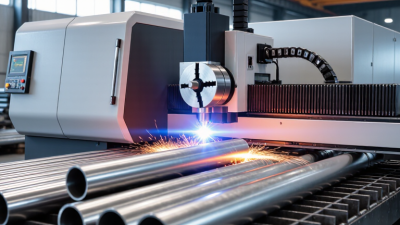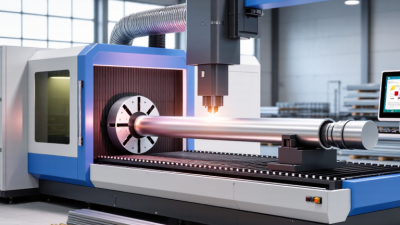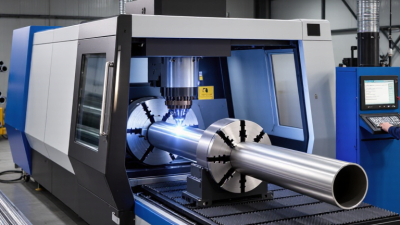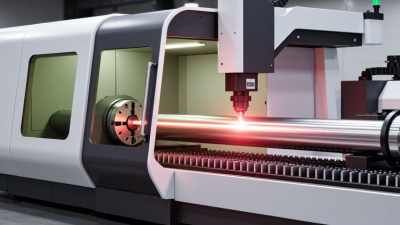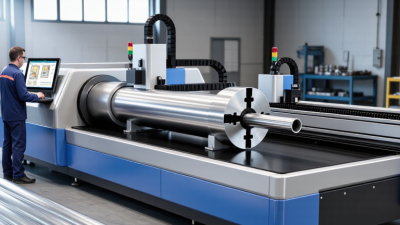
Choosing a laser pipe cutting machine in 2026 is less about buying the highest laser power and more about matching the machine to real production work. A shop cutting thin stainless tubes has different needs from one processing thick structural steel. Start with your common materials, tube diameters, wall thicknesses, and profile shapes. Then compare cutting speed, loading options, chuck design, software, and available service. Details matter. A fast machine can still become a bottleneck if operators struggle to load long tubes or prepare reliable cutting programs.
A useful decision principle comes from fictional composite industry expert Elena Park: “Choose for the tubes you cut every week, not the showcase part you cut once.” Treat that as a guide, not a universal rule. Ask suppliers to run sample parts using your actual material and geometry. Check edge quality, cycle time, scrap, and how quickly settings can be adjusted. Request clear information about maintenance, training, and support response times. A polished demonstration is helpful, but it cannot answer every shop-floor question. That is the catch. This guide examines the specifications and practical trade-offs behind a confident purchase, while leaving room for an honest truth: no single machine is ideal for every shop.
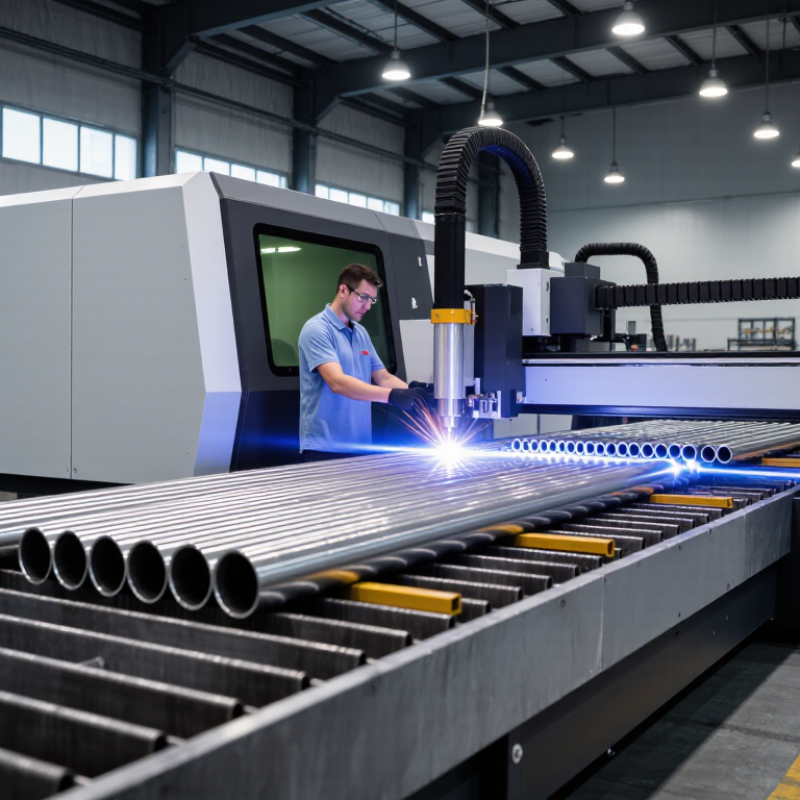
Before comparing machine specifications, list every pipe material you expect to cut. Carbon steel, stainless steel, and aluminum behave differently during cutting. Surface coatings and reflective finishes may also affect process settings. Check the material grade, not just the broad category. Keep a few representative samples nearby.
Record the full size range: round diameter, square or rectangular dimensions, wall thickness, and maximum pipe length. Include the smallest parts, too. Thin-wall tubing can deform if clamping pressure is poorly matched, while heavy sections need stable support. Measure actual stock, since nominal dimensions may not tell the whole story. This step can feel tedious. It prevents a costly mismatch.
Then describe the work, not just the machine. How many pieces run per shift? Are cuts mostly straight, or do parts need slots, holes, and angled ends? Note the required tolerance, changeover frequency, and whether operators load and unload manually. A machine sized for occasional prototypes may struggle with steady production. The reverse is possible, too: automation can add cost and complexity when batches are small. One detail is easy to miss: floor space for long stock and finished parts. Sketch the loading path, then check it against your workshop before setting a budget.
Choosing a laser pipe cutter in 2026 starts with the material, wall thickness, and daily workload. Fiber lasers are widely used for steel, stainless steel, and aluminum tubing. They handle reflective metals efficiently and suit many thin-to-medium materials. CO2 systems may remain relevant for particular production setups, but compare their operating costs and cutting performance against your actual jobs. More power is not automatically better; a machine should match your usual tube sizes and thicknesses.
Machine configuration matters just as much as laser type. Check the minimum and maximum tube diameter, supported lengths, and whether the chuck can hold square, rectangular, and round profiles securely. A three-chuck layout can reduce scrap on short parts, while automatic loading helps keep longer production runs moving. If parts need angled edges, confirm that the cutting head supports bevel cutting. I would also inspect sample cuts: a clean edge on a short demonstration tube may not reflect performance across a full shift.
Tips: Bring real drawings and sample materials when comparing machines. Ask for cut tests at your common thicknesses, and check loading time, remnant handling, and service access. Small details matter. A layout that looks efficient on paper can feel awkward beside a crowded workshop line.
Evaluate Cutting Capacity, Accuracy, and Automation
Start with the tubes you actually run, not the machine’s headline capacity. Check the full range of diameters, wall thicknesses, material types, and tube lengths. A cutter may accept a large-diameter pipe yet struggle with your everyday thin-wall parts. Ask for a test using your own material, including a short offcut and a long tube.
Numbers can mislead. Confirm loading limits, chuck grip, and whether the machine supports your most common profiles without manual repositioning.
Accuracy affects fit-up and rework. Request positioning accuracy and repeatability figures, and ask how they were measured. ISO 230-2 provides methods for testing numerically controlled machine axes, where applicable, but a finished-part trial shows how the whole system performs. Measure end cuts and hole locations after production-speed runs, not just on a carefully prepared sample.
Automation matters too. Compare bundle loading, automatic centering, unloading, and software that flags setup errors.
Deloitte’s 2024 Smart Manufacturing Survey found that 86% of surveyed manufacturing executives expect smart manufacturing solutions to drive competitiveness within five years.
That supports investing in useful automation, not buying every feature. I would still verify how quickly operators can recover from a jam; glossy demonstrations rarely show that moment.
A laser pipe cutting machine can look impressive in a showroom and still slow down a real shop. Test the software with your own tube drawings, not only the supplier’s sample files. Check how easily operators set diameter, wall thickness, and cut sequence. A clear nesting view helps reduce scrap, but awkward menus can waste minutes on every change. Small details matter.
Safety features need a practical review. Ask how the enclosure, interlocks, fume extraction, and emergency stops work during routine loading and maintenance. Watch a full cutting cycle, including setup and unloading. Confirm that operators can see the process without bypassing safeguards. A machine that is technically safe but difficult to use may invite workarounds. That deserves honest attention.
Maintenance and operating costs reach beyond the purchase price. Request a schedule for cleaning optics, checking gas lines, replacing consumables, and servicing the chiller. Then estimate electricity, assist gas, extraction filters, and expected downtime using your own shift pattern. Ask which tasks staff can perform and which require a technician. Keep a small allowance for parts and training; estimates are rarely perfect. If possible, run typical jobs for several hours and record actual setup time, material waste, and energy use. Those figures may change the decision.
| Decision area | What to assess | Practical checks before purchase | Why it affects the decision |
|---|---|---|---|
| Material and tube range | Material types, wall thickness, tube shape, outside dimensions, length, and maximum workpiece weight. | Test representative round, square, and rectangular sections, including the thickest material and longest tube in the planned job mix. Confirm chuck capacity and supported loading length. | A machine’s rated laser power alone does not establish that it can cut every material, profile, or thickness in a production-ready manner. |
| Software and workflow | CAD file support, tube nesting, cut sequencing, process settings, simulation, and production reporting. | Import your actual design files; check whether the software flags collisions, estimates material use, handles remnants, and supports the file formats and revision process used by your team. | Usable programming and simulation tools can reduce setup errors, material waste, and reliance on manual programming. |
| Safety and extraction | Laser enclosure, interlocks, guarding, fume extraction, fire-risk controls, and safe material handling. | Verify the machine’s documented laser classification and safeguards as installed. Check interlock operation, extraction requirements, access for loading, emergency stops, and the site’s local safety obligations. | Enclosure and extraction requirements depend on the machine, process, materials, and local regulations; they should be assessed as part of the installation, not as an afterthought. |
| Maintenance and service | Routine cleaning, nozzle and protective-window replacement, chiller checks, lubrication, chuck care, and service access. | Request the maintenance schedule, common wear-part list, recommended spare-parts stock, service response arrangements, and training requirements. Confirm who performs each task. | Maintenance time, parts availability, and recovery time after a fault affect machine availability and total cost of ownership. |
| Operating cost per part | Electricity, assist gas, consumables, labor, material utilization, and downtime. | Measure energy and gas use during a representative test. Compare cost per accepted part using: material + energy + gas + consumables + labor + allocated downtime. | Consumption varies with material, thickness, cutting parameters, assist gas, utilization, and local utility rates; supplier estimates should be checked against your own parts. |
| Loading and production flow | Manual or automated loading, unloading, part sorting, remnant handling, and operator access. | Time the complete workflow, including loading, setup, cutting, unloading, and part separation—not just laser-on time. Check whether automation fits the available floor space and staffing pattern. | In many operations, handling and setup can limit throughput more than the cutting cycle itself. |
| Acceptance test and support | Cut quality, dimensional accuracy, repeatability, training, installation, and after-sales support. | Use agreed sample parts and written acceptance criteria. Record cycle time, dimensional results, edge quality, scrap, and operator training completion during the test. | A documented test using your own part mix is more informative than comparing headline specifications alone. |
Cost and performance depend on the machine configuration, materials, production mix, local utility rates, installation, and operating conditions. Confirm specifications and safety requirements for the proposed installation.
When comparing a laser pipe cutting machine, look beyond the quoted price. Ask the supplier who will install it, train operators, and troubleshoot faults. Get clear response times for urgent problems, including evenings or weekends if your production schedule requires them. “We offer support” is not specific enough. Request the service terms in writing.
Check where common spare parts are held and how quickly they can be shipped. Ask for a maintenance schedule covering items such as protective windows, cutting nozzles, and chiller filters. Then estimate costs over several years, including installation, operator training, electricity, assist gas, consumables, software updates, and planned servicing. Downtime belongs in the calculation too. A delayed replacement part can cost more than its invoice suggests.
Ask for references from manufacturers cutting similar tube materials and sizes. If possible, watch a test cut and inspect the finished edges, changeover time, and setup process. These details can reveal needs that a polished demonstration misses. I would not assume every service promise will hold under pressure; confirm what is covered, who pays travel costs, and whether remote diagnostics require a separate fee. Keep the assumptions visible in your cost comparison, even if some figures are imperfect.