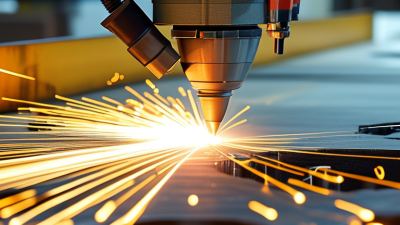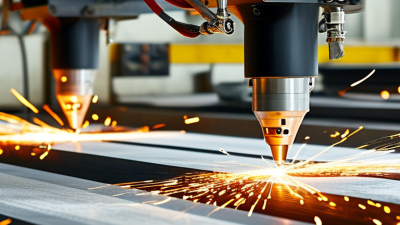
Choosing a cnc fiber laser cutting machine is not just a matter of buying the highest wattage. A shop cutting 2 mm stainless steel has different needs from one processing thick carbon-steel plate all day. Bed size, cutting-head stability, nesting software, extraction, and local service can matter as much as speed. Small details count. A clean edge saves finishing time; a delayed replacement lens can stop production.
Laser-cutting specialist John Powell’s process-focused work supports a practical principle, paraphrased here: “Choose the laser around the job, not the headline wattage.” This guide compares leading Chinese manufacturers, including Han’s Laser, Bodor, HSG Laser, G·WEIKE, and Penta Laser. It considers stated specifications, material range, automation options, control systems, warranty terms, and service access. These are useful starting points, not proof that every machine performs equally well in every workshop.
A brochure cannot replace a sample cut. Ask suppliers to process your own material and thickness, then inspect the edge, kerf, and consistency across the sheet. Request a clear breakdown of installation, training, consumables, and maintenance support. Be cautious with broad claims about speed or precision; results depend on material, settings, and operating conditions. There is no universal winner. The right shortlist depends on your workload, budget, and tolerance for downtime—and some differences only become obvious after the machine is running.
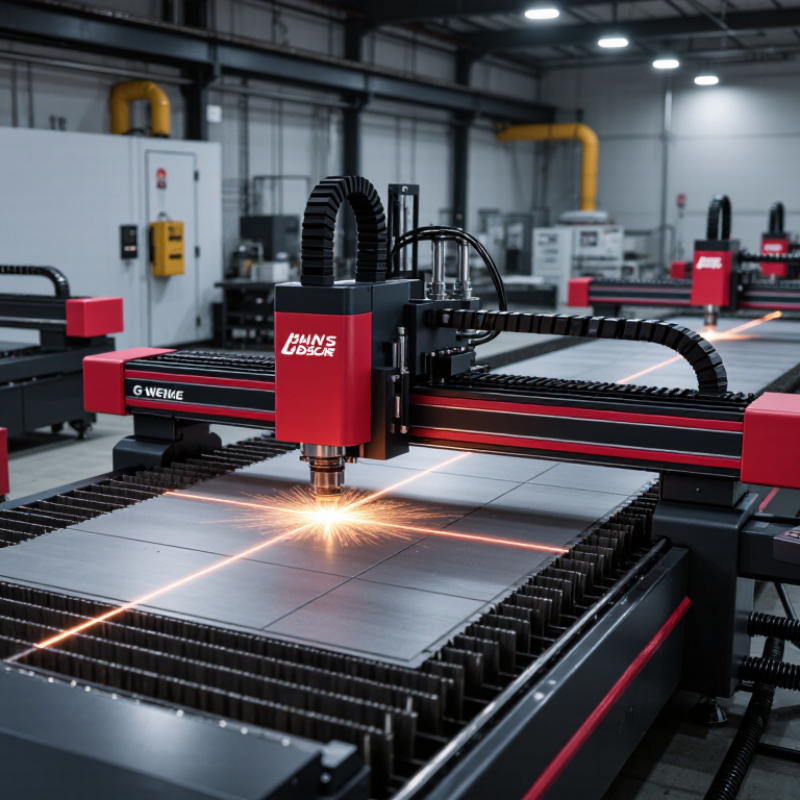
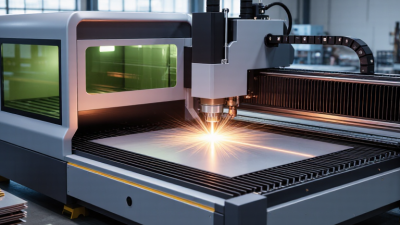
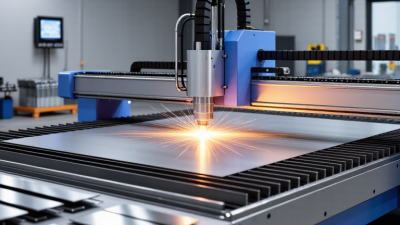
A CNC fiber laser cutting machine uses a concentrated beam of light to cut conductive sheet materials, such as steel, aluminum, and copper. “CNC” means a computer controls the machine’s movement according to programmed cutting paths. The fiber laser source creates the beam, while mirrors and a cutting head guide and focus it onto the workpiece. The focused heat melts or vaporizes a narrow line of metal. Assist gas then clears material from the cut.
Small details matter.
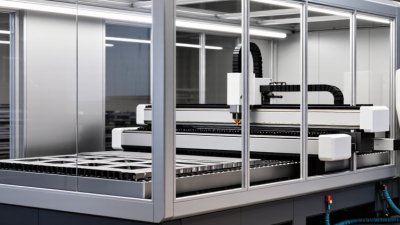
The machine’s main parts include the laser source, CNC controller, cutting head, worktable, and fume extraction system. An operator enters a design, sets parameters such as power and speed, and positions the sheet. The controller moves the cutting head along the programmed path.
For example, a simple bracket may need straight edges, round holes, and carefully spaced slots. The quality of those features depends on both machine settings and material condition.
In practical use, a fiber laser can cut quickly and produce precise edges, but it is not an automatic guarantee of good parts. Nozzle wear, incorrect focus, or an unstable sheet can affect the result. Even a clean-looking cut may need inspection for burrs or dimensional variation.
That part is easy to overlook.
Regular checks, suitable ventilation, and trained operation help keep performance consistent. A useful machine is one that matches the material thickness, required accuracy, and daily workload—not simply the one with the highest advertised power.
China’s fiber laser cutting industry has moved from imported, high-cost systems toward a broad domestic supply chain covering laser sources, cutting heads, motion controls, and machine beds. The China Laser Processing Industry Alliance’s 2023 China Laser Industry Development Report estimated that China’s laser-processing equipment sales reached about RMB 91.5 billion in 2023, up roughly 5.6% year on year. This figure covers equipment beyond fiber cutting, so it should not be read as the cutting-machine market alone. Still, it shows the scale of the industrial base supporting CNC fiber laser adoption.
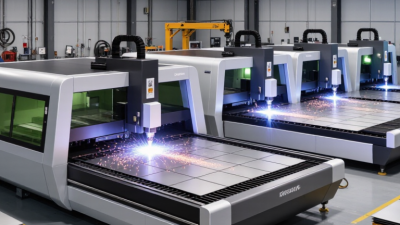
Factories now use machines for tasks ranging from thin-sheet enclosures to heavy steel plate. Higher-power sources have shortened cutting times on thicker materials, while CNC controls help operators manage nesting, speed, and gas settings. On the shop floor, that means fewer manual layout steps and more repeatable parts. Not effortless, though. Setup quality, extraction, and operator training still affect edge finish and uptime. The China Laser Processing Industry Alliance’s market data tracks the wider sector, but public figures do not always separate fiber machines from other laser equipment. That gap makes precise growth claims difficult. Industry expansion is clear; its exact fiber-cutting share is less clear.
Representative commercially used laser-source power ratings, in kilowatts. These are equipment classes, not sales figures or a ranking of manufacturers.
China’s fiber laser cutting industry has expanded from lower-power sheet-metal systems toward higher-power machines for thicker plate and greater throughput. Actual cutting capability depends on material, thickness, assist gas, optics, and machine configuration—not laser power alone.
China’s leading CNC fiber laser market is shaped by manufacturers with strong production capacity, application engineering, and local service networks. Rather than relying on a single ranking, buyers can compare machine series by intended workload. General-purpose flat-sheet systems commonly use 3–6 kW sources for mild steel and stainless steel. Enclosed platforms often add extraction, guarding, and automated loading options. These details affect daily output.
For thicker plate, high-power series in the 12–20 kW range can improve cutting speed, but only when the machine frame, cooling system, and process settings support that power. Tube-cutting series serve a different need, with rotary chucks and automatic feeding for round, square, or rectangular stock. Look for clear specifications, sample-cut results, and documented service response times. Ask to inspect an actual cut edge. Small burrs matter.
Chinese manufacturers compete across all these categories, from value-focused workshops to export-oriented industrial suppliers. A polished brochure is not enough. I would compare repeatability over a full shift, not just one impressive demonstration. Some published speed figures may reflect ideal material and setup conditions. That distinction is easy to miss. Service quality can vary by region, too, so confirm who will install the machine and provide replacement parts.
| Machine Category | Typical Working Area or Capacity | Common Laser Power Range | Typical Materials | Best-Suited Applications | Key Selection Consideration |
|---|---|---|---|---|---|
| Compact sheet-metal fiber laser cutter | Approximately 1,300 × 900 mm to 1,500 × 3,000 mm | About 1–6 kW | Mild steel, stainless steel, aluminum, and other compatible sheet metals | Small workshops, prototypes, short production runs, and parts with a limited footprint | Check the maximum sheet size, worktable design, extraction system, and local service support. |
| Standard-format sheet-metal cutter | Common formats include 1,500 × 3,000 mm and 2,000 × 4,000 mm | About 3–12 kW | Mild steel, stainless steel, aluminum, and galvanized sheet | General fabrication, electrical cabinets, machinery components, and metal enclosures | Match the cutting bed to the sheet sizes used most often; assess loading access and automation options. |
| High-power sheet-metal cutter | Often 2,000 × 4,000 mm or larger, depending on configuration | About 12–30 kW or more | Thicker mild steel and stainless steel, as well as aluminum within the machine’s rated limits | High-throughput fabrication and production involving thicker plate or large daily workloads | Cutting results depend on material grade, thickness, assist gas, nozzle setup, and process settings—not power alone. |
| Tube and profile laser cutter | Capacity varies by chuck design; many configurations handle round tubes around 20–220 mm in diameter | About 1–6 kW | Round and square steel tube, stainless-steel tube, and selected metal profiles | Furniture frames, construction components, vehicle parts, and tubular assemblies | Confirm compatible cross-sections, maximum length, loading method, and the machine’s stated tube-size limits. |
| Combined sheet-and-tube cutter | Sheet bed commonly around 1,500 × 3,000 mm, with a separate tube-cutting capacity | About 3–12 kW | Sheet and tubular forms of compatible metals | Job shops that process both flat stock and tubes but have limited floor space | Compare changeover time, tube handling, and the performance of each function with a dedicated machine. |
| Automated sheet-cutting cell | Typically built around a standard or large-format sheet cutter; storage and loading capacity are configuration-specific | About 6–30 kW or more | Sheet metals compatible with the selected laser source and process setup | Multi-shift production requiring reduced manual sheet handling and more consistent machine utilization | Evaluate automation compatibility, material flow, safety systems, software integration, and total operating cost. |
Note: These are general configuration ranges found across the market, not a verified manufacturer ranking or a specification for any particular machine. Actual work areas, tube capacities, power options, and cutting limits vary by model and material. Request a material-specific cutting test and confirm the rated specifications before purchase.
Chinese CNC fiber laser cutters range from compact, lower-power systems to high-output machines for thick plate. A 1–3 kW configuration may suit sheet metal and lighter fabrication, while higher power can improve throughput on thicker material. The result still depends on the cutting head, assist gas, material, and setup. More power is not always better. On thin stainless sheet, excessive power can add cost without improving the finished edge.
Precision depends on more than the laser source. Frame rigidity, motion control, calibration, and maintenance all affect cut consistency. Ask for sample cuts using your own material, then inspect edge quality and dimensional accuracy. A clean sample matters. But one sample cannot predict every production shift.
Automation features such as automatic nozzle changing, height sensing, and loading systems can reduce repetitive work and downtime. They also raise the purchase price and may require skilled service. Compare the full cost: installation, extraction, consumables, energy, software, and local support. A cheaper machine can become expensive if parts take weeks to arrive. I would be cautious about comparing advertised speeds alone; real throughput changes with part geometry, operator experience, and production planning.
Flat-sheet fiber lasers suit appliance panels, electrical cabinets, and contract fabrication. Their fast cutting and compact nesting help shops process many thin-gauge parts with limited scrap. Enclosed machines with higher power and rigid beds are better for thick plate used in construction equipment and industrial machinery. More power is not always better. Material thickness, assist gas, and daily cutting volume should guide the choice.
Tube-cutting systems serve automotive frames, agricultural equipment, furniture, and structural profiles. They cut round, square, and rectangular sections with fewer manual setup steps. For complex formed components, five-axis or robotic laser systems can reach angled surfaces, though they usually need more specialized programming and fixturing. Fit matters more than headline speed.
China’s manufacturing scale helps explain these varied needs. World Steel Association data reports 1,005.1 million tonnes of Chinese crude steel production in 2023, supporting extensive plate and profile processing demand. The International Federation of Robotics reports 276,288 industrial robot installations in China that year, about 51% of global installations. These figures describe the wider production environment, not laser-machine sales. Buyers should still test their actual material, thickness, edge quality, and part geometry before selecting a machine type.